“A lot of what we call ‘common sense’ is not reasoning at all, but the conclusion that we believe the majority of people would come to in any given situation. Of course, what that means varies from person to person given culture, social norms, expectations, personal values, and so on.”
My ex-wife used to use the phrase ‘common sense’ to normalize her own baises and shame me because I didn’t recognize her preconceived notions as ‘common sense’. For that and other reasons, I find this article worth reading and understanding.
“The first hour is the rudder of the day” I have heard it said and what you put in that hour can make or break you. Consider starting your day like a Roman emperor!
If you’re looking for a resource to help you, may I suggest the following:
New blogger and old friend Pam Lefkowitz has finally gone public. She says:
“I used to speak on tech topics but discovered that Iโm not very good at taking tech principles and operations from my brain and teaching them to audiences. I can translate tech-speak to muggle-speak, however. I just canโt do it tech to tech. I suspect itโs a case of Imposter Syndrome more than anything, to be honest.
Here’s your warning!
But I *am* very good at soft skills presentations. And, so, Iโve done a number of them. The most recent one was a lot of fun: Ageism in Tech, revisited. I talk about ageism, racism, and sexism in tech. Iโll post it here. I hope you enjoy it.”
If I recall correctly, Pam is the first woman to become authorized as an Apple Authorized Systems Engineer. She’s super smart and super funny. Follow her blog…
Andrew Marshall writes “If you love someone and they love you, shouldnโt you be able to tell them if something they do upsets you? It is a beautiful thought and something Iโm sure most people would agree on.
But how can you do it in a loving wayโa way that wonโt be heard as criticism? Having spent 35 years listening to couples arguing, I have also had plenty of opportunities to think about how to turn this ambition into a reality.” Source: Why Does My Partner Only Hear Criticism?
First, I’m not a mental health professional but I’m surprised to find an article that addresses this issue without mentioning confirmation bias or non-violent communication. Let’s look into those ideas in hopes it will add to the original article.
Bono sure seems to have a lot of haters but I’m not one of them. Lately, I’ve been listening to his audiobook Surrender: 40 Songs, One Story and I think it’s a masterpiece. Bono has a reputation for being a little full of himself, but I challenge anyone to maintain that opinion after reading/listening to this book!
I recommend the audio version. Hear Bono read the book in his own voice. This morning I pulled two great quotes out of Chapter 22 where Bono talks in part about bandmate Adam Clayton’s battle with alcohol. Here they are:
Here’s the Spotify playlist of all 40 songs referenced in the book:
The one book that had the biggest impact on my year last year was The ONE Thing. Funny thing is that the book had been on my shelf for at least three years and I never read it. As the woman said ‘when the student is ready the teacher appears’…
The book resonated with me — I had already been thinking along those lines most of my life — and it reorganized my thinking in ways that had a big impact, especially at work!
One of the most important concepts in the book is this: a domino can knock over a domino 1.5x its size…
Resolve to read this book and apply its lessons this year!
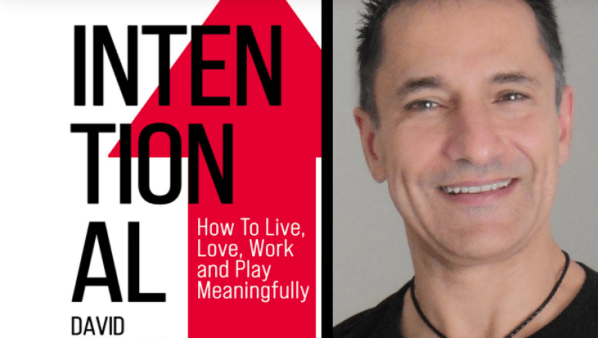
Intentional: How To Live, Love, Work and Play Meaningfully by David Amerland David Amerland has always been an influential thinker for me — for example, his book on SEO was my college degree in that space! Intentional belongs on my top shelf along with 7 Habits, Getting Things Done, Fierce Conversations, and Radical Candor. If you like this kind of thinking, you will love this book: “Life is complex. We are complicated. There will be times when this value statement will be reversed. What will never change however is the sense of satisfaction that comes from being the sole architect of how you choose to live.” Amerland, David. Intentional (p. 38). David Amerland. Kindle Edition. View all my reviews
We spend about 43 per cent of our day doing things without thinking about them. For many of these habitual behaviours, we donโt recognise them as such. However, these learned behaviours are necessary for living our life.
Wendy Wood
I’m a huge fan of the book The ONE Thing. In it, the author Gary Keller talks about the idea that you really don’t need to be as disciplined as you think. Why? Because you only need enough discipline to start a habit and the habit then takes over. Go to the source: Why You Need Instant Gratification, According to Science
You must be logged in to post a comment.