A powerful listening technique for partners and co-parents. Source: 6 Minutes to Improve Your Relationship
Thinks I find along the way

A powerful listening technique for partners and co-parents. Source: 6 Minutes to Improve Your Relationship

Having your feelings go unacknowledged makes you feel alone in the world. Source: How Emotional Neglect Can Cause Lifelong Lonely Feelings

LAT (Living Apart Together) lets couples maintain some independence while still staying committed. Here’s how it works and how you can make it work, according to experts. Source: What Is ‘Living Apart Together,’ and Is It Right for You? Here’s What Relationship Experts Think

A new study investigated the experience of love. Source: 8 New Scientific Insights on Love and How It Fades Away
Here is the study on which the article is based…

Relationships are complex, but one easy shift nurtures love and understanding. Source: The One Word That Kills Relationships

“It is common for partners to inwardly reflect on how satisfied they are in their intimate relationship. A wise counseling client of mine once said that it is glaringly more obvious when an intimate relationship is not working out versus when it is going well.
So, if you feel your relationship is working well for you and your partner, wouldn’t it be enlightening and helpful to know what is making it thrive? Or, if you are not in a satisfying relationship, it could feel centering to see what makes other relationships so rewarding.” Source: 9 Signs That You Are in a Great Relationship

We have a responsibility to love—it must be protected to survive. Source: Nine Important Things You Should Know About Love

“And if it’s true we are alone, we are alone together, the way blades of grass are alone, but exist as a field.”
Rosemerry Wahtola Trommer: Belonging – Rosemerry Wahtola Trommer – Mindfulness Association

Can you be single while in a relationship? Source: Is Living Apart Together Better Than Living Together Apart?

The author writes “Being resilient means you have already come through “many dangers, toils and snares.” Hopefully, you will become stronger, more mature, and compassionate. Being resilient means you have successfully broken through the darkness you confronted.
This means you have light to offer others, too. You have insights to share that can help someone else avoid an error you made yourself. Maybe you can calm someone’s fear as they face a procedure you had yourself.
Share the light. Share the wisdom life has taught you. You may well be someone’s answered prayer.”
That is the very purpose of this website — to share the light and wisdom through curation and occasionally, creation. I could just bookmark this content and keep it to myself by I share it here (and automagically to Facebook, Instagram, LinkedIn and X) in hopes that just one other person might stumble upon it and benefit from it. Go to the source: Curating What Fills Your Mind Can Shape Your Resilience

The question of the benefits of being in a long-distance relationship, especially during the periods when partners are physically separated, is an interesting one. While it is natural to focus on the challenges and difficulties that come with being apart from a loved one, it is equally important to recognize that there can be positive aspects to such a situation.
Long-distance relationships often come with their own set of unique challenges and obstacles. However, when approached with the right mindset and commitment, they can also offer numerous benefits. In particular, being in a healthy long-distance relationship can provide individuals with a valuable opportunity for personal growth, enhanced communication skills, strengthened trust, and a deeper appreciation for each other.
Continue reading “7 Benefits of Being in a Healthy, Long-Distance Relationship”
“We remind ourselves never to say anything we can’t take back.” Source: How to Ask for (and Get) What You Need From a Relationship

The difference between a romantic search and romantic interest. Source: Should You Search for Love or Let Love Find You?
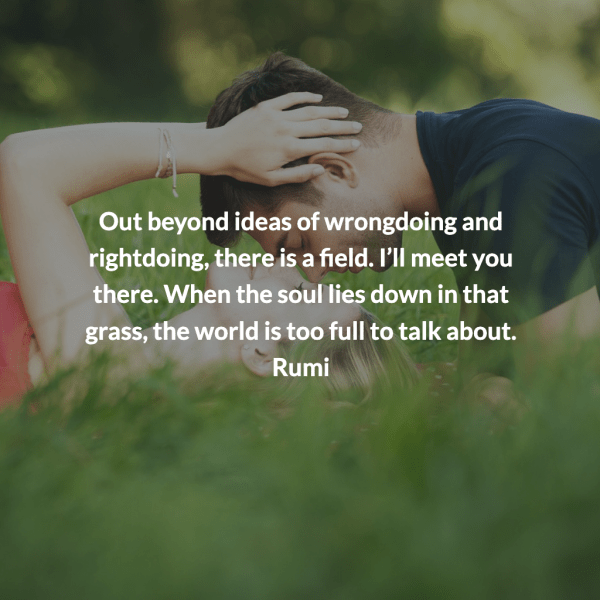
“Out beyond ideas of wrongdoing and rightdoing, there is a field. I’ll meet you there. When the soul lies down in that grass, the world is too full to talk about. Ideas, language, even the phrase “each other” doesn’t make any sense. The breeze at dawn has secrets to tell you. Don’t go back to sleep. You must ask for what you really want. Don’t go back to sleep. People are going back and forth across the doorsill where the two worlds touch. The door is round and open. Don’t go back to sleep.” Source: The Rumi Poem we should all Read. | elephant journal

The “Golden Bachelor” can teach us five things about losing (and finding) love. Source: Is Love After Loss Possible?
Change is a fundamental aspect of the human experience. Throughout our lives, we encounter numerous circumstances and events that shape us, molding us into the people we are today. But can people truly change? This question has been a subject of much debate and contemplation among philosophers, psychologists, and everyday individuals seeking personal growth. In this blog post, we will explore different perspectives on this intriguing subject.
One of the main factors influencing change is the ongoing Nature vs. Nurture debate. Some people argue that our personalities and behaviors are largely determined by our genetic makeup, while others believe that our environment and experiences shape us. Both nature and nurture play a significant role in who we are, but the extent to which they dictate our ability to change remains a complex matter.
Habits are deeply ingrained patterns of behavior that can be challenging to overcome. Whether it’s smoking, procrastination, or unhealthy eating habits, breaking free from negative patterns requires dedication and willpower. However, research suggests that it is indeed possible to change habits through consistent effort and the utilization of various behavior change strategies. This shows that individuals have the capacity for change when it comes to their habits.
Advancements in neuroscience have shed light on the brain’s remarkable ability to rewire itself, a phenomenon known as neuroplasticity. The brain is not a fixed organ but rather a dynamic and adaptable one. It can form new neural connections and modify existing ones based on experience, learning, and deliberate effort. This implies that our thoughts, behaviors, and emotions can be altered through the rewiring of our brains, offering concrete evidence of our potential for change.
Self-reflection serves as a powerful tool for personal growth and transformation. By engaging in introspection, individuals gain insight into their thoughts, feelings, and behaviors. This deeper understanding allows for the identification of areas in need of change and the development of strategies to make those changes. Self-reflection creates an opportunity for individuals to take responsibility for their actions and make conscious efforts to become better versions of themselves.
Change often requires motivation and willpower. Without a desire to change and the determination to follow through, it can be challenging to make enduring transformations. Motivation can stem from various sources, such as personal goals, external influences, or a desire for personal growth. Willpower, on the other hand, is the ability to resist short-term gratification in pursuit of long-term goals. Although motivation and willpower may fluctuate, individuals who possess these qualities have a greater likelihood of enacting meaningful change in their lives.
People do not exist in isolation. External factors and support systems can profoundly influence an individual’s capacity for change. Positive, nurturing environments and supportive relationships can provide the necessary encouragement, guidance, and accountability for personal growth. Whether it’s through therapy, mentoring, or the support of friends and family, external factors can play a pivotal role in facilitating change.
While change is indeed possible, it is important to acknowledge its limitations. Some aspects of our personalities, such as core values or temperament, may be resistant to change. Additionally, the extent to which individuals can change varies from person to person. Factors like age, past experiences, and neurological conditions can complicate the process of change. It is crucial to practice self-compassion and acceptance, recognizing that personal growth is a gradual and ongoing journey.
In conclusion, the question of whether people can truly change is a complex one. While the capacity for change exists within us, it is influenced by a multitude of factors, including genetics, environment, habits, neuroplasticity, motivation, and external support. Personal growth and transformation require self-reflection, determination, and resilience. It is important to approach the journey of change with patience, compassion, and an understanding that change is a dynamic process unique to each individual. By embracing the potential for change, we can embark on a path of personal growth and continually strive to become the best versions of ourselves.

Cross-national studies indicate “male confession bias” may be universal. Source: Why Men Say “I Love You” Before Women Do

“A lover asked his beloved, Do you love yourself more than you love me? The beloved replied, I have died to myself and I live for you…” ~ Rumi
Source: Do You Love Me? A Deep and Meaningful Poem by Rumi – Purpose Fairy

Expectations can be a double-edged sword in our lives. On one hand, they provide us with a sense of hope and anticipation. On the other hand, when expectations are not met, they can quickly turn into seeds of resentment. In this blog post, we will explore the notion that “expectations are future resentments” and how managing our expectations can lead to a happier and more fulfilling life.
Expectations are innate to our human nature. We constantly form expectations about various aspects of our personal and professional lives. We expect things to go a certain way, people to behave in a particular manner, and situations to unfold as we imagine. These expectations can stem from societal norms, personal beliefs, past experiences, or our own desires and aspirations.
When our expectations are not met, it can lead to disappointment, frustration, and even resentment. We may feel let down by others or ourselves, and it can have a negative impact on our emotional well-being. The cycle begins when we set an expectation, and whether consciously or unconsciously, we attach our happiness or fulfillment to its fulfillment. However, life is unpredictable, and things don’t always go as planned.
While it may be difficult, managing our expectations is crucial for our own mental and emotional well-being. Here are some strategies to consider:
Expectations have the potential to shape our experiences and relationships. By acknowledging that “expectations are future resentments,” we can strive to manage them effectively. Embracing acceptance, clear communication, flexibility, and gratitude can lead to a more harmonious and peaceful existence. Remember, life is full of surprises, and it is up to us to navigate them with resilience and optimism.
So, let go of rigid expectations, embrace the beauty of uncertainty, and cultivate a mindset of gratitude. Free yourself from the burden of future resentments and allow life to unfold in its own magical way.
Remember, expectations are merely illusions of control – let them go and set yourself free!
Stay tuned for more insights into personal growth and well-being.
Note: Expectations are normal, but the excessive or unrealistic expectations can impact mental health. If you find yourself struggling with unmet expectations and it is affecting your well-being, it may be beneficial to seek support from a mental health professional.

Here are 10 questions to assess the state of your union. Source: Maybe It’s Time for Your Relationship Check-Up

How to make the right choice for your future when values don’t match. Source: Love vs Values
 Bright, shiny objects!
You must be logged in to post a comment.