While Northeast Wisconsin and the rest of the midwest braces for a heat wave…

Algoma, aka ‘Penguin City’, will be nice and comfortable for the 4th! Why don’t you come on over and drop huge amounts of money into our local economy? :-D

Thinks I find along the way
While Northeast Wisconsin and the rest of the midwest braces for a heat wave…
Algoma, aka ‘Penguin City’, will be nice and comfortable for the 4th! Why don’t you come on over and drop huge amounts of money into our local economy? :-D
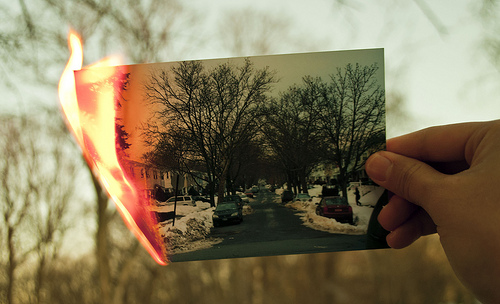
“Letting go isn’t the end of the world; it’s the beginning of a new life.” ~Unknown. via Finding the Strength to Let Go and Start Over | Tiny Buddha.

We should always work to be better people. We have the tools, and they shouldn’t be wasted. How you decide to become a better person is up to you. It may mean being a better spouse, parent, sibling, son, or daughter. Perhaps it means being a better provider, a better employee, or a better employer. No matter what it means to you, it means work. One should not shy away from the work that it takes to improve as a person. With that said, if you need a little direction then here are 3 hacks to be a better you: 3 Hacks to Be a Better You.
Me? I like the first ‘hack’; exercise. Eating well and exercising has changed my life this year. Get rid of your excuses and take care of yourself. Nothing matters more because it affects everything — EVERYTHING you do!

“I’m not ready.”
“I don’t know what I’m doing.”
“What if nobody likes it or I’m not a good writer?”
These questions haunted me for the past several months, as I got up the gumption to finally write my first post for Positively Positive.
Candor, self-disclosure, and transparency are my preferred teaching tools. No need to uphold an idealized version of myself—not helpful for you or me.
Yes, I was nervous to put myself “out there.” Every time I break open and expand, I’m met with self-doubt, fear, insecurity, and a comparing mind.
For my first post, I decided to tackle my self-doubting questions head-on and share some tools I find useful when battling the nasty voice of uncertainty: practical advice meets neuroscience meets spirituality.
Ask yourself: How do you handle the anxiety around a difficult transition and trust the unknown? Do you freeze (procrastination, excuses), run (avoid, deny, lie), or attack (irritable, critical, blame)?” via How to Begin (Anything) « Positively Positive.

This fireworks/firecrackers FAIL compilation is brought to you by World Wide Interweb. Be careful out there, kids!
via A Fourth Of July PSA.


Anyone who has ever had a pet can vouch for the fact that seeing their loving little eager-to-please faces as you come home can really lift your spirits after a long day.
Even if they do destroy your home, keep you up with their crying all night or leave unwanted presents on your new carpet – you can’t help but love their butter-wouldn’t-melt-in-their-mouth faces!
Therefore, it’s not surprising that studies have confirmed that having a little furry friend does indeed do wonders for your overall happiness. Study researcher Allen McConnell, of Miami University in Ohio, said in a statement.
“We observed evidence that pet owners fared better, both in terms of well-being outcomes and individual differences, than non-owners on several dimensions.
Specifically, pet owners had greater self-esteem, were more physically fit, tended to be less lonely, were more conscientious, were more extroverted, less fearful and less preoccupied than non-owners.”
On a deeper level, having a pet as a companion can also help mend the pain associated with loss, or during periods of loneliness or depression. They force you to care for another life – thus helping to take the focus off your own problems and provide you with unconditional love.
Everyone wants to be loved and needed – pets fulfill this nurturing role. This can be particularly important for middle-aged parents who may be suffering from ‘empty nest syndrome’ after their children have moved out, or for the elderly who are alone and have limited family and friends.
Of course if you’re not an animal person, or you’re having trouble looking after yourself, having an animal will not be for you. However, if you’re in a position to care for a special little friend, getting a pet can be the best remedy for loneliness.
One of our favorite pet stories has to be the story of Faith, a dog born with deformed front legs. However, as a result of her owner’s love and determination, she not only averted the doggy lethal injection, but now also walks on her back legs!
Has your pet helped you get through a difficult time or increased your overall happiness? We’d love to hear your story and how they’ve made a difference in your life, or to someone you know!” via The Healing Power Of Furry Friends.
Blog readers know all about my black cat Boo and how our ‘kitty time’ has changed my life. How about you? Got an animal friend?
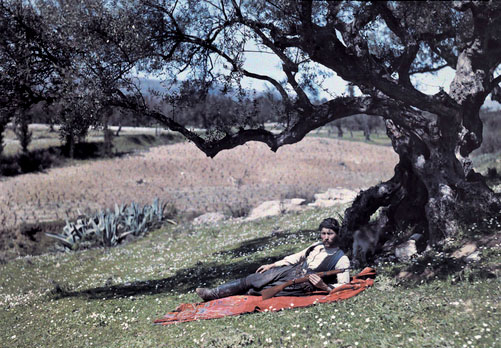
Retronaut. Get more here: Greece in colour, c.1920s.

 Psychology Today Features. Get more here: Are You Resilient Enough?.
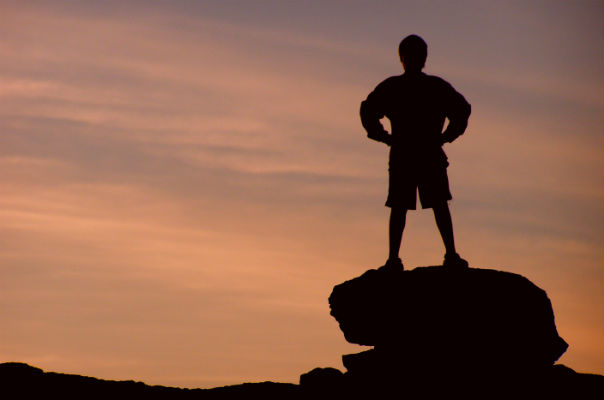
“The most important thing in the Olympic Games is not winning but taking part; the essential thing in life is not conquering but fighting well.” Pierre de Coubertin. via Quote: Olympics Spirit and “Fighting Well” | Greatist.comHealth and Fitness Articles, News, and Tips – Greatist.com.
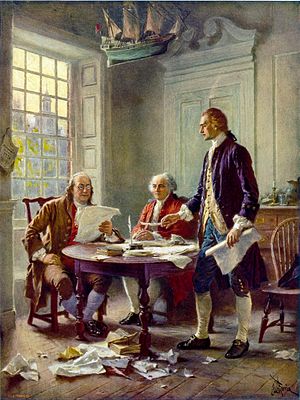

On this day in 1776, the Second Continental Congress, assembled in Philadelphia, formally adopts Richard Henry Lee’s resolution for independence from Great Britain. The vote is unanimous, with only New York abstaining.
The resolution had originally been presented to Congress on June 7, but it soon became clear that New York, New Jersey, Pennsylvania, Delaware, Maryland and South Carolina were as yet unwilling to declare independence, though they would likely be ready to vote in favor of a break with England in due course. Thus, Congress agreed to delay the vote on Lees Resolution until July 1. In the intervening period, Congress appointed a committee to draft a formal declaration of independence. Its members were John Adams of Massachusetts, Benjamin Franklin of Pennsylvania, Roger Sherman of Connecticut, Robert R. Livingston of New York and Thomas Jefferson of Virginia. Thomas Jefferson, well-known to be the best writer of the group, was selected to be the primary author of the document, which was presented to Congress for review on June 28, 1776.
On July 1, 1776, debate on the Lee Resolution resumed as planned, with a majority of the delegates favoring the resolution. Congress thought it of the utmost importance that independence be unanimously proclaimed. To ensure this, they delayed the final vote until July 2, when 12 colonial delegations voted in favor of it, with the New York delegates abstaining, unsure of how their constituents would wish them to vote. John Adams wrote that July 2 would be celebrated as the most memorable epoch in the history of America. Instead, the day has been largely forgotten in favor of July 4, when Jeffersons edited Declaration of Independence was adopted.” via Congress votes for independence — History.com This Day in History — 7/2/1776.

Molly Snyder writes:
I’m far from being a gourmet cook, but I do enjoy preparing food and experimenting in the kitchen. Over the years, I’ve made hundreds of grilled cheese sandwiches and, since it’s the last day of Dairy Month, I’m sharing the few simple rules I follow that produce a perfect grilled cheese sandwich every time.

Holy Kaw! via The life and financial times of Average Joe [infographic].
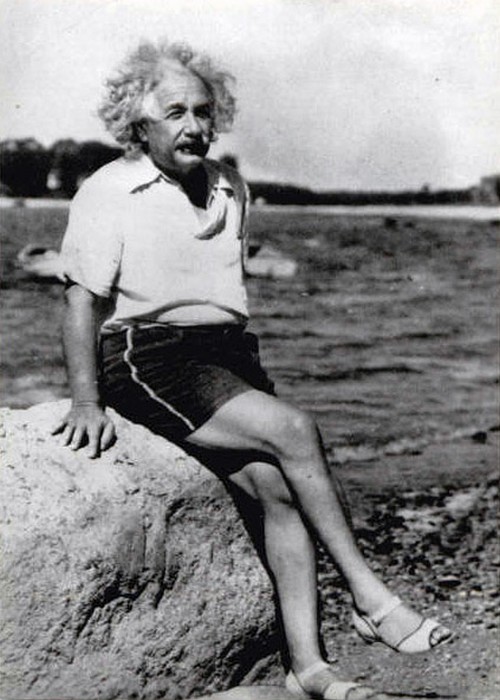
Words fail me right now. Retronaut. Get more here: Einstein on the Beach, 1939.
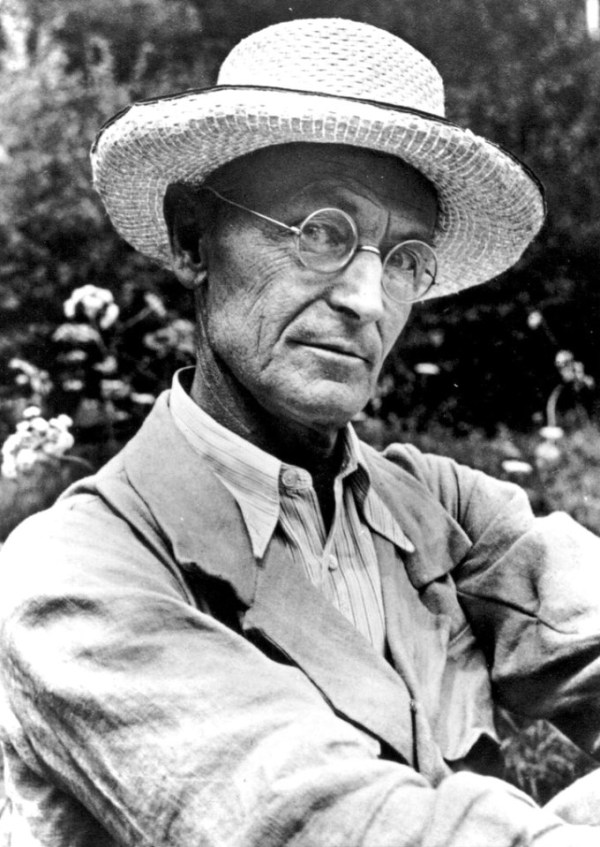
I was born in Calw in the Black Forest on July 2, 1877. My father, a Baltic German, came from Estonia; my mother was the daughter of a Swabian and a French Swiss. My father’s father was a doctor, my mother’s father a missionary and Indologist. My father, too, had been a missionary in India for a short while, and my mother had spent several years of her youth in India and had done missionary work there.My childhood in Calw was interrupted by several years of living in Basle (1880-86). My family had been composed of different nationalities; to this was now added the experience of growing up among two different peoples, in two countries with their different dialects.
I spent most of my school years in boarding schools in Wuerttemberg and some time in the theological seminary of the monastery at Maulbronn. I was a good learner, good at Latin though only fair at Greek, but I was not a very manageable boy, and it was only with difficulty that I fitted into the framework of a pietist education that aimed at subduing and breaking the individual personality. From the age of twelve I wanted to be a poet, and since there was no normal or official road, I had a hard time deciding what to do after leaving school. I left the seminary and grammar school, became an apprentice to a mechanic, and at the age of nineteen I worked in book and antique shops in Tübingen and Basle. Late in 1899 a tiny volume of my poems appeared in print, followed by other small publications that remained equally unnoticed, until in 1904 the novel Peter Camenzind, written in Basle and set in Switzerland, had a quick success. I gave up selling books, married a woman from Basle, the mother of my sons, and moved to the country. At that time a rural life, far from the cities and civilization, was my aim. Since then I have always lived in the country, first, until 1912, in Gaienhofen on Lake Constance, later near Bern, and finally in Montagnola near Lugano, where I am still living.
Soon after I settled in Switzerland in 1912, the First World War broke out, and each year brought me more and more into conflict with German nationalism; ever since my first shy protests against mass suggestion and violence I have been exposed to continuous attacks and floods of abusive letters from Germany. The hatred of the official Germany, culminating under Hitler, was compensated for by the following I won among the young generation that thought in international and pacifist terms, by the friendship of Romain Rolland, which lasted until his death, as well as by the sympathy of men who thought like me even in countries as remote as India and Japan. In Germany I have been acknowledged again since the fall of Hitler, but my works, partly suppressed by the Nazis and partly destroyed by the war; have not yet been republished there.
In 1923, I resigned German and acquired Swiss citizenship. After the dissolution of my first marriage I lived alone for many years, then I married again. Faithful friends have put a house in Montagnola at my disposal.
Until 1914 I loved to travel; I often went to Italy and once spent a few months in India. Since then I have almost entirely abandoned travelling, and I have not been outside of Switzerland for over ten years.
I survived the years of the Hitler regime and the Second World War through the eleven years of work that I spent on the Glasperlenspiel (1943) [Magister Ludi], a novel in two volumes. Since the completion of that long book, an eye disease and increasing sicknesses of old age have prevented me from engaging in larger projects.
Of the Western philosophers, I have been influenced most by Plato, Spinoza, Schopenhauer, and Nietzsche as well as the historian Jacob Burckhardt. But they did not influence me as much as Indian and, later, Chinese philosophy. I have always been on familiar and friendly terms with the fine arts, but my relationship to music has been more intimate and fruitful. It is found in most of my writings. My most characteristic books in my view are the poems (collected edition, Zürich, 1942), the stories Knulp (1915), Demian (1919), Siddhartha (1922), Der Steppenwolf (1927) [Steppenwolf], Narziss und Goldmund. (1930), Die Morgenlandfahrt (1932) [The Journey to the East], and Das Glasperlenspiel (1943) [Magister Ludi]. The volume Gedenkblätter (1937, enlarged ed. 1962) [Reminiscences] contains a good many autobiographical things. My essays on political topics have recently been published in Zürich under the title Krieg und Frieden (1946) [War and Peace].
I ask you, gentlemen, to be contented with this very sketchy outline; the state of my health does not permit me to be more comprehensive.” via nobelprize.org
Happy birthday, Hermann! You made a profound impact on my life through your body of work…
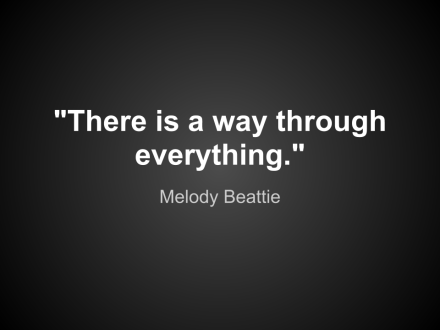
Melody Beattie writes:
Divorce. Breaking up. Moving. A new job. Getting sober. Stopping using or abusing drugs. Discovering we’re codependent, and redefining ourselves, our relationships (including our relationship with ourselves) and our behaviors. Finding out we have a chronic illness, and we need to center our lives around it. Empty nest syndrome (yes, it’s real).
We wake up in the morning and before we go to bed that night, our lives have been irrevocably changed. They’ll never be the same again.
Sometimes we lose it all (or almost all of it) all at once. A friend from many years back woke up one morning. That day, he discovered that his wife of 15 years had been cheating on him from day
one; that neither the son nor his daughter he thought belonged to him were his; and that day, his business went belly-up.Some people may call it “reorganization.” Others name it a “new beginning.” Most of the time I hear it described like this: “Sigh. I’m starting all over. Again.”
I hate it, at least in the beginning. We’re walking in the dark and living in the mystery. We don’t have a clue about what’s next. Sometimes we may wonder if we’re dying – the transformation feels that profound. Usually the person isn’t dying – not in the physical sense. But the changes taking place can be so profound that the experience feels similar to a death.
Times it feels like our heart has been broken. If we tell people that, they may look at us like we’re overplaying the drama queen role, but recently Mayo Clinic identified “Broken Heart Syndrome” as a legitimate physical illness. A broken heart, which can be caused by the loss of a loved one or an overload of stress, shows itself with symptoms similar to those of a real heart attack. These symptoms may include heart pain that worsens with each heartbeat; difficulty breathing or shortness of breath; and nausea or vomiting.
I went out to do errands. Around lunch-time, I decided to find someplace to eat. I had driven out of my usual neighborhoods and didn’t recognize the mall I pulled into, at least not at first. Then I saw it – the restaurant where we celebrated my son, Shane’s last birthday – the one two days before the date of his death.
The pain hit hard and fast – right in my chest. I felt paralyzed. My hands gripped the steering wheel. I couldn’t move them to rummage around in my purse and find my cell phone. Movement of any kind hurt too much. I couldn’t even roll down my window and yell, “Help.” I’d rate the pain as a ten on the pain scale from one to ten.
For just over one hour I sat in the same position, leaning forward, clutching the steering wheel, stopped in my tracks by this pain in my heart. Then slowly the debilitating pain began to subside. I
didn’t get out of the car; I went home instead. A week later I went to my doctor. (This was before the identification of Broken Heart Syndrome as an actual physical illness.) The doctors made me stay overnight.The diagnosis? “It’s the strangest thing,” the doctors said. “For all purposes, it looks like you had a myocardial infarction (heart attack). But then, it also doesn’t appear as though you actually suffered from a heart attack. It left the doctors scratching their heads but I’d known from the minute – the second – the nurse at the Emergency Room asked me if I had someone I could call after Shane’s
accident that his death had broken my heart.Don’t rely on self-diagnosis. If your heart hurts, get a checkup.
Then, when your body stabilizes – which it will – you can get on with the business of Starting Over Again (SOA). One idea that may be helpful: although it feels like you’re starting over again, is remembering you’re not really starting over. Life is a continuum. You’re either jolted or sliding into the next experience. You’re moving on.
Here are a few tips for those of you in that uncomfortable place of SOA when you thought the last time you started over would be the last, only to find yourself SOA.
- Let yourself grieve your loss or losses. You don’t need to be so stoic. Give yourself room to be human. What you’re going through may be extremely difficult and it may hurt. But you will get through it.
- Remind yourself that what you’re going through won’t last forever. If you have to leave post-it notes around the house, then do it. Remember other times you’ve started over, and how you got through those experiences? Draw on what you learned, including that you did survive that devastating time.
- Give yourself time to cocoon. No, you’re not isolating. You’re resting, giving your body a chance to adapt to this sudden change.
- Tell your story as often as you need to, and tell it to people who will listen and care. While some people may accuse us of obsessiveness, telling our story over and over is an important way we integrate the unthinkable into our life story.
- Set goals. In the beginning, start by writing a list of what you want or need to accomplish just that day. Take life in small chunks. After some time passes, begin writing goal lists that go further into the future. For now, while you’re in shock, a list for today is enough.
- Be kind to yourself. There may be days when all you accomplish is getting out of bed and taking a shower. Instead of focusing on how little you did, tell yourself you did great – because you did.
- Slowly, as new people and interests come into your life, be willing to say “yes” to opportunities. I never fail to be amazed at how either a person or an interest that I think is just a “time killer” slowly becomes a major part of my new life.
- If you need help, ask.
- If you need to cry or get angry, cry or get angry. You may even be furious with your Higher Power. That’s okay. You’ll work it out further down the road.
- Know there is no one right way to start over. We have tools, not rules. Now is the time to dig into your toolbox and use what you’ve been given: living in the present moment; prayer; meditation; exercise (when your body can handle it); detachment (which involves feeling all your emotions); and sometimes Acting As If. Know that if the emotions become too intense, you can shut them down for a while without going into denial. Something as simple as taking a shower, going into another room, or going to the grocery store can help you stop falling deeper into what may feel like a bottomless pit of pain.
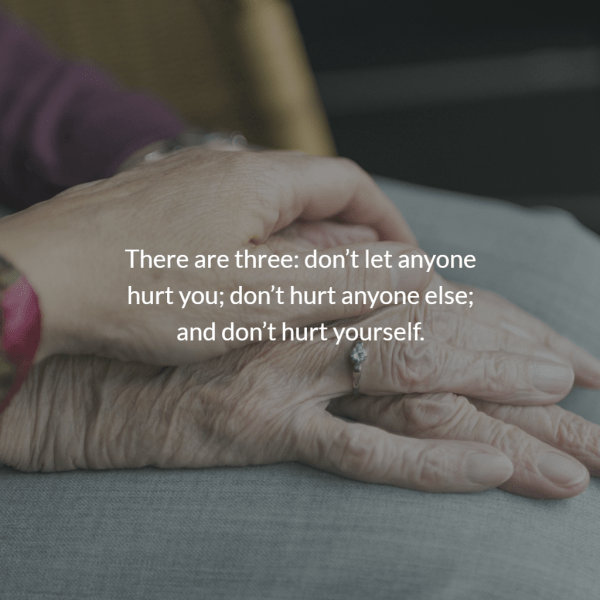
Although I said there aren’t any rules, I lied. There are three: don’t let anyone hurt you; don’t hurt anyone else; and don’t hurt yourself.
You will get through this – I promise. It might not happen as quickly as you want it to or it may happen so quickly it surprises you. But one morning you’ll wake up and find yourself living in a new normal instead of waking up to a blast of pain from what you’ve lost. Instead, your new life will be there, fully formed. You’ll be living it.
You’ve done it. You started over again, whether you wanted to or not. Now the next time you need to start over, you’ll be more prepared.
Earlier this Spring we had the chance to hear from Trip Lee on his new album and its connection to the gospel and on-the-ground sanctification. In this video he explains the gospel in two minutes.

Posted from WordPress for Android

Happened yesterday near Sarasota.

The “Miss Geico” powerboat burst into flames yesterday at about 5:30pm, 250 yards off shore. No one—including the ubiquitous gecko—was hurt in the accident, according to the Herald-Tribune. The boat was preparing for today’s 2012 Suncoast Super Boat Grand Prix event.
Maybe Mayhem was behind the wheel? Photo via reddit. via 15 Minutes Could Save You 15% On Boat Insurance.
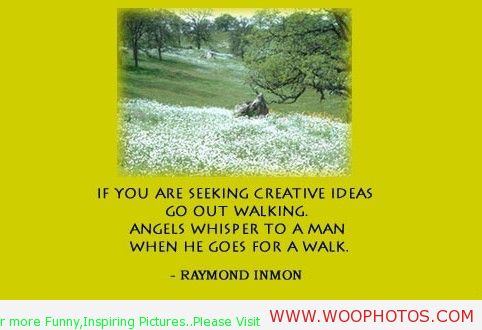
“If you are seeking creative ideas, go out walking. Angels whisper to a man when he goes for a walk.” Raymond Inmon.
We all seek creative ideas from time to time – perhaps when we have a problem resting heavily on our minds, or when we are simply in a bad mood. We need to refresh ourselves at those times. Refreshment doesn’t solve a problem, but it can revitalize our thinking. Sometimes when we are feeling hopeless, we neglect to care for ourselves, forgetting a better environment will give us a stronger attitude, even toward the most difficult problems.
We must learn our own best methods for being refreshed – ways that allow angels to whisper to us. They should be simple, inexpensive, and accessible daily. Going for a walk is a very good example. Daily reading and study is another possibility. Observing nature, doing handicrafts or hobbies are refreshing for some men. These activities allow us to temporarily set aside our tasks and concerns and open us to creative ideas.
Today, I will give myself a creative break from the concerns I am facing.” via Just For Today Meditations » Daily Recovery Readings – July 1, 2012.









 Bright, shiny objects!
comments