
Visual Inspiration: Enjoy the Ride!
via Visual Inspiration: Enjoy the Ride!.
This reminded me of one of my old favorite James Taylor songs…
Thinks I find along the way
Visual Inspiration: Enjoy the Ride!
via Visual Inspiration: Enjoy the Ride!.
This reminded me of one of my old favorite James Taylor songs…

 Craig Harper shares this from the intro to his new book:
Success is not about what the world – God, karma, the universe, society, the government or your parents – owe you; it’s about what YOU do with what you’ve been given. In this moment. And every moment. Success is not about how many motivational books you read, workshops you attend, conversations you have, goals you set, promises you make or how much self-help crap you manage to memorise; it’s about your thinking, choices, behaviours, resilience and results over time. It’s about what you do with what you know. It’s about the application of the information. It’s about knowing what success is for you – not your parents, partner, friends or peers. It’s about how uncomfortable you’re prepared to get and for how long. It’s about stepping out of your ego and into your potential. Out of fear and into consciousness. It’s about your ability to do what the majority won’t. To be the solution person not the problem person. To get up when most would give up. To ask better questions. To create opportunities not wait for them. To find your own truth and purpose no matter how popular or unpopular that might make you. To be courageous in the face of adversity and to live a life in total alignment with your core values.” via

Yet another amazing TEDTalk worthy of your attention…

 Another Melody Beattie I should have posted on Thanksgiving but it rings true every day:
“Gratitude and acceptance are two magic tricks available to us in recovery. No matter who we are, where we are, or what we have, gratitude and acceptance work.
We may eventually become so happy that we realize our present circumstances are good. Or we master our present circumstances and then move forward into the next set of circumstances.
If we become stuck, miserable, feeling trapped and hopeless, try gratitude and acceptance. If we have tried unsuccessfully to alter our present circumstances and have begun to feel like we’re beating our head against a brick wall, try gratitude and acceptance.
If we feel like all is dark and the night will never end, try gratitude and acceptance.
If we feel scared and uncertain, try gratitude and acceptance.
If we’ve tried everything else and nothing seems to work, try gratitude and acceptance.
If we’ve been fighting something, try gratitude and acceptance.
When all else fails, go back to the basics.
Gratitude and acceptance work.
Today, God, help me let go of my resistance. Help me know the pain of a circumstance will stop hurting so much if I accept it. I will practice the basics of gratitude and acceptance in my life, and for all my present circumstances.” via Just For Today Meditations » Daily Recovery Readings – November 22, 2012.

Great song for where I’m at right now. Crank it!!!
I think this is one of the greatest music videos [simple, impactful] of one of the greatest love songs ever [from two of my favorite artists, as well]. That’s a lot of greatest!
Posted from WordPress for Android

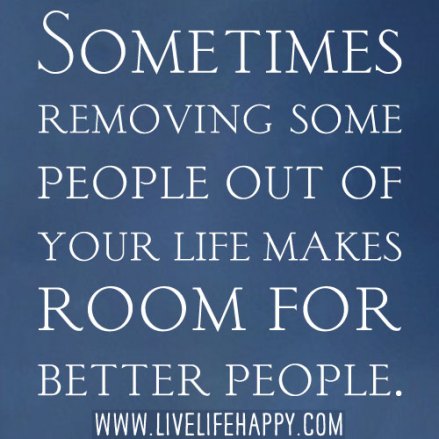
Some relationships are incredibly pernicious. We often develop relationships out of convenience, without considering the traits necessary to build a successful bond with another person—important traits like unwavering support and shared trust and loving encouragement.
When a relationship is birthed out of convenience or proximity or chemistry alone, it is bound to fail. We need more than a person’s physical presence to maintain a meaningful connection, but we routinely keep people around because … well, simply because they’re already around…
We’ve all held on to someone who didn’t deserve to be there before. And most of us still have someone in our lives who continually drains us: Someone who doesn’t add value. Someone who isn’t supportive. Someone who takes and takes and takes without giving back to the relationship. Someone who contributes very little and prevents us from growing. Someone who constantly plays the victim.
But victims become victimizers. And these people are dangerous. They keep us from feeling fulfilled. They keep us from living meaningful lives. Over time, these negative relationships become part of our identity—they define us, they become who we are.
Fortunately, this needn’t be the case. Several actions can be taken to rid ourselves of negative relationships.
Go to the source: Letting Go of Shitty Relationships | The Minimalists

Melody Beattie writes:
Express your power naturally and as gently as you can.
When I started learning what it meant to take care of myself and to own my power, I talked loudly, spoke up, and yelled in order to set boundaries, limits, and to express myself. That was the way to get my point across. That’s how I’d showed people I meant what I said.
I had to say it loudly.
About five years after I started this process of learning what it meant to own my power, I met a bear called Winnie the Pooh. The book that introduced me was The Tao of Pooh. Lights started coming on. The seeds of new lessons began to sprout.
To own my power, I could quietly say what I meant. The clearer I was about what I had to say and who I was, the less I had to shout. Owning my power wasn’t something I had to plan out, premeditate, and obsess about.
The more I took care of myself and connected to myself, and the clearer I became, the more natural and easier it became to own my power. My power–including setting limits, saying no, refusing to be manipulated, and saying I’d changed my mind– often became a natural, graceful, timely expression of me.
There are still times in our lives when we have to be firm, sometimes forceful, and repeat what we’ve said, sometimes loudly. The quieter and more relaxed we can be when we say what we mean is usually in direct proportion to how much we believe in ourselves.
Let your power, boundaries, and expressions of who you are arise naturally.
Learn and respect the value of responding as gently, but as firmly, as you can.
God, help your power flow through me. Teach me to take care of myself gently, in a way that reflects harmony with myself and as much as possible, the people in my life.” via Just For Today Meditations – Maintaining A Life.
You Have To Find Something http://bit.ly/TjTZJ9 http://pic.twitter.com/N0SCDVno
— Todd Lohenry (@toddlohenry)
10 minutes ago
You’re Worth More than This! http://bit.ly/WNi2Ww http://pic.twitter.com/sQp1GGfw
— Todd Lohenry (@toddlohenry)
20 minutes ago
30s Tip: What Are the Nutrients of Avocado? http://bit.ly/QDVAxo
— Todd Lohenry (@toddlohenry)
32 minutes ago
How To Beat The Holiday Bah Humbug http://bit.ly/QDVCoY
— Todd Lohenry (@toddlohenry)
32 minutes ago
3 Ways to Bring Your Career to Life http://bit.ly/U5hl67
— Todd Lohenry (@toddlohenry)
an hour ago
5 Reasons Detachment Can Save Your Relationship http://bit.ly/UStxpf http://pic.twitter.com/UCRJRkvJ
— Todd Lohenry (@toddlohenry)
3 hours ago
RT @ChiTribHamilton: #NotreDame is headed to the national championship game.
— Todd Lohenry (@toddlohenry)
9 hours ago
Just because today was terrible doesn’t mean tomorrow won’t be the best day of your life http://bit.ly/TcXjFE http://pic.twitter.com/GqUSA4rf
— Todd Lohenry (@toddlohenry)
13 hours ago
3 Reasons Why You Should Juice http://bit.ly/SlhKS0
— Todd Lohenry (@toddlohenry)
13 hours ago
Keep a Food Diary to Lose Weight and Maintain It http://bit.ly/WLygPM
— Todd Lohenry (@toddlohenry)
13 hours ago
A flock of wild turkeys http://bit.ly/YduZt6 http://pic.twitter.com/UYqUhXj3
— Todd Lohenry (@toddlohenry)
17 hours ago
Letting Go http://bit.ly/URz9QC http://pic.twitter.com/GbdWqumF
— Todd Lohenry (@toddlohenry)
21 hours ago
Good advice… http://bit.ly/URz6EB http://pic.twitter.com/NfsoQ8ND
— Todd Lohenry (@toddlohenry)
21 hours ago
The best of @toddlohenry for 11/24/2012 http://bit.ly/UkzBLc http://pic.twitter.com/G6N64KcY
— Todd Lohenry (@toddlohenry)
21 hours ago

This? Whatever you’re settling for in yourself or others…

Jasmin Bedria writes:
When most people envision the ideal relationship, they think of engulfing, inseparable love. Being “attached at the hip” is typically an early sign that you and your new love share the ever-consuming, romantic high of a Nicholas Sparks novel.
You want to keep learning about each other, acting as sponges to the other’s every word and affection.
So, how in the world can detachment actually strengthen an intensely loving and growing relationship?
Detachment is one of the most important aspects in achieving true, profound fulfillment. Believe it or not, practicing detachment while remaining vulnerable will benefit you in remarkable ways.
Get the full story here: 5 Reasons Detachment Can Save Your Relationship
And, for me it’s one of the most difficult concepts imaginable. Sigh…
Off in the field.

Posted from WordPress for Android
Melody Beattie writes:
Stop trying so hard to control things. It is not our job to control people, outcomes, circumstances, life. Maybe in the past we couldn’t trust and let things happen. But we can now. The way life is unfolding is good. Let it unfold.
Stop trying so hard to do better, be better, be more. Who we are and the way we do things is good enough for today.
Who we were and the way we did things yesterday was good enough for that day.
Ease up on ourselves. Let go. Stop trying so hard.
Today, I will let go. I will stop trying to control everything. I will stop trying to make myself be and do better, and I will let myself be.
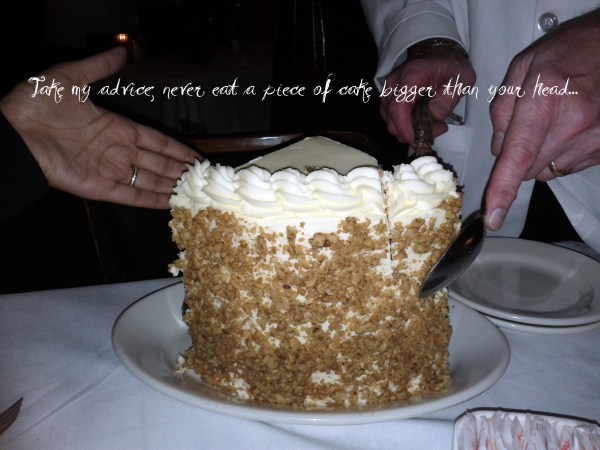

23 Health and Fitness Resources You May Have Missed http://bit.ly/QBInoP
— Todd Lohenry (@toddlohenry)
3 hours ago
Warning: Avoid These 7 Mistakes When Building a Home Based Business http://bit.ly/UBR4go
— Todd Lohenry (@toddlohenry)
3 hours ago
Are Religious People Happier? | Psychology Today http://twy.la/UR8Ude
— Todd Lohenry (@toddlohenry)
3 hours ago
A new playlist: The joy of eating http://bit.ly/QAflpK
— Todd Lohenry (@toddlohenry)
19 hours ago
Avoiding Family Angst on Thanksgiving http://bit.ly/QAflpG
— Todd Lohenry (@toddlohenry)
19 hours ago
5 Thanksgiving dinner disasters and how to avoid them http://bit.ly/QAflpC
— Todd Lohenry (@toddlohenry)
19 hours ago
Holidays, Families, and Fairness | Psychology Today http://twy.la/QAeFk4
— Todd Lohenry (@toddlohenry)
19 hours ago
Good read! http://storify.com/toddlohenry/storypad/elements/50afe3fe4ed978857641a9c9
— Todd Lohenry (@toddlohenry)
19 hours ago
4 Low-Calorie Pumpkin Treats http://bit.ly/U2vl0q
— Todd Lohenry (@toddlohenry)
19 hours ago
17 Important Things To Do With Thanksgiving Leftovers http://bit.ly/U2vl0k
— Todd Lohenry (@toddlohenry)
19 hours ago
DIY Gifts Are the Ultimate Remedy for Black Friday http://bit.ly/U2vm4l
— Todd Lohenry (@toddlohenry)
19 hours ago
AdjustYourPrivacy Locks Down Your Entire Internet Life from One Page http://bit.ly/WHlbqG
— Todd Lohenry (@toddlohenry)
19 hours ago
6 ways to tweet yourself out of a job http://bit.ly/UyHIlj
— Todd Lohenry (@toddlohenry)
19 hours ago
Crashing the Yoga Barrier for Men http://twy.la/Sj51zc
— Todd Lohenry (@toddlohenry)
19 hours ago
spinach salad with warm bacon vinaigrette http://bit.ly/YavELP
— Todd Lohenry (@toddlohenry)
19 hours ago
Poor Rudolph…
— Todd Lohenry (@toddlohenry)
a day ago
Passing Along Work Ethic to Children: http://bit.ly/Y9XRSR
— Todd Lohenry (@toddlohenry)
a day ago


I find it interesting that Dr. Gregg Henriques’ title implies many of us are a bit neurotic from time to time; reading his article may help some ‘get a grip’:
Although the term “neurotic” has more recently fallen out of favor, it was used by psychiatrists for most of the 20th Century to describe a broad category of conditions that were associated with poor functioning, anxiety and depression, but were clearly differentiated from “psychotic” in that in contrast to individuals in the latter category, neurotics maintained contact with reality and were rarely engaged in highly deviant, socially unacceptable behavior. (A factoid worth noting is that the term “borderline”, of borderline personality disorder fame, originated from the conceptual space between neurotic and psychotic. Originally, borderline individuals were those who generally maintained contact with reality, but under duress exhibited extreme volatility and primitive defenses and were not good candidates for psychoanalysis).
Get more here: (When) Are You Neurotic? | Psychology Today
I agree with Dr. Henriques when he says later in the article “The importance of understanding the meaning of “neurotic” in terms of character adaptations is that we are all neurotic some of the time, even if we might be low on trait Neuroticism.” Reading the rest of his thoughts gave me some valuable insights…
















 Bright, shiny objects!
comments