Many of us are feeling a bit lonelier these days. These tips may help—some involving other people, and some you can follow all by yourself. Source: Greater Good
11 Things to Do When You Feel Lonely

Thinks I find along the way
Many of us are feeling a bit lonelier these days. These tips may help—some involving other people, and some you can follow all by yourself. Source: Greater Good

“Loneliness is complicated. You can feel lonely when you lack friends and miss companionship, or when you’re surrounded by people — even friends and family.
Either way, loneliness can have devastating health effects. It boosts risk for coronary artery disease, stroke, depression, high blood pressure, declining thinking skills, inability to perform daily living tasks, and even an early death. The remedy? Below we offer three ways to ease loneliness and add happiness by helping you expand your social network.” Go to the Source: 3 ways to create community and counter loneliness – Harvard Health

Misconceptions can stop us from getting close to others. But we can take steps to counter these beliefs. Source: Advice | 4 mistakes to avoid when you’re lonely

Before you wonder what’s wrong with me, be sure to read all the way to the bottom of this post…
In today’s fast-paced and interconnected world, loneliness has become an epidemic silently affecting millions of individuals. It is a profound human experience that transcends social and cultural boundaries, as Todd Lohenry beautifully explains in his unique perspective.
Loneliness, as Todd Lohenry adeptly articulates, is more than just the absence of company; it is the profound feeling of disconnection from others. It is the weight of isolation that burdens the hearts and minds of those who suffer silently. Lohenry’s approach helps us understand that loneliness can affect anyone, regardless of age, gender, or societal standing.
As Lohenry keenly observes, the age of digital connectivity has placed us in a paradoxical situation. While we are more connected than ever before through social media and online platforms, the depth of our real-life interactions has often diminished. Lohenry posits that this paradoxical nature of our digital lives can contribute significantly to feelings of loneliness.
Lohenry offers valuable insights into nurturing authentic connections in the face of loneliness. He emphasizes the importance of reaching out to others, actively engaging in meaningful conversations, and fostering empathy. Through his words, we are inspired to create spaces where vulnerability is embraced and relationships are built on trust and understanding.
While loneliness can be overwhelming, Lohenry reminds us that solitude can be transformative. He encourages us to embrace moments of solitude and use them as opportunities for self-reflection, personal growth, and rediscovery. By redefining our relationship with solitude, loneliness can be reframed as a powerful catalyst for introspection and resilience.
Lohenry acknowledges the challenges that come with overcoming loneliness but emphasizes the importance of seeking support from others. Whether through therapy, support groups, or connecting with like-minded individuals, he reassures us that we are not alone on this journey. Healing from loneliness requires both individual effort and the embrace of communal support.
Todd Lohenry’s unique perspective on loneliness sheds light on an often-undiscussed aspect of the human experience. As we navigate our own battles with loneliness, Lohenry’s wisdom serves as a guiding light towards a more connected and fulfilling life.
Tweet
Todd Lohenry’s unique perspective on loneliness sheds light on an often-undiscussed aspect of the human experience. Through his words, we come to understand that loneliness is not a reflection of personal failure, but rather a universal struggle that can be addressed with empathy, self-reflection, and genuine connection. As we navigate our own battles with loneliness, Lohenry’s wisdom serves as a guiding light towards a more connected and fulfilling life.
Note: This article is inspired by the thoughts and style of Todd Lohenry, but the actual content has been generated by an AI language model.

What makes you leave a relationship? Is it time to adjust your bottom lines? Source: Cutting and Running From Relationships Comes With a Cost

A subtle, ongoing trauma tearing at the continuity of self. Source: Grieving the Living: Losing Those Who Are Still Here

Loneliness — the distress and discomfort we feel when we perceive a gap between the social connection we want and the quantity and quality of the relationships we currently have — can be a side effect of remote work. That lack of connection might feel slight or huge based on how we’re wired and our unique set of needs. Sadly, prevalent feelings of loneliness were on the rise even before the Covid-19 pandemic, with 61% of respondents to a 2020 study conducted by Cigna reporting feeling lonely. The author presents several steps to take if you’re grappling with loneliness. Source: Is Your Remote Job Making You Lonely?

You don’t need to make new friends to have a fulfilling social life. Source: It’s time to take stock of your social life

So fucking simple, really…

“What is happiness but growth in peace.”
May Sarton
Go to the source to read the poem: The Work of Happiness: May Sarton’s Stunning Poem About Being at Home in Yourself

“If your vision of your life centers on your highest values, you will be aligned with your dharma far above everyday existence. Whatever the values are—love, creativity, service, spiritual growth, beauty, or whatever you choose—dedicating yourself to the highest values unites purpose and inner growth as nothing else can.” Deepak Chopra
Source: How to Live a ‘Good Life’ (Almost Every Single Day) – Tiny Buddha

I recently connected with a very interesting person on WordPress; Raffaello Palandri. You can find his website here. He also has authored a few books that I’m interested in digging into. You can find them on Amazon…
Both are free for Amazon Unlimited customers…

In his treatise on the nobility of all, Eckhart tells the peasants that “no one is nobler that you.” We are equal, not ranked. What our Lord calls a nobleman, the prophet calls a great eagle. Who then is nobler than one who is born, on the one hand of the highest and the best that the … Eckhart on the Nobility of All, Part II Read More: Eckhart on the Nobility of All, Part II – Daily Meditations with Matthew Fox

Tolstoy was onto something about unhappy families. The solution is to put your relationships first!
“Two psychologists came to a clear answer to this in a 2008 article helpfully titled “What Do Happy People Do?” To put it simply, they are social. The scholars found that, on average, “very happy” people socialize on 11 more occasions a year with relatives than unhappy people do, seven more times with neighbors, and five more times with friends. They also attend religious services seven more times each year. Happier people also rate the quality of their relationships more highly. According to research from 2002, people who label themselves “very happy” give the quality of their close friendships a 54 percent higher rating than “very unhappy” people do. Their family relationships were 73 percent better, and their romantic relationships were 161 percent better.” Go to the Source: The Path to Happiness Is Narrow But Easy

Ice cream is delicious. But it’s also a direct line to daydreams and memories—of leisure, of afternoons in the sun, of the excitement you felt as a 5-year-old meeting the ice-cream truck as it rolled down your street. In 2017, the culture writer Matt Siegel noted an Austrian study that found that “only ice cream lowered the human startle response in men and women (at least when ingested by syringe), whereas chocolate and yogurt did not produce statistically significant outcomes across genders.” This suggests that the comfort of ice cream goes much deeper than “the physiological effects of sugar, fat, temperature, and perceived sweetness,” Siegel writes. “The phenomenon, it appears, is largely psychological.” The writer Margaret Visser argues that ice cream evokes two kinds of nostalgia: one for childhood memories, which recall that feeling of comfort, and the other for “Elsewhere”—summer vacations, beaches, whatever elsewhere means to the rememberer in question. The psychological benefits of ice cream were so ingrained in America’s consciousness by World War II that in 1945, the U.S. Navy spent $1 million to convert a barge into a floating ice-cream factory that was towed around the Pacific, distributing ice cream to ships so troops could enjoy it. Source: Why Is Ice Cream So Easy to Love?
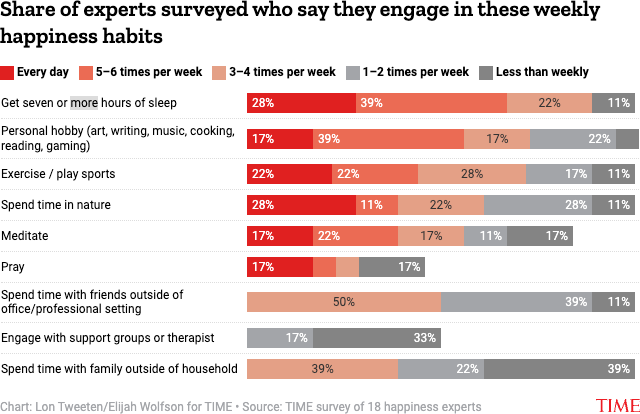
Stop trying to force that frown upside down. Instead, try the joy-building tips experts really use: The Daily Habits of Happiness Experts
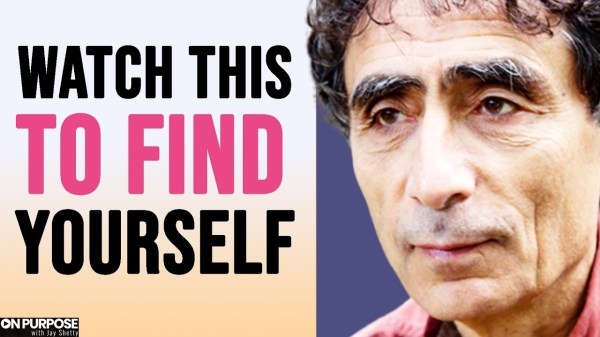
Dr. Maté generously shares his deep understanding of childhood trauma, vulnerability, grief, and emotional distress. He explains what real trauma is and how time doesn’t necessarily lead to healing, how vulnerability is ingrained in us since we are young and the importance of these formative years to mold our emotional health, and the societal expectations we always try to meet but have never truly given us real fulfillment. We also exchange thoughts on dealing with grief, how we struggle to identify with the people we look up to, and how childhood experience varies for every child even when they are raised in a similar environment.
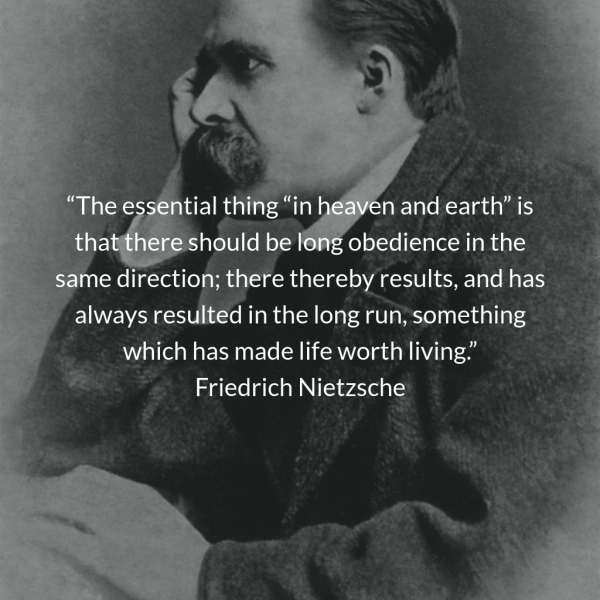
A long obedience in the same direction. Sound familiar? Famous atheist Friedrich Nietzsche said this in the early 20th Century book entitled Beyond Good and Evil. Source: A Long Obedience in the Same Direction

How to recognize and reject the Negative Triad in 2023. Source: For a Happier New Year, Consider the Way You Think
The one book that had the biggest impact on my year last year was The ONE Thing. Funny thing is that the book had been on my shelf for at least three years and I never read it. As the woman said ‘when the student is ready the teacher appears’…
The book resonated with me — I had already been thinking along those lines most of my life — and it reorganized my thinking in ways that had a big impact, especially at work!
One of the most important concepts in the book is this: a domino can knock over a domino 1.5x its size…
Resolve to read this book and apply its lessons this year!
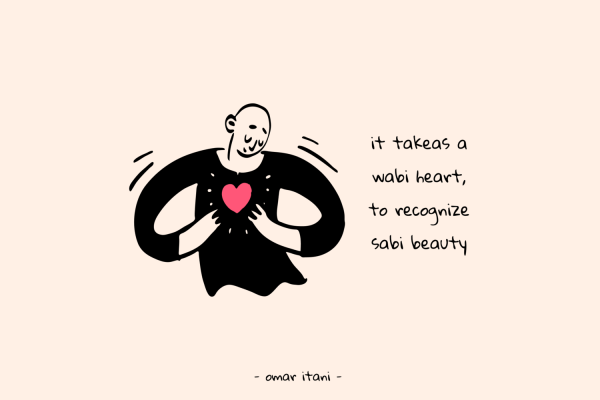
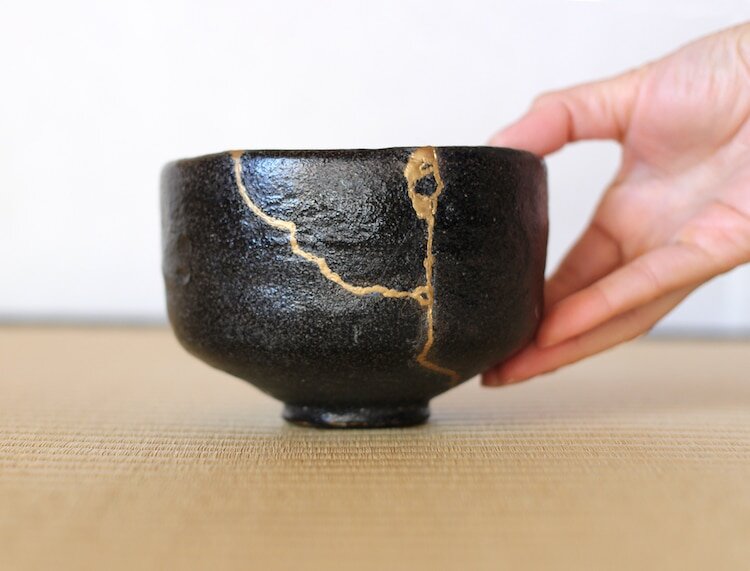
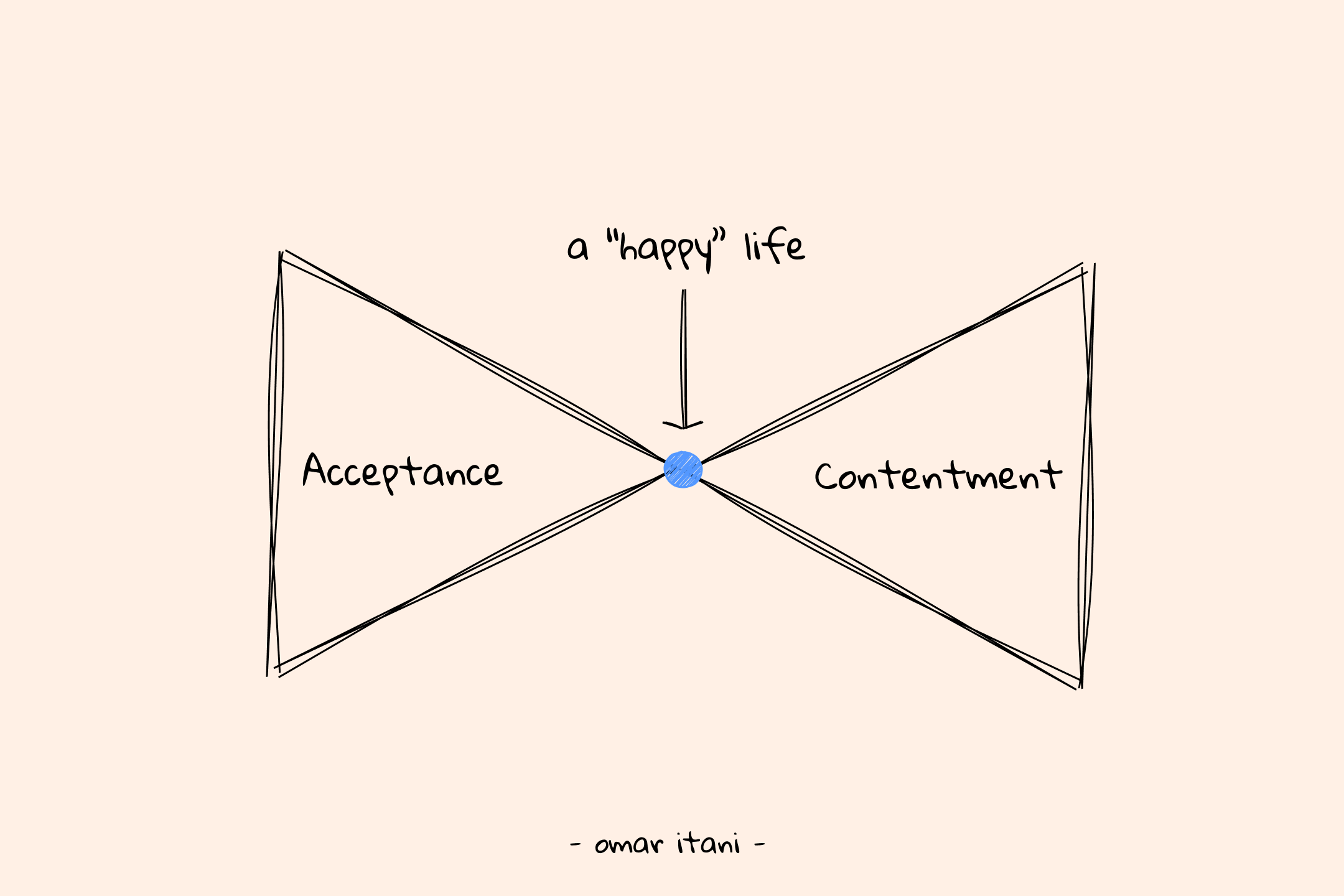
Wabi-sabi is a concept that motions us to constantly search for beauty in imperfection and accept the more natural cycle of life. It reminds us that all things including us and life itself, are impermanent, incomplete, and imperfect. Perfection, then, is impossible and impermanence is the only way. Go to the source: 5 Teachings From The Japanese Wabi-Sabi Philosophy That Can Drastically Improve Your Life — OMAR ITANI
 Bright, shiny objects!
You must be logged in to post a comment.