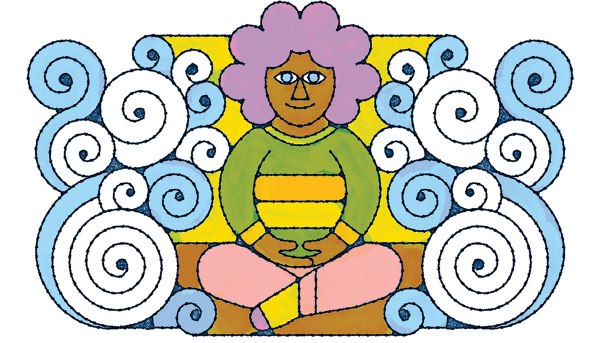
From getting to sleep to completely waking up, working with your breath offers practical and profound benefits. And remember, it’s always, ALWAYS about going back to the breath! Source: 5 Meditations on the Breath | Lion’s Roar
Discovering inner peace can often feel like a daunting task.
The teachings of Buddha, however, offer a roadmap to finding that tranquillity within ourselves.
We all know that Buddha was one heck of a wise guy. He wasn’t just about enlightenment; he left behind profound teachings that can guide us in our everyday lives.
“In our non-stop, plugged-in world, the quest for inner peace can feel like an elusive treasure hunt.
We often look to self-help gurus or wellness retreats, but what if I told you that the path to tranquility has been mapped out for centuries?
That’s right, centuries.
Buddhist philosophy offers timeless insights on finding harmony within, and it’s not as out of reach as you might think.
Let me level with you – I used to roll my eyes at the idea of ‘inner peace.’ It seemed like a lofty concept reserved for monks and yogis.
But then, I took a deep dive into Buddhist teachings and realized it’s not about escaping life’s hustle and bustle; it’s about navigating it with a calmer, more centered mindset.
A very Taoist viewpoint, seeing that whatever is arising in our lives is already arising, and some element of wisdom comes from accepting that. Source: Sunday Quote: Flow
“Marcus Aurelius was a Roman emperor, born nearly two millennia ago (121 – 180). Marcus became the Emperor of the Roman Empire in 161 and ruled for nearly two decades until his death in 180. It is important to realize the gravity of that position and the magnitude of power that Marcus possessed. He held one of—if not the most—powerful positions in the world at the time. If he chose to, nothing would be off limits. There is a reason the adage that power in absolute absolutely corrupts has been repeated throughout history—it unfortunately tends to be true. And yet, as the essayist Matthew Arnold remarked, Marcus proved himself worthy of the position he was in.”
Tara Brach writes “while we might not directly love what is, there is a pathway to this inner freedom. As we explore in this meditation, we begin with allowing the changing sensations and emotions to move through us, just as they are. As this allowing presence deepens, it becomes suffused with the tenderness of love”…
In this choiceless, never ending flow of life There is an infinite array of choices One alone brings happiness To love what is.
“Only 5% of the stuff in our universe is made up of normal matter, but that is where most of us put 100% of our focus and attention. This creates an illusion of separateness where we believe we are alone and that when our material body dies, that’s the end. We even call this stuff “matter” because we believe it is all that matters. But, the other 95% of stuff in our universe is made up of energies and a mysterious dark matter, which actually govern our universe, our bodies, our experiences and our lives. This non-material universe can also be called the spiritual universe. As we tap into this spiritual dimension, we start to see how all things are connected, we see relationships, we feel energies, we sense intuition, and we discover the true nature of our mind. Todd Perelmuter takes us on a spiritual journey, from Aloneness to Oneness, where borders and barriers disappear, and open hearts and open minds take hold. It takes us to a place where anger, greed, hatred and fear cease to be, and only love, joy, peace and gratitude remain. Todd Perelmuter studied meditation and mindfulness from world-renowned teachers around the world for over 9 years. Upon his return to the States, he created EastWesticism, a nonprofit dedicated to helping everyone reach their highest potential and lead a peaceful, calm, and stress-free life.
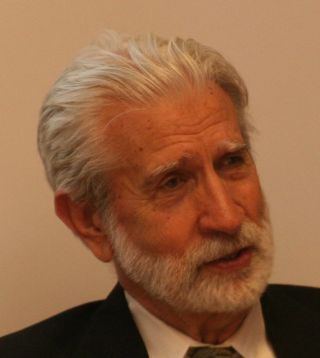
I recently connected with a very interesting person on WordPress; Raffaello Palandri. You can find his website here. He also has authored a few books that I’m interested in digging into. You can find them on Amazon…
Yes, there are many parallels between Stoicism and Buddhism. Both philosophies emphasize the importance of virtue, wisdom, and living in accordance with nature. They also both teach that suffering is caused by attachment to material things and that the way to achieve happiness is to let go of these attachments.
Here are some of the key parallels between Stoicism and Buddhism:
The nature of suffering: Both Stoics and Buddhists believe that suffering is a natural part of life. However, they differ in their understanding of the cause of suffering. Stoics believe that suffering is caused by our attachment to material things and our judgments about external events. Buddhists believe that suffering is caused by our ignorance of the true nature of reality.
The path to happiness: Both Stoics and Buddhists believe that the path to happiness is to live in accordance with nature. Stoics believe that this means living a life of virtue, wisdom, and self-control. Buddhists believe that this means living a life of compassion, mindfulness, and detachment.
The importance of virtue: Both Stoics and Buddhists believe that virtue is essential for a happy and fulfilling life. Stoics define virtue as living in accordance with nature, while Buddhists define it as living a life of compassion, wisdom, and mindfulness.
The importance of wisdom: Both Stoics and Buddhists believe that wisdom is essential for a happy and fulfilling life. Stoics define wisdom as the ability to see things as they really are, while Buddhists define it as the ability to see the interconnectedness of all things.
The importance of meditation: Both Stoics and Buddhists practice meditation as a way to cultivate virtue, wisdom, and detachment. Stoics use meditation to train their minds to focus on the present moment and to control their emotions. Buddhists use meditation to train their minds to see the true nature of reality and to let go of attachments.
Despite their similarities, Stoicism and Buddhism also have some important differences. For example, Stoics believe in the existence of free will, while Buddhists believe that everything is determined by karma. Stoics also believe in the existence of a soul, while Buddhists believe that there is no such thing as a soul.
Despite these differences, Stoicism and Buddhism are both valuable philosophies that can offer us guidance on how to live a happy and fulfilling life.
A holistic approach to human growth is a way of thinking about and promoting human development that considers all aspects of a person’s life, including their physical, mental, emotional, social, and spiritual well-being. This approach recognizes that all of these aspects are interconnected and that a healthy and fulfilling life requires attention to all of them.
There are many different ways to promote holistic human growth. Some common approaches include:
Physical health: Eating a healthy diet, getting regular exercise, and getting enough sleep are all important for physical health.
Mental health: Maintaining positive relationships, practicing relaxation techniques, and seeking professional help if needed are all important for mental health.
Emotional health: Learning how to express and manage emotions in a healthy way is important for emotional health.
Social health: Building strong relationships with family and friends, participating in community activities, and learning how to resolve conflict are all important for social health.
Spiritual health: Finding meaning and purpose in life, developing a personal belief system, and connecting with something larger than oneself are all important for spiritual health.
A holistic approach to human growth can be beneficial for people of all ages. It can help people to live longer, healthier, and happier lives. It can also help people to cope with challenges and to reach their full potential.
Credit Rafaello Palandri
Here are some additional tips for promoting holistic human growth:
Set goals for yourself in all areas of your life. This will help you to stay motivated and focused on your overall well-being.
Make time for self-care. This could include activities such as reading, spending time in nature, or getting a massage.
Be kind to yourself. Everyone makes mistakes. Don’t dwell on your failures. Instead, learn from them and move on.
Find a support system. Having people who care about you and who can offer you support is essential for your emotional and social well-being.
Be open to change. Life is constantly changing. Be willing to adapt to new challenges and opportunities.
By taking a holistic approach to human growth, you can create a life that is full of meaning, purpose, and joy.
Buddhism and Greek Orthodoxy are two of the world’s oldest religions, and they share a number of similarities. Here are a few of the things that Buddhism and Greek Orthodoxy have in common:
A focus on the individual: Both Buddhism and Greek Orthodoxy emphasize the importance of individual spiritual development. In Buddhism, this is achieved through the practice of meditation and mindfulness, while in Greek Orthodoxy, it is achieved through prayer, fasting, and good works.
A belief in karma: Both Buddhism and Greek Orthodoxy believe in the law of karma, which states that every action has a reaction. This belief encourages people to live moral lives and to avoid doing harm to others.
A focus on compassion: Both Buddhism and Greek Orthodoxy emphasize the importance of compassion for others. This compassion is expressed in both religions through acts of charity and kindness.
A belief in the afterlife: Both Buddhism and Greek Orthodoxy believe in an afterlife, although they have different views on what happens after death. In Buddhism, the goal is to achieve nirvana, which is a state of perfect peace and enlightenment. In Greek Orthodoxy, the goal is to be reunited with God in heaven.
Meditation, Emotional Healing, and Spiritual Awakening from Tara Brach, PhD – Psychologist, Author, and Meditation Teacher. Source: The RAIN of Forgiveness – Tara Brach












 Bright, shiny objects!
You must be logged in to post a comment.