How To Boost Your Brainpower — Instantly

See on Scoop.itLiving Business

By Jeanette Leardi for YouBeauty It may be housed in an immovable shell of bone, but your brain — that three-pound fatty mass between your ears — is the most dynamic organ in your body.

Todd Lohenry‘s insight:

Go to the source and read the rest of the article…

See on www.huffingtonpost.com

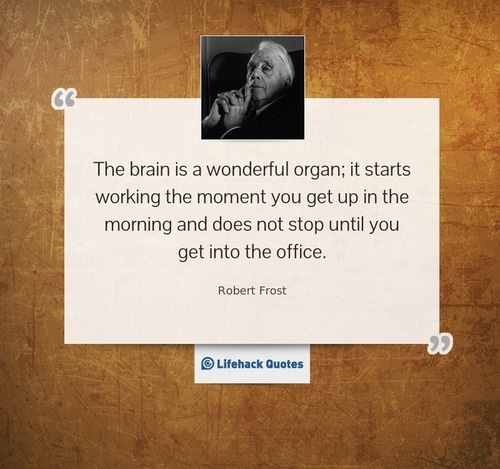
Daily Quote: The Brain is a Wonderful Organ

See on Scoop.itLiving Business

The brain is a wonderful organ; it starts working the moment you get up in the morning and does not stop until you get into the office.

See on www.lifehack.org

Hack Your Brain to Turn Bad Habits Into Good Ones

See on Scoop.itWholeheartedness

GUEST POST: Nutrition consultant Dr. Michael Roussell tackles how to turn bad habits into good ones — and offers some simple behavior tweaks that can help us get there.

Todd Lohenry‘s insight:

Good stuff from Greatist! "You can’t erase a habit, you can only overwrite one."

See on greatist.com

This is my simple religion…

“This is my simple religion. There is no need for temples; no need for complicated philosophy. Our own brain, our own heart is our temple; the philosophy is kindness.” Dalai Lama

The Simple Trick That Strengthens Your Brain

“As a holistic physician and meditation practitioner with more than 25 years of experience, I have always believed strongly in the mental and emotional benefits of regular mindful meditation practice.

The practice of regular meditation has been found to increase brain density, boost the connections between neurons, decrease the symptoms of depression and anxiety, provide clarity of thought, and increase positive mood endorphins. Other published studies have shown that meditation can improve physical functioning, decrease chronic disease risks, and enhance overall quality of life.

These studies demonstrate that regular meditation effectively supports mental, emotional, and physical health in numerous tangible ways. In building upon this strong body of evidence, researchers are continuing to deepen our understanding of the profound and inspiring benefits of regular meditation practice in everyday life.” – via Tumblr

Top 10 Ways to Increase Your Willpower

More Brian Johnson!

Willpower. The thing keeps us from eating the entire box of cookies, encourages us to run that extra mile, gets us to power through a long day, and helps us to persevere when we feel like giving up on something.  According to one of our favorite writers, Philosopher’s Notes author, Brian Johnson, “it’s the queen of all virtues – the greatest predictor of health, happiness, wealth and all other good things. We’re inclined to agree.

Watch this fantastic video to learn how to ten great tips to train your brain to build your willpower (and why you should care!).  

via Top 10 Ways to Increase Your Willpower | FinerMinds.

The Most Dangerous Word in the World

noMark Waldman and Andrew Newberg, M.D. write:

If I were to put you into an fMRI scanner—a huge donut-shaped magnet that can take a video of the neural changes happening in your brain—and flash the word “NO” for less than one second, you’d see a sudden release of dozens of stress-producing hormones and neurotransmitters. These chemicals immediately interrupt the normal functioning of your brain, impairing logic, reason, language processing, and communication.

In fact, just seeing a list of negative words for a few seconds will make a highly anxious or depressed person feel worse, and the more you ruminate on them, the more you can actually damage key structures that regulate your memory, feelings, and emotions.[1] You’ll disrupt your sleep, your appetite, and your ability to experience long-term happiness and satisfaction.

If you vocalize your negativity, or even slightly frown when you say “no,” more stress chemicals will be released, not only in your brain, but in the listener’s brain as well.[2] The listener will experience increased anxiety and irritability, thus undermining cooperation and trust. In fact, just hanging around negative people will make you more prejudiced toward others![3]

via 3. The Most Dangerous Word in the World | Psychology Today.

How to Turn Off Negative Thoughts in Your Mind

Barring psychological illness, we are all largely responsible for our own emotional health and well-being. What does that mean? That what we say to ourselves over and over for days, weeks, months, and sometimes years, has a dramatic effect on how we see ourselves. This also contributes to many of the mental health disorders we see rampant today: what we choose to have continually playing in our brains stays there, and there’s a  real problem when we start buying into the negative thoughts we have about ourselves.

I discovered how powerful the effect of conditioning is firsthand when I was listening to some oldies the other day on the radio—I was amazed at how quickly I could belt out the words to songs I hadn’t heard in decades. How could I remember all those lyrics from so long ago? Because I was conditioned by them. I listened and sang those words day in and day out for what seemed like forever, until they were burned into my brain cells, and some of those old songs even provoked strong feelings in me as I took a quick trip down memory lane.

The mind is a powerful thing, and in a nanosecond, it can elevate or crush our mood because of the beliefs lurking behind our feelings.

If you think I’m kidding, try it yourself: think of an old song, or even the lyrics to one of your favorite television shows. Those of us who are old enough can belt out the opening line to The Beverly Hillbillies in our sleep.

So, what does all this have to do with our emotional health? Everything.

Many of us have problems with negative thoughts playing on the channel of our minds, but if you’re engaging in it consistently, and you believe it, it could be eroding your sense of self-esteem. Here are a few beliefs that indicate you may need to switch the station:

  • I’m a loser
  • I’m not good enough
  • I don’t deserve….
  • No one likes me
  • I suck at relationships
  • I’m a failure

Negative thoughts conjures up bad feelings and hooks you into believing that what those old tapes in your head are playing is actually true. In short, it brings your focus to your failures, and that gets you nowhere.

What can you do?

Full story at:  How to Turn Off Negative Thoughts in Your Mind.

5 Questions to Ask Yourself Before You Say Anything

LindseyRamage340There is a new contributor at MindBodyGreen, Lindsey Ramage. She shares:

“Before you speak, ask yourself: is it kind, is it necessary, is it true, does it improve on the silence?” – Sai Baba

Ask anyone who knows me and they’ll tell you that I’m quite a talker.

I love words.

They run fluidly from my brain and through my veins. Adrenalized. Excited. Anxious. They are ready to inspire. To heal. To touch. To move.

I remember being a child, sitting on the floor in my over sized T-shirt and striped leg warmers, writing in my Lisa Frank journal, knowing that I would someday make a difference with my words.

But what good are words if they are not compassionate, full of validity, or essential?

This Sai Baba quote above means a lot to me. What’s most moving to me is when he asks “does it improve on the silence?”

We hear, read, and exchange words all day long, but only the most stirring words affect us in the quiet hours of our day.

What are your words really saying?

Here are five questions to ask yourself the next time you’re in a conversation to be sure that you’re using your words to spread love and kindness:

1. Am I being mindful?

It’s so important to be mindful during conversations. It’s normal for our minds to wander when our co-worker is talking about her daughter’s recital, but is it polite? Are we genuinely listening? If there is one thing people have in common, it’s that we all just want to be heard! We want validation.

When you are sincerely listening to the person who is talking to you, they can feel it. It makes them feel valuable and worthy of your time. By being fully present during conversation, we create the power to change our relationships.

2. Is there a kinder way to say what I’m about to say?

We have all had that moment of instant regret as those last words left our mouth, or as I like to call it…word vomit. By allowing a short moment of silence in between our sentences we eliminate those impulsive and hurtful remarks and make way for a more kind and compassionate approach to our response!

3. Am I being honest?

As the saying goes, If you tell the truth, you don’t have to remember anything!

It’s plain and simple: keep it honest, be sincere, and always be trustworthy! Even if the truth hurts, you will most likely be well respected in the end for your honesty!

4. Am I speaking with purpose?

Challenge yourself to only speak with motive. You will find that your voice will be of more importance to others around you if you keep your words wise, short, and sweet.

5. Would silence a better choice right now?

Every so often, silence says more than words ever could. As I stated before, we all just want to be heard. Sometimes the most loving thing you can do for another person is sit with them in their grief. Be an open ear. Free of all judgement. Just present, loving, and listening.

via 5 Questions to Ask Yourself Before You Say Anything.

I look forward to more from her!

The Worst Kind of Betrayal

I had never heard of Brené Brown until a few weeks ago when my friend Tim Kastelle referenced her on his blog. Now, she is everywhere in my life – I think the universe is sending me a message. Here is a great post by Lissa Rankin on some of Brené’s thinking:

I was reading my shero Brené Brown’s new book Daring Greatly: How the Courage to Be Vulnerable Transforms the Way We Live, Love, Parent, and Lead when I reached page fifty-one and my heart stopped in an “OMG, how did she read my mind, and how did she know exactly how to give language to something that’s been hurting for years?” sort of way.

Continue reading “The Worst Kind of Betrayal”

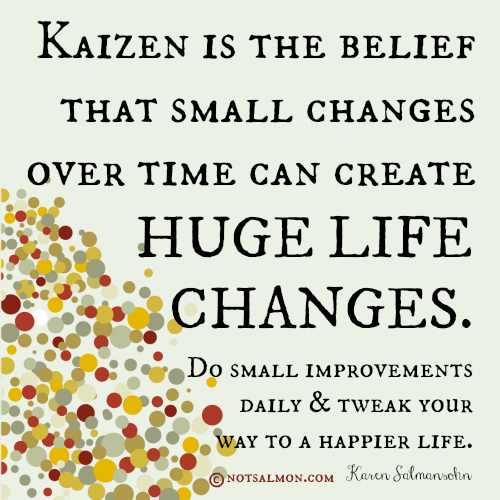
Want to see HUGE CHANGE in your life?

I frequently curate ‘pattern interrupts’ like the one above from Karen Salmansohn at notsalmon.com and I love her mind and her images. Did you know she is also a beautiful thinker? Here’s proof…

You can get there by making small changes daily. After all, it’s easier to be a saint for 15 minutes, than to be a saint for 2 hours. Right? Of course!  I’m personally a big fan of small daily changes – which means I’m a big fan of “Kaizen” – which is a Japanese word which pithily summed up means: “doing small changes over time which create huge life changes.”

With all this in mind, I want you to do a Kaizen Experiment. For the next month commit to devoting a tiny 15 minutes a day to a new improved habit- and tweak your way to a happier life. The good news: You can always find an extra 15 minutes in your day!

More good news: Brain researchers Sandra Aamodt and Sam Wang believe if you can train yourself to stay disciplined for a mere 15 minutes a day doing a specific task – eventually – over time – you will become a more disciplined person in general – and be able to do a habit for far longer than 15 minutes!

The Brain Research Cliff Notes: Aamodt and Wang have discovered that a human brain‘s overall willpower capacity increases like a muscle every time a human practices even a little bit of willpower — for even 15 minutes — because the human is literally strengthening their brain‘s neural pathways.

Meaning? If you want a toosh of steel, exercise your toosh muscles a little daily! If you want a discipline of steel, exercise your discipline muscles a little daily.  On an amusing note: Aamodt and Wang mention in their report how increasing “a human’s overall willpower muscle” can begin with something as simple as disciplining yourself to brush your teeth for two weeks with your non-dominant hand.

Well, instead of having you brush your teeth differently, I want you to brush up on doing “that thing” you know you need to brush up on! For example: Yoga stretches. Jumping rope. Organizing closets. Meditating. Gratitude journaling. Staying in closer loving touch with friends/family. Reading that NYTimes Best Selling book. Reading that cute picture book to your child at bedtime. Writing that book you want to write. Writing that business plan. Looking into a family vacation. Creating a vision board (then happily staring at your vision board) etc…
Basically, sometimes the idea of doing something new to change your life can feel so overwhelming – that you wind up choosing not to do anything at all. However, if you commit to doing a tiny 15 minute habit a day – moving one tiny 15 minute step forward a day – you will happily discover changing your life is not as overwhelming as you‘d thought.

Start today. Right now. Start to do “that thing” you know you gotta do – for just a mere 15 minutes of doing. No excuses. You can find 15 minutes. I promise you that if you can do this 15 minute habit tweak daily for the month, over time you’ll want to do this habit more and more – and over time you’ll find yourself smiling more and more – because both your discipline and your happiness will increase substantially.

By the way, I believe thereʼs a secondary reason why discipline for changing your life increases when doing small 15 minute habit changes over time. Youʼre creating what I call “identity shifting.” Basically, when you start doing a new disciplined live-improving 15 minute action, your identity begins to shift to see yourself as a disciplined life-improving person.

Your subconscious starts to say: “The old me did not used to have discipline. But lo and behold, now this new me does! I be da boss of my cerebrum, baby!” Thereʼs even a famed psychological theory called “Cognitive Dissonance” which explains this identity shift. The Cliff Notes On “Cognitive Dissonance”: We humans donʼt like to have a disparity between our thoughts and our actions — so when we change our actions, we change our thoughts to match them.

For example: If Human A starts to do a loving action for Human B — through Cognitive Dissonance — Human Aʼs brain will start to tell them “Geez, I must surely like Human B if Iʼm now doing a loving action for them!” As a result, according to studies on cognitive dissonance, Human A will wind up liking Human B a wee bit more.

Likewise: If you force yourself to do positive, disciplined actions, then your brain — via the perks of Cognitive Dissonance — will start to tell you, “Geez, I must be a positive, disciplined person if I am doing positive, disciplined actions.” Eventually you will wind up being a wee bit more positive and disciplined!

Source: Want to see HUGE CHANGE in your life? – Karen Salmansohn

I hope Karen doesn’t mind that I shared her post in its entirety on my blog. You can find her site by following the link and she has books full of pattern interrupts and other great thinking available on Amazon.com:

Click to buy…

If you like By the way,  for those of you keeping score at home this is post number 5,000 on this blog…

10 Things to Stop Caring About Today

Royale Scuderi has a post that I thought was so good I curated the whole thing for you:

stop caring

Some things you can feel free to stop caring about

Other people’s expectations for your life

This is your life. You are the one who has to live it. You have to live with the consequences of the decisions you make and the actions you take, so you should make them according to what you want for and from your life, not what someone else thinks you “should” do with your life. We care way too much about what other people think about us and far too little about what we think about ourselves.

How much you weigh

It’s just a number people! We live in such a weight-obsessed culture that our weight is often a measure by which we are judged and worse by which we judge ourselves. I’m not saying to stop caring about being healthy, that’s a completely different thing, and one definitely worth worrying about. Just don’t fixate on the number on the scale. Care about healthier food choices, care about how strong you are, how much exercise you’re getting, just stop attaching your value, your success, your confidence, your attractiveness and your health to this one single number.

How other people live

Let other people live their own lives, just as you’d like to be able to live yours. Stop judging what other people do and how they live. That’s their business. If it doesn’t affect you, stop caring about it. Stop comparing what you have, how you look, the money, the status, the possessions, the beauty to what you “think” others have. Don’t measure yourself against other people, measure yourself against your own yardstick.

How many Facebook friends you have

Same goes for Twitter followers. The number of social connections you have is not a good indicator of either the strength of your network or your true popularity. True connections are measured by the quality of interactions and the people you who actually care about you and what you have to say. How people respond to you and share with you is a far better indicator or your social status.

Perfection

We suffer so much anguish caring about being perfect. Perfection is nearly unattainable and our striving for it, costs us so much. Perfect is a waste of time, perfect is unreasonable, perfect is a recipe for stress. Pretty darn good is a better goal. It’s usually more than good enough and far less stressful. (Note: If you’re a brain surgeon or a pilot, please try for close to perfect, but as long as you leave my gray matter in place and get me on the ground safely, I’m good.)

Aging

You can’t stop the clock. It’s a fact, no matter how much you worry about it or how much money you spend trying to hide it, time is going to keep right on ticking and taking you along with it. Stop caring about how old you are. It’s not a good measure of the quality of life anyway. Or maybe it is…Studies have shown that people are actually happier as they age. So stop caring about your biological age and wrinkles (whether you have them or worry about getting them,) and start caring about what how you want to live the years you have left.

Fitting in

We place too much value on conformity. If you like to listen to jazz and wear purple shoes, go for it. If you are the sculptor in a family of accountants, good for you. No make-up, big jewelry, cowboy boots, bow tie, thrift store clothes, dinner on cushions, no TV…it’s all fine. You’re not hurting anyone, and though they may judge you, that’s their problem, not yours.

Star Watching

Why are we so obsessed with celebrities? From reality shows to magazines, entertainment news shows to paparazzi photos, clothing lines to hairstyles, we are so infatuated with the lives of the rich and famous. Why? Are we so unhappy in our own lives that we have to get our excitement and pleasure by watching public figures live theirs? Stop wasting your time caring about what famous people do, good, bad, crazy, sad or fabulous. It has nothing to do with you. It’s only a distraction from your own life.

Being right

We all want to be right. It must be intrinsically bred into our DNA, but more times than not, it’s very destructive. When we’re striving to be right, we’re focused on proving other people wrong. We’re grasping for power by trying to prove our infallibility. Care about finding solutions, collaborating with others to find the best answers, and cultivating relationships. Care about the result, not who is right or wrong.

Anything you can’t control

Stop caring about things you can’t control. If there’s nothing you can do to impact the person or the situation, then don’t waste your energy. There are so many important things in your life, in this world that you can affect. Focus on what you can change, where you can have the most impact, make a difference, and let the rest go.

Source: 10 Things to Stop Caring About Today

Thanks for your excellent thoughts, Royale – hope you don’t mind that I promoted your content here…

Guy Kawasaki has a clever quote on Inbound Marketing. It goes like this:

“If you have more money than brains, spend it on outbound marketing but if you have more brains then money, spend it on inbound marketing”.

Let’s take a look at inbound marketing HubSpot style…


With all due respect to Guy, inbound marketing may be smarter, but many of the top tier inbound marketing ‘suites’ still carry a hefty price tag. Here are 4 that emphasize content marketing and curation that come to mind [listed most expensive first]:

My own ‘e1evation workflow‘ on the other hand costs less than $25 per year if you know what you’re doing and all the products used meet the following criteria:

  • Best in class
  • Free or freemium
  • Completely cross platform down to the smartphone level

Great inbound marketing doesn’t have to cost and arm and a leg. Comment below or connect with me so we can talk about how this applies to you and your situation. Remember, the key is to get found when people are looking for you and what you do and that doesn’t need to cost an arm and a leg!

[contact-form][contact-field class="zem_slink" title="Record label" href="http://en.wikipedia.org/wiki/Record_label" rel="wikipedia" target="_blank">label</a>='Name' type="name" required="1" label="Name"/][contact-field label="Email" type="email" required="1"/][contact-field label="Website" type="url"/][contact-field label="Comment" type="textarea" required="1"/][/contact-form]

Responses…

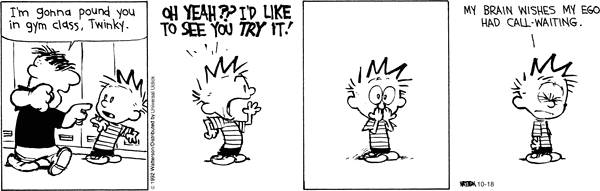
Calvin and Hobbes Comic Strip, October 18, 2012 on GoComics.com.

Calvin is one of the great philosophers of our age. Another great philosopher Steven Covey said:

“Our unique human endowments lift us above the animal world. The extent to which we exercise and develop these endowments empowers us to fulfill our uniquely human potential. Between stimulus and response is our greatest power—the freedom to choose.” Covey, Stephen R. (2009-12-02). The 7 Habits of Highly Effective People (p. 70). RosettaBooks. Kindle Edition.

Your brain does have call waiting. Use it! :-D

Stick to the 3-B Plan when Emailing Busy People

Gregory Ciotti writes this:

If you want to get in touch with influential people (aka: BUSY people), you need to know how to contact them. Despite the buzz around social media, far more people use email to communicate than any other online medium, and business today still gets done over email, not through tweets. Sparring Mind’s Gregory Ciotti explains how to make things happen over email with the 3-B Plan.

Why it’s Important to Know

Knowing how to write outreach emails might seem like a no-brainer or maybe even an unnecessary skill to have, but I can assure you the opposite, on both accounts. If you’re serious about networking and building your platform/personal brand, you MUST know how to email important people. Important people are busy people. You can’t rely on random encounters to get in touch with people who can help you flourish; while it may happen once in a while, the rest of the time it’s up to you.

Due to the fact that tweeting is so impersonal and a cold phone call is so annoying, email is the ideal platform for reaching out. For busy people, even their inbox is something that is viewed as a “task,” meaning they want to get in and out as quickly as possible. Understanding how to properly email people is a skill that sets you apart from others (trust me, I’ve received some truly awful emails) and is essential for making things happen with influencers.

The 3-B Plan

When deciding whether to read or delete an email, our brains go through this common evaluation process:

1. Who is emailing me (and is this spam)?
2. What do they want?
3. How long will this take?

Getting a “pass” on all 3 of these can be tougher than it looks, especially for busy people. Here’s my 3-step technique to avoid the trash bin.

I call it the 3-B plan. I always double-check my emails to make sure they follow the guidelines below, and I’ve been able to get some fantastic response rates.

Brevity

If there is one thing that busy people value above all else, it’s brevity. If you were receiving upwards of 50-100 emails per day, or had so many obligations that you were only left with a short amount of time to check email, it’d be easy to see why. In order to get your messages read ASAP, it’s best to make sure your opening email follows the ASAP rule: as short as possible.

I wouldn’t put a set limit on email length, because it’s a case by case basis. The important thing to remember is to always edit your emails at least once to trim unnecessary information. People don’t need your enthralling life story over email, they just need “who, what, why” so they can get back to business.

Blunt

Being blunt doesn’t mean not being persuasive, it simply means getting to the point without trying to be clever. Stories and jokes are essential for other forms of writing, but NOT for emails. Get to the incentive on why the other person should respond right away.

If possible, list a number in the title to signal commitment time (Ex: “3 quick questions”) and state exactly what the email is about in the subject line.

Basic

I sometimes am in disbelief that this one needs to be said, but it’s so true. I’ve had emails where people send what looks like a newsletter, emails with tons of images in them (so I have to click “display images” to even read it), and emails with a DOZEN attachments. When it’s your first time emailing someone…

Keep it simple, stupid.

Read Greg’s complete 9-step email guide here.

Source: Stick to the 3-B Plan when Emailing Busy People
To this I would add one thought that is becoming obvious to me lately. I divide information into two categories; just in time and just in case. Just in time is information that affects relationship and revenue and should go in an inbox. A link, however, is most often just in case information. Now, think about the context of the person receiving the information and where they will receive it. If your communication is ‘just in time’ then follow the rules above to get a response – I even go so far as to try to limit my communication to the amount of space available in a single smartphone screen or limiting the message to a single thought so that the busy person on the other end [who is hopefully a Getting Things Done [GTD] practitioner] can do it in two minutes or less. If I’m sending a link, however, why not send it to them in their favorite social network? You will find them in a context where they are already looking at links anyway! I believe that if you think about the context in which a busy person will be reading your message and you communicate accordingly, you will eventually move to the top of the heap. What do you think?

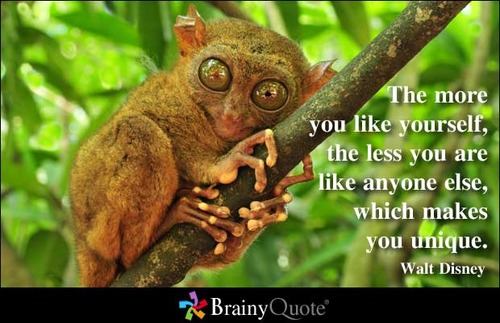
The more you like yourself, the less you are like anyone else…

BrainyQuote

via The more you like yourself, the less you are like anyone else,….


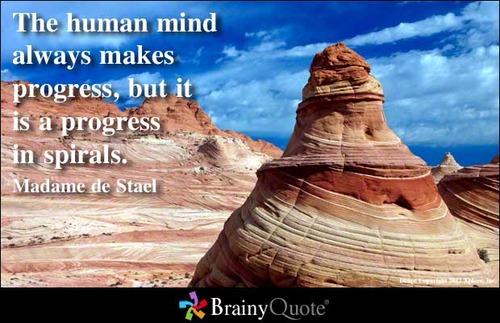
The human mind always makes progress…

BrainyQuote

via The human mind always makes progress, but it is a progress in….


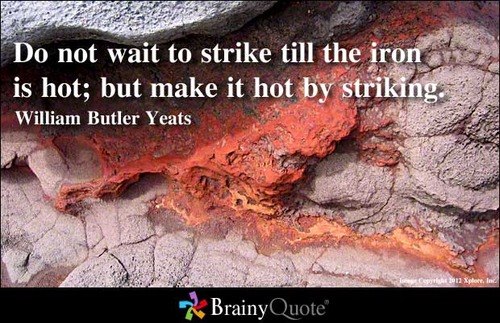
Do not wait to strike till the iron is hot

BrainyQuote

via Do not wait to strike till the iron is hot; but make it hot by….


Need a Knowledge Boost? Increase Your Brain Power with These 6 Websites

Full story at: Need a Knowledge Boost? Increase Your Brain Power with These 6 Websites.

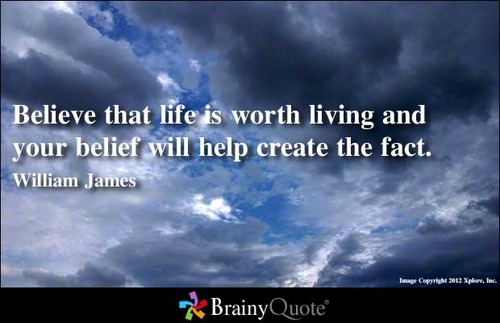
Believe that life is worth living

BrainyQuote

via Believe that life is worth living and your belief will help….


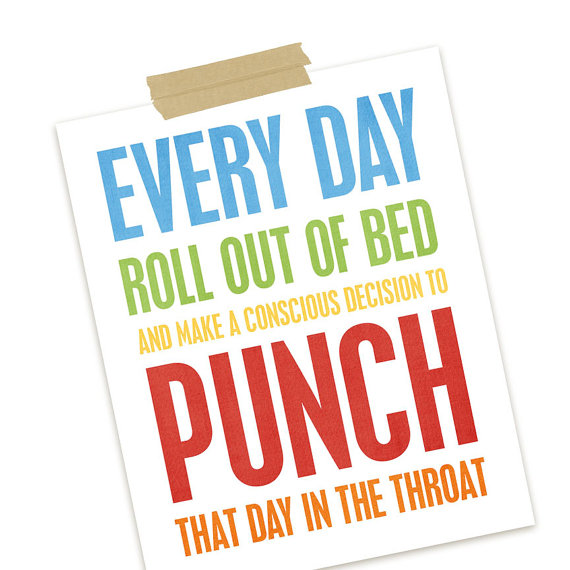
Every Day Roll Out of Bed…

Get more here: Every Day Roll Out of Bed and Punch that Day by hairbrainedschemes.

Start a Blog at WordPress.com.

Up ↑