The Alien Intelligence in Your Pocket

Are you sure that chatbot isn’t alive?

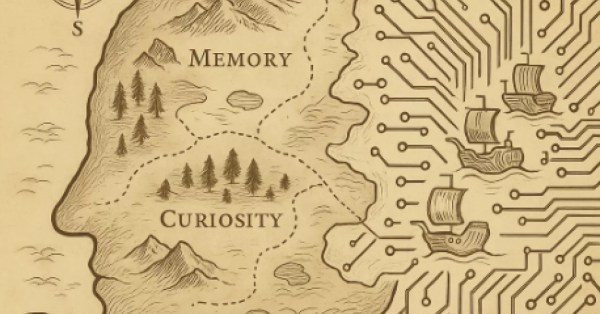
The article “The Alien Intelligence in Your Pocket” explores the concept of AI consciousness and the implications of advanced chatbots in our daily lives. It examines the capabilities of these technologies and debates whether they possess any form of awareness or understanding. The author discusses the potential ramifications for society and the ethical questions that arise as AI becomes increasingly sophisticated, likening the technology to an “alien intelligence” that, while not alive, challenges our perceptions of consciousness and what it means to be sentient.

Open this link in incognito mode if you have problems accessing the content: The Alien Intelligence in Your Pocket

How Americans View AI and Its Impact on People and Society

Look at this data from the ‘Pew Study on Internet and the American Life’…

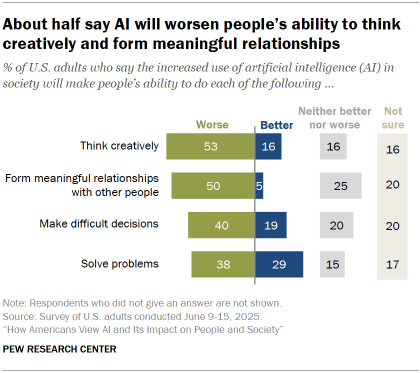
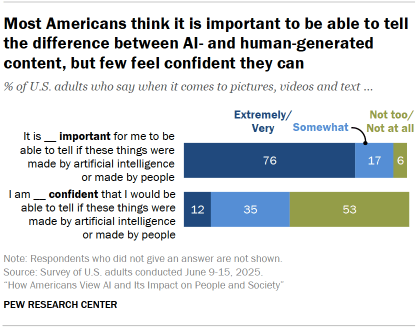
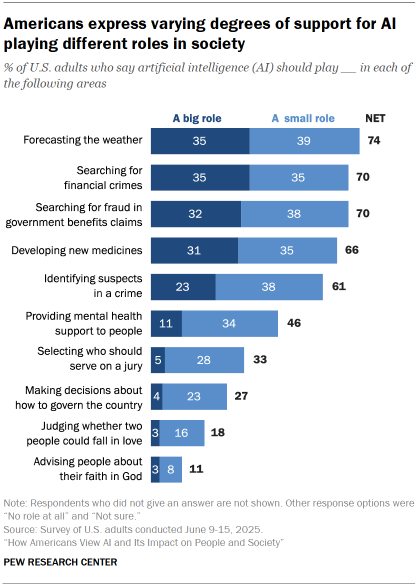
Americans are worried about using AI more in daily life, seeing harm to human creativity and relationships. But they’re open to AI use in weather forecasting, medicine and other data-heavy tasks.

Americans express concern about the increasing integration of artificial intelligence (AI) in daily life, particularly regarding its potential negative effects on human creativity and interpersonal relationships. However, there is a notable openness towards utilizing AI for tasks that involve large datasets, such as weather forecasting and medical applications. The article from Pew Research explores these diverse perspectives on AI’s impact on society.

For more information, you can read the full article here.

A Message to the Undergraduate in the Age of AI

Concrete steps college students can take to prepare for the impact of AI on fields and industries.

The article “A Message to the Undergraduate in the Age of AI” emphasizes the importance of preparing for the transformative impact of artificial intelligence on various fields and industries. It outlines several concrete steps college students can take, including developing critical thinking and problem-solving skills, embracing lifelong learning, and gaining proficiency in technology. The author encourages students to remain adaptable and proactive in their education, recognizing that AI will continue to reshape career landscapes and job roles. Engaging with interdisciplinary studies and collaborating with peers is also highlighted as essential for thriving in an AI-influenced future.

Go to the source article: A Message to the Undergraduate in the Age of AI


Human Agency in the Age of AI

When AI stands at the ready to do our work—and our thinking—for us, human agency is what keeps us drivers, not passengers, of the mind.

The article “Human Agency in the Age of AI” discusses the importance of maintaining human agency as artificial intelligence becomes increasingly integrated into our lives. It highlights that while AI can take over tasks and perform complex thinking, it is crucial for individuals to remain proactive and in control of their decision-making processes. The piece emphasizes that fostering human agency ensures that we steer our thoughts and actions rather than allowing AI to dictate them. The author advocates for a balanced relationship between human intelligence and AI capabilities to enhance creativity and critical thinking.

Go to the source article: Human Agency in the Age of AI

Why We Work, and What We’ll Do in a Post-Work Future

Work isn’t just about paying the bills. For many, it is also a way of fulfilling higher human needs. In a high-tech future, we may need to find new ways of satisfying them.

For anyone employed and under the age of 55, the next decade may reveal a job landscape unlike anything ever seen since the beginning of the Industrial Age (circa 1760): a world without work.

Thomas Rutledge Ph.D.

The article “Why We Work, and What We’ll Do in a Post-Work Future” explores the multifaceted role of work in human life beyond mere financial needs. It emphasizes that work can fulfill higher human needs such as purpose, belonging, and personal growth. As we move into a high-tech future where traditional employment may shift, the piece highlights the necessity of finding new methods to meet these deeper needs and engage individuals meaningfully in society.

Go to the source article: Why We Work, and What We’ll Do in a Post-Work Future

3 Ways to Save Yourself From AI’s Critical Thinking Decline

AI makes thinking easier and our ability to do so weaker. Debate, philosophy, and creative problem-solving can save your brain from the critical thinking slide.

In the article “3 Ways to Save Yourself From AI’s Critical Thinking Decline,” the author explores how reliance on artificial intelligence can diminish our critical thinking abilities. It discusses the importance of engaging in activities like debate, philosophy, and creative problem-solving to maintain and enhance our cognitive skills. These practices can serve as a safeguard against the potential negative impacts of AI on our thinking capacity, encouraging mental engagement and intellectual growth.

Source: 3 Ways to Save Yourself From AI’s Critical Thinking Decline

Why Are We Looking for a Friend in ChatGPT?

OpenAI added new mental health guardrails to the latest ChatGPT model, yet users demanded the friendly version back. People want the convenience of a friend without the work.

In the article “Why Are We Looking for a Friend in ChatGPT?” from Psychology Today, the author discusses the recent updates made by OpenAI to the ChatGPT model, particularly focusing on the introduction of new mental health guardrails aimed at ensuring user safety. Despite these enhancements, many users expressed a desire for the previous, more personable version of ChatGPT, indicating a preference for conversational warmth and friendliness. The article explores the underlying psychological motivations for seeking companionship in AI, suggesting that people increasingly want the ease and comfort of friendship without the responsibilities that come with human relationships. This reflects a broader trend in which users turn to technology for emotional support and connection.

Source: Why Are We Looking for a Friend in ChatGPT?

AI Rebound: The Paradoxical Drop After the AI Lift

The AI tools that make us sharper today may leave us less capable when they’re not there.

The article “AI Rebound: The Paradoxical Drop After the AI Lift” discusses how reliance on AI tools can enhance our cognitive abilities in the short term, making tasks easier and more efficient. However, it also highlights a concerning trend where individuals may become less capable when those tools are unavailable, indicating a potential downside to our dependence on technology. The article emphasizes the importance of balancing the use of AI with the need to maintain and develop our own skills and capabilities.

Go to the source to read the article: AI Rebound: The Paradoxical Drop After the AI Lift

How to Protect Your Data in the AI Age

As people are pouring increasing amounts of sensitive information into AI platforms, we need to understand how our data can be misused. An expert weighs in.

As individuals increasingly share sensitive information with AI platforms, understanding the potential misuse of this data becomes essential. An expert provides insights on how to safeguard personal data in the age of AI. Key strategies for protecting one’s information include being aware of privacy settings, understanding data sharing policies, and practicing caution when providing sensitive information online. The article emphasizes the importance of proactive measures to mitigate risks associated with AI technology. For a deeper dive, you can explore the full article here.

Go to the source article: How to Protect Your Data in the AI Age

Your Brain on Scrolling

How scrolling hurts your mind and what you can do to feel better.

Scrolling through social media and digital content can have detrimental effects on mental health. The constant influx of information may lead to feelings of anxiety, stress, and decreased attention span. This behavior can trigger a cycle of comparison and self-doubt, impacting overall well-being.

To counteract these effects, it is recommended to take breaks from screens, engage in offline activities, and establish boundaries around social media use. Mindfulness practices, such as meditation or journaling, can also help foster a healthier relationship with technology. Prioritizing real-life connections and focusing on personal interests outside of digital platforms can contribute positively to mental health and improve life satisfaction.

Go to the source to read the entire article: Your Brain on Scrolling

How Artificial Intelligence Is Changing Education

The world your child is growing up in looks nothing like that of your own childhood. Find out how AI is transforming your child’s learning experience.

The article “How Artificial Intelligence Is Changing Education” discusses the significant impact of AI on the learning experiences of children today. It highlights how AI tools and technologies are personalizing education, allowing for individualized learning paths tailored to each child’s needs. The integration of AI in classrooms is not only enhancing engagement but also providing educators with valuable insights into student performance. As technology advances, the article emphasizes the importance of adapting teaching methods to prepare children for a future shaped by AI.

Go to the source to read the entire article: How Artificial Intelligence Is Changing Education

The Appeal of Human Empathy in an Age of AI

New research finds that empathy that appears to come from another human emotionally resonates more than AI-generated empathy, even when the message is the same.

New research discussed in the article “The Appeal of Human Empathy in an Age of AI” reveals that empathy, when expressed by a human, resonates more emotionally with individuals compared to empathy expressed through AI, even if the messages are identical. This highlights the unique value of human connection in an increasingly digital world.

Go to the source to read the entire article: The Appeal of Human Empathy in an Age of AI


AI and the Shortcut That’s Rewriting Human Thought

AI gives us the answer, but robs us of the ache that made it matter.

The article “AI and the Shortcut That’s Rewriting Human Thought” discusses the impact of artificial intelligence on human cognition and creativity. It emphasizes that while AI can provide quick answers and streamline processes, it may diminish the intrinsic value of the learning experience by removing the struggle and emotional engagement that often accompany problem-solving. This shift in reliance on AI has potential implications for the way we think, learn, and create, suggesting that ease of access to information might overshadow the deeper, more meaningful aspects of knowledge acquisition.

Go to the source to read the entire article: AI and the Shortcut That’s Rewriting Human Thought


AI Tutors Are Teaching Kids to Fake Critical Thinking

New AI tutors teach kids to fake critical thinking instead of developing it. Here’s why this educational “breakthrough” damages developing minds.

In the article “AI Tutors Are Teaching Kids to Fake Critical Thinking,” the author discusses how the introduction of AI tutors in education may lead to superficial learning. Rather than fostering genuine critical thinking skills, these AI systems may encourage students to mimic responses or strategies that seem intelligent but lack deeper understanding. This reliance on technology, the article argues, could ultimately hinder the development of authentic cognitive abilities in children, creating a generation that may struggle with complex problem-solving and independent thought.

Go to the source to read the entire article: AI Tutors Are Teaching Kids to Fake Critical Thinking

What do the 3 ‘Godfathers’ of AI Have to Say About Their Godchild?

Yann LeCun, Geoffrey Hinton, and Yoshua Bengio won the Turing Award for conceptual and engineering breakthroughs that have made deep neural networks a critical component of computing. What do they have to say about their ‘godchild’?

Continue reading “What do the 3 ‘Godfathers’ of AI Have to Say About Their Godchild?”

We Are the 83%

What is it that we are really supposed to take away from MIT’s “Your Brain on ChatGPT”?

The article “Your Brain on ChatGPT,” published on We Are the 83%, discusses the cognitive impact of interacting with AI language models like ChatGPT. It examines how these technologies shape our thinking, creativity, and communication. The article highlights both the benefits and potential drawbacks of reliance on AI in various aspects of life, emphasizing the importance of balancing technology use with personal engagement and critical thinking. Ultimately, it encourages readers to reflect on their relationship with AI and how it influences their cognitive processes.

Go to the source to read the entire article: We Are the 83%

What Are the Reasons and the Cures for Loneliness Today?

Author’s Perspective: I was appalled to learn that so many people are turning to A.I. for therapists, for friends, and even for lovers.

The article “What Are the Reasons and the Cures for Loneliness Today?” explores the contemporary issue of loneliness, examining its causes and potential solutions. It discusses how various factors, including societal changes and digital interactions, contribute to feelings of isolation. The author highlights the growing trend of individuals seeking companionship through AI, which raises concerns about the implications for real human connections. The article ultimately emphasizes the importance of addressing loneliness through both personal efforts and community support to foster genuine relationships and emotional well-being.

Source: What Are the Reasons and the Cures for Loneliness Today?

AI and the Arrival of the Cognitive Colonizers

Is AI quietly reshaping how we think, slowly influencing what still feels entirely our own?

The article “AI and the Arrival of the Cognitive Colonizers” discusses how artificial intelligence is subtly transforming human thought processes and decision-making. It argues that as AI systems increasingly influence our choices, they may disrupt our sense of individual agency, leading to what the author describes as cognitive colonization. The piece raises concerns about the erosion of authentic human experience in favor of algorithm-driven recommendations, suggesting that while AI can enhance productivity and efficiency, it also raises ethical questions about autonomy and the nature of consciousness. The article calls for a critical examination of our relationship with AI to ensure that technology serves human interests rather than undermining them.

Go to the source: AI and the Arrival of the Cognitive Colonizers

What Guess’s AI model in Vogue means for beauty standards

The first AI-generated model to appear in the pages of Vogue is seen in an advert for Guess.

The article discusses the debut of an AI-generated model in a Vogue advertisement for Guess, marking a significant moment in the fashion industry. It explores the implications of using AI in beauty and modeling, questioning how this technology might influence beauty standards and perceptions of authenticity. The piece reflects on the evolving relationship between technology and traditional modeling, and how it shapes consumer experiences in the fashion world.

Source: What Guess’s AI model in Vogue means for beauty standards – BBC News

AI Can Make Things Easier for You, but Should It?

Research shows that cognitive effort feels unpleasant. AI can take over most of that unpleasant effort, but avoiding the discomfort could mean missing out on learning and growing.

The article “AI Can Make Things Easier for You, but Should It?” discusses the balance between the convenience provided by artificial intelligence and the cognitive discomfort associated with learning and problem-solving. It highlights that while AI can alleviate challenging tasks and reduce unpleasant cognitive effort, relying heavily on AI might hinder personal growth and the learning experience. The piece ultimately raises questions about the implications of using AI for ease versus the necessity of engaging in uncomfortable tasks for development.

Go to the source: AI Can Make Things Easier for You, but Should It?

This New Artist Completely Sucks

Music expert Rick Beato talks about AI and music and explains why there’ll never be another Abbey Road…

Support original artists like Mary Spender…

Start a Blog at WordPress.com.

Up ↑