Leadership Is a Conversation

The command-and-control approach to management has in recent years become less and less viable. Globalization, new technologies, and changes in how companies create value and interact with customers have sharply reduced the efficacy of a purely directive, top-down model of leadership. What will take the place of that model? Part of the answer lies in how leaders manage communication within their organizations—that is, how they handle the flow of information to, from, and among their employees. Traditional corporate communication must give way to a process that is more dynamic and more sophisticated. Most important, that process must be conversational.

We arrived at that conclusion while conducting a recent research project that focused on the state of organizational communication in the 21st century. Over more than two years we interviewed professional communicators as well as top leaders at a variety of organizations—large and small, blue chip and start-up, for-profit and nonprofit, U.S. and international. To date we have spoken with nearly 150 people at more than 100 companies. Both implicitly and explicitly, participants in our research mentioned their efforts to “have a conversation” with their people or their ambition to “advance the conversation” within their companies. Building upon the insights and examples gleaned from this research, we have developed a model of leadership that we call “organizational conversation.”

Smart leaders today, we have found, engage with employees in a way that resembles an ordinary person-to-person conversation more than it does a series of commands from on high. Furthermore, they initiate practices and foster cultural norms that instill a conversational sensibility throughout their organizations. Chief among the benefits of this approach is that it allows a large or growing company to function like a small one. By talking with employees, rather than simply issuing orders, leaders can retain or recapture some of the qualities—operational flexibility, high levels of employee engagement, tight strategic alignment—that enable start-ups to outperform better-established rivals.” Get more here: Leadership Is a Conversation – Harvard Business Review.

4 Reasons You Don’t Have The Body You Want

Get the answer here: 4 Reasons You Don’t Have The Body You Want.

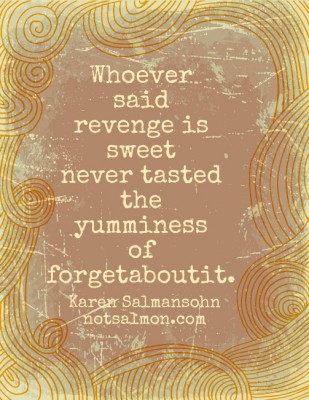
Whoever said revenge is sweet never….

notsalmon via Whoever said revenge is sweet never…..

If happiness is a journey….

notsalmon via If happiness is a journey…..

Cyoot Kitteh of teh Day: Teh Dog Did It?


Cyoot Kitteh of teh Day: Teh Dog Did It? – Lolcats – Funny Pictures of Cats – I Can Has Cheezburger?.

SLY’D FOX

Why do I love fox pictures? Because Todd is a latin name meaning ‘fox’. :-D btw, Zorro also means fox as does Renard, the villain in the Bond movie [although I don’t remember which one]: SLY’D FOX – Very Demotivational – The Demotivational Posters Blog. Here’s my theme song — a little known number from Elton John…

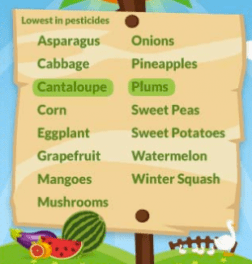
Shopper’s delight: Here’s what to buy organic

Every year, the Environmental Working Group (EWG) releases a new version of its Shopper’s Guide to Pesticides just as I start gearing up to fill my gullet with watermelon, peaches, and tomatoes.

That’s right, it’s peak produce season, and — unless you eat everything 100 percent organic all the time — pesticide residue is a valid concern. What’s more, not all conventionally grown fruits and vegetables pose the same risk. The EWG site ranks 45 foods and pulls out the best and worst on the list. “The Dirty Dozen” are the foods most likely to be coated with pesticide residue (peaches happen to be No. 4 on the list, while apples have earned the No. 1 spot for several years running). “The Clean 15” are the foods (including onions, corn, and avocados) that are safest for consumers.” Get more here: Shopper’s delight: Here’s what to buy organic | Grist.

Then They Both Went Home and Blogged About Their Day on Tumblr


Then They Both Went Home and Blogged About Their Day on Tumblr – Funny Facebook Status Messages and Facebook Fails.

How Your Limiting Beliefs Are Preventing You From The Life You Want

A limiting belief is an established thought pattern that prevents us from achieving what we want or need, no matter how much we strive towards a goal. As long as a limiting belief in place, it acts like a 3-headed dog whose job it is to prevent from achieving your goal.

Simply put, limiting beliefs are things we tell ourselves, mostly with great conviction, as to why something is not possible for us. Why we can’t get rich, why we can’t have a fairytale relationship and so on. When you are operating through the lens of a limiting belief, your perception of reality is narrower and more grim than what it would have been otherwise.

Limiting beliefs are acquired when we are highly impressionable, especially when we were kids. But even as grown ups, there are times when we are vulnerable to form them particularly when faced with adversity. At such times, this sense of helplessness can be high and the mind wants to rationalize why we got into this state.

When we feel cornered, an easy way out is by forming a conclusion, mostly irrational, just so that we don’t get into this state ever again. We try to reach conclusions that we later label as “life lessons”. More often than not, these life lessons are exactly what keep us in the trenches.” Get more here: How Your Limiting Beliefs Are Preventing You From The Life You Want | FinerMinds.

Relationship Martyrs

Are you a relationship martyr? Consider this:

Many of us have gone so numb and discounted our feelings so completely that we have gotten out of touch with our needs in relationships.

We can learn to distinguish whose company we enjoy, whether we’re talking about friends, business acquaintances, dates, or spouses. We all need to interact with people we might prefer to avoid, but we don’t have to force ourselves through long-term or intimate relationships with these people.

We are free to choose friends, dates, and spouses. We are free to choose how much time we spend with those people we can’t always choose to be around, such as relatives. This is our life. This is it. We can decide how we want to spend our days and hours. We’re not enslaved. We’re not trapped. And not one of us is without options. We may not see our options clearly. Although we may have to struggle through shame and learn to own our power, we can learn to spend our valuable hours and days with the people we enjoy and choose to be with.

God, help me value my time and life. Help me place value on how I feel being around certain people. Guide me as I learn to develop healthy, intimate, sharing relationships with people. Help me give myself the freedom to experiment, explore, and learn who I am and who I can be in my relationships.

Source: Daily Meditation ~ Relationship Martyrs – Miracles In Progress Codependents Anonymous Group

Powerlessness

Melody Beattie writes:

Willpower is not the key to the way of life we are seeking. Surrender is.

“I have spent much of my life trying to make people be, do, or feel something they aren’t, don’t want to do, and choose not to feel. I have made them, and myself, crazy in that process,” said one recovering woman.

“I spent my childhood trying to make an alcoholic father who didn’t love himself be a normal person who loved me. I then married an alcoholic and spent a decade trying to make him stop drinking.

“I have spent years trying to make emotionally unavail­able people be emotionally present for me.

“I have spent even more years trying to make family mem­bers, who are content feeling miserable, happy. What I’m saying is this: I’ve spent much of my life desperately and vainly trying to do the impossible and feeling like a failure when I couldn’t. It’s been like planting corn and trying to make the seeds grow peas. It won’t work!

“By surrendering to powerlessness, I gain the presence of mind to stop wasting my time and energy trying to change and control that which I cannot change and control. It gives me permission to stop trying to do the impossible and focus on what is possible: being who I am, loving myself, feeling what I feel, and doing what I want to do with my life.”

In recovery, we learn to stop fighting lions, simply because we cannot win. We also learn that the more we are focused on controlling and changing others, the more unmanage­able our life becomes. The more we focus on living our own life, the more we have a life to live, and the more manage­able our life will become.

Today, I will accept powerlessness where I have no power to change things, and allow my life to become manageable.” via June 20: Powerlessness.

Eating

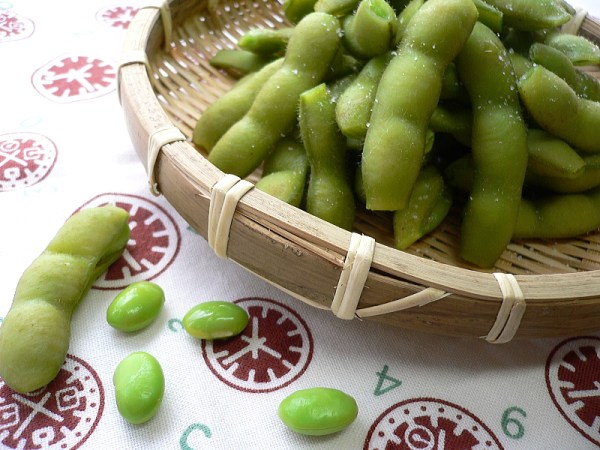
boiled green soybeans

“Eating is really one of your indoor sports. You play three times a day, and it’s well worth while to make the game as pleasant as possible.” via Dorothy Draper.

5 Life Lessons Taught By The Muppets

Just because you’re too old for Sesame Street (and hopefully you already know your ABCs), that doesn’t mean you’re not too old to learn something. The Muppets are more than entertainers — they’re pretty good teachers too.

Here’s a look at 5 life lessons you can learn from The Muppets.” Get more here: 5 Life Lessons Taught By The Muppets.

When Friends Fear We May Judge Them

“When you judge another, you do not define them. You define yourself.” ~Wayne Dwyer. Get more here: When Friends Fear We May Judge Them | Tiny Buddha: Wisdom Quotes, Letting Go, Letting Happiness In.

3 Keys to Staying Present under Pressure

“The only pressure I’m under is the pressure I’ve put on myself.” ~Mark Messier. Get more here: 3 Keys to Staying Present under Pressure | Tiny Buddha: Wisdom Quotes, Letting Go, Letting Happiness In.

Are You Addicted To Suffering? (And Ready To Quit?)

I teach my students and clients that one should look for the best three paragraphs when curating; occasionally I say it’s OK to double dip and grab two quotes. When it comes to Kute Blackson, I usually break all my rules – his stuff is sooo good that I usually end up curating his entire post to that it’s easier for you to read the whole think. Today is no exception to the Kute Blackson rule:

Most guru’s or teachers will teach how to avoid suffering. I am going to share with you the seven steps of how to successfully create suffering in your life, so that you can be aware of them and make different choices.

Suffering can become a very dangerous addiction. An unhealthy way to feel. An ultimately unfulfilling way to feel alive. You can get so used to suffering that it becomes comfortable and familiar. Suffering is the ego’s way of feeling important.

Whether you are a businessman or a buddha, pain is inevitable. There is no way to avoid it. Just by virtue of being in a human body there will be some pain. Trying to avoid pain will only create more suffering. Embrace pain to release yourself from suffering.

Suffering is optional. Suffering is a choice.

Suffering comes from your story about what is happening in your life and less about what is actually happening. What is happening is simply what is happening. The suffering part comes from all your interpretations and meanings about the experience. Change your story and the way you are interpreting reality and you begin to change your reality. When you change your reality within yourself, you shift your experience of your reality outside. Once you understand this, you only suffer if you chose to.

What stories are you making up about yourself, your life, your partner, your current experience that is causing you suffering?

The Seven Keys to creating suffering:

1- Resist everything: Resist what is. Resist reality. Fight against what is happening in your life with all your might. This is a guaranteed method to suffer.

Key Solution: Accept what is, so that you can then decide how to shift it.

2- Holding the belief: “The experience that is happening to me should not be happening to me. I should be having some other experience than the one I am having. This shouldn’t be happening to me”. You have probably heard yourself doing some version of this. It just keeps you stuck.

Key Solution: Embrace your current experience. Your current experience is the experience that you are meant to be having because you are having it right now. Trust, and focus on what you can learn and how you can grow. The experience is here to help you evolve.

3- Focusing on all the things that you cannot control. This will only cause you to feel completely helpless and disempowered. It will leave you in a state of worry and anxiety. Some of us are professional “worriers”. No matter how much you worry, it doesn’t actually change the situation. Once you are done worrying, the situation will be the same. Worrying is a waste of time.

Key Solution: Focus on what you can control. Take actions that are in your power, step by step.

4- Refusing to change. Keep doing the same over and over and hoping for a different result. Well, as Einstein said, this is the definition of insanity. Are you so set in your ways that you are afraid of giving up the known suffering for the unknown possibility of happiness?

Key Solution: Embrace change. Be willing to do something different. Let go. Go into the unknown. Take different actions.

5- Give up your responsibility: Be a victim. Play the blame game, making everyone else at fault or responsible for your life and how you feel. Unless you take responsibility for your current experience, then you are powerless to change it.

Key Solution: Take full responsibility for your current reality and decide what changes you are committed to making. Give up blame.

6- Focus on everything that is wrong in your life. Whether a relationship or person. When you focus on what is wrong, you will surely find what is wrong. You will end up creating more of what is wrong to feel wrong about. Then the negative cycle continues.

Key Solution: Start focusing on what you are grateful for. Remember all your blessings, and appreciate that daily. What you appreciates, expands. What you thank about comes about.

7- Denial: Lie to yourself and others. Pretend that everything is fine when you know that it isn’t. When you avoid facing what is, you end up staying stuck and repeating the same patterns of pain and relationship. This only ends up prolonging your suffering.

Key Solution: Tell the truth to yourself first. Tell the truth to those in your life. Be honest. Face reality.

Life is too short to waste spent suffering. Most of what you worry about today, you won’t even remember a few months from now. Most of what you are trying to change in people today, you won’t care about on your deathbed.

You hold the padlock and you hold the key to your freedom.

Source: Are You Addicted To Suffering? (And Ready To Quit?)

It’s a long, long road…

One of the favorites of my ‘yout’ as Joe Pesci would say…

Anderson Layman’s Blog via It’s a long,long road……………...

On the over-ratedness of perfection….

roflmao! Anderson Layman’s Blog via On the over-ratedness of perfection…..

I clicked the link and did a search in the article for blog and bloggers. Apparently we escaped unscathed in this assessment, David…

Live & Learn's avatarLive & Learn

internetsurfingUh, oh.  Oh boy.  No further comment.

Source: New York Times – How Depressives Surf the Internet.  Some choice excerpts:

…IN what way do you spend your time online? Do you check your e-mail compulsively? Watch lots of videos? Switch frequently among multiple Internet applications — from games to file downloads to chat rooms?

…your pattern of Internet use says something about you…research suggests it can offer clues to your mental well-being.

…There were two major findings. First, we identified several features of Internet usage that correlated with depression…the more a participant’s score on the survey indicated depression, the more his or her Internet usage included… high levels of sharing files (like movies and music).

…Our second major discovery…styles of Internet behavior that were signs of depressive people. For example, participants with depressive symptoms tended to engage in very high e-mail usage. This perhaps was to be expected: research…

View original post 126 more words

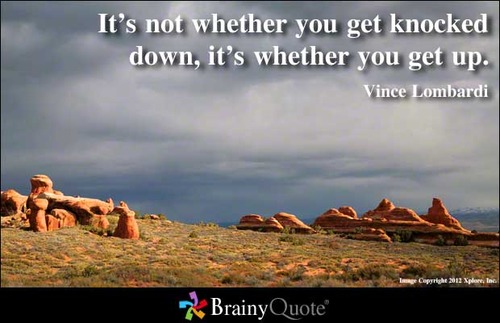
It’s not whether you get knocked down, it’s whether…

Here in the Green Bay area, we’re pretty much obliged to curate everything we come across from ‘The Vince’. BrainyQuote via It’s not whether you get knocked down, it’s whether….

Start a Blog at WordPress.com.

Up ↑