3 Steps to Fuel Your Creativity and Purpose with Exercise

Stepcase Lifehack

Get the scoop here: 3 Steps to Fuel Your Creativity and Purpose with Exercise.

4 Important Ways To Show Love, Identified by Divorced People.

The Happiness Project

Get the scoop here: 4 Important Ways To Show Love, Identified by Divorced People..


A few resources for my Facebook class today…

http://storify.com/e1evation/facebook-thoughts-tactics-and-tools-7-24-2012

Google And Multitasking: Friend Or Foe?

FinerMinds

Get the answer here: Google And Multitasking: Friend Or Foe?.

Happiness

What if…What if…What if…What if…What if…

Lead.Learn.Live.

via What if…What if…What if…What if…What if….


Fishing Report

Pops Digital

via Fishing Report.


Who Makes You Better?

Antonio Neves writes:

I’m not going to be a national champion.

Those were my thoughts as I completed my first track and field practice as an NCAA Division I student athlete at Western Michigan University.

As much as this realization stung to the core, it was the truth. No matter how hard I practiced, the odds of my becoming a national champion were pretty much non-existent.

This realization didn’t mean that I didn’t want to get better. Quite the contrary. I was determined to see what I was made of. To see how far my DNA could take me.

Unfortunately, during my first two years of competing, I didn’t come close to placing in a major competition. I was hanging on for dear life and hoping not to get cut from the roster.

That was until one day at practice my coach pointed out something of which I was unaware.

“Antonio, we have two All-Americans on our team,” he said. “I’ve never seen you practice with either of them. Are you surrounding yourself with people who make you better?”

As he walked away I kept asking myself, “Antonio, who makes you better?” This question hit me like a ton of bricks.

The harsh reality was that I spent most of my time at practice going through the motions and joking around with the same group of teammates. As much as I loved these guys, if I gave a less than stellar effort, no one questioned me. They didn’t make me better.

Yet, right there in front of me were two All-Americans that could make me better. But I was intimidated. Why? Because I saw the discipline, hard work, and healthy habits that were required to compete at that level. These were two individuals who wouldn’t accept mediocrity. Was I willing to commit to working that hard?” via Who Makes You Better? « Positively Positive.

Miracles Await!

The Daily Love

via Visual Inspiration: Miracles Await!.


The first time London hosted the Olympics…


The New Yorker

Get more here: The first time London hosted the Olympics, it was as a….


What to Do When You’re New: In School, Work, or Your City

“If you light a lamp for somebody, it will also brighten your path.” ~Buddhist saying

via What to Do When You’re New: In School, Work, or Your City | Tiny Buddha.


Pain is part of life…

notsalmon

via Pain is part of life….


Posted this on my business blog; thought I’d share it here as well…

Todd Lohenry's avatare1evation, llc

View original post

What data is being collected on you? Some shocking info

TED Blog

via What data is being collected on you? Some shocking info.


4 Proverbs

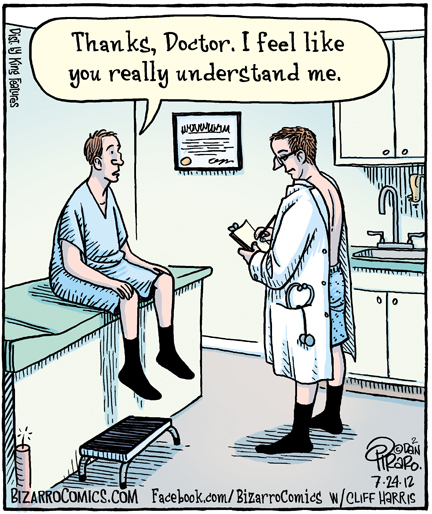
Bizarro Blog!

Get more here: 4 Proverbs.


Say Yes

Manifestation Station

Get the rest here: Say Yes..

Hang in there….

notsalmon

via Hang in there…..


48 Things That Will Make You Feel Old

Get the rest here: 48 Things That Will Make You Feel Old.

Treat your soul like a soulmate…

notsalmon

via Treat your soul like a soulmate….

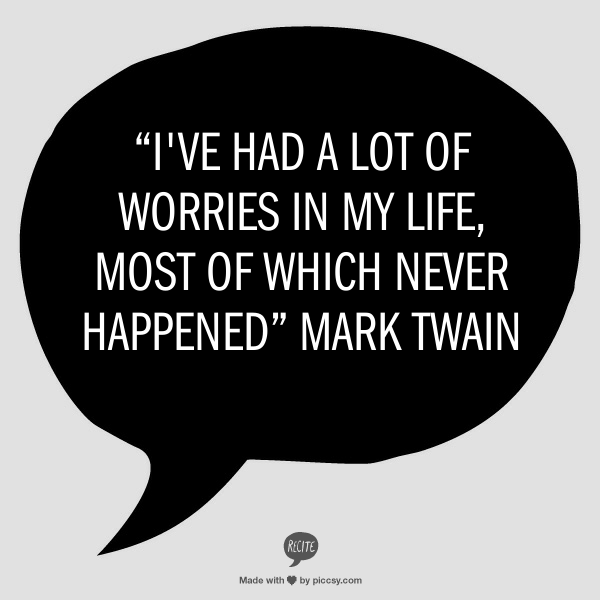
Worry

“I've had a lot of worries in my life, most of which never happened”  ― Mark Twain

Love or dependency?

Kristin Barton Cuthriell has an excellent post on codependency that I want to share with you this morning:

“Love is the ability and willingness to allow those that you care for to be what they choose for themselves without any insistence that they satisfy you.” Wayne Dyer.

Sally tells her husband, Ron, that she would like to go visit her sister for the weekend. Ron becomes upset and accuses Sally of not loving him. He gives Sally such a hard time, that even if she were to go, she would not enjoy herself. Ron tells Sally that he does not want her to go because he loves her and wants to spend all of his time with her.

Ken and Angie spend most evenings and weekends together. One Saturday, Ken is invited to go to a ballgame with the guys. When Ken asks Angie if he can go, she becomes upset and reasons that he would rather be with the guys than with her.  She feels hurt and acts angry and resentful towards Ken. Ken can’t enjoy the game because he knows that he has hurt Angie.

Cindy joins a book club that meets the first Wednesday night of each month. Ted feels threatened by Cindy leaving the house to do something without him. As much as Cindy enjoys book club, she stops going. The way Ted treats her when she does go, just isn’t worth it.

Unless the visit to the sister, the ballgame, and the book club are destructive to the individual or the couple in some way, Ron, Angie, and Ted are operating with their insecurities in the driver’s seat. They believe that they have been acting out of love. But this kind of love is about them, not their partner. What they call love is really dependency. They are not holding their partner back for the good of their partner, they are holding their partner back because they want to make themselves happy. They want to fulfill an unmet need within themselves.

When individuals function from a place of dependency rather than mature love, they are usually trying to get a childhood need for security and nurturing met. As infants, we are totally dependent on our caretakers for all of our needs. If those needs are met, we are more likely to experience mutual love in adult relationships. If those needs are not met when we are young, we do not outgrow them. Instead, we unconsciously demand that these needs be met by our partners. When this happens, our partner’s needs are often ignored and the relationship becomes more about us than about them.

A healthy parent child relationship is very different from a healthy adult relationship. In a healthy parent child relationship, the parent is to meet the child’s needs, not the other way around (Note: meeting a child’s needs is not the same as spoiling a child). The relationship is not mutual. It is about the child.

A healthy adult relationship is about mutual sharing. The adult is not enmeshed, as an infant often is with their primary caretaker. The relationship consists of a delicate balance of closeness and separateness.” If any of this resonates with you, you can read the rest of the article here: Love or dependency – Let Life in Practices.

While you’re there, signup to receive Kristin’s updates or follow her in social media! She is a continuous source of good, clear thinking on relationships and her perspective has helped me many times…

Start a Blog at WordPress.com.

Up ↑