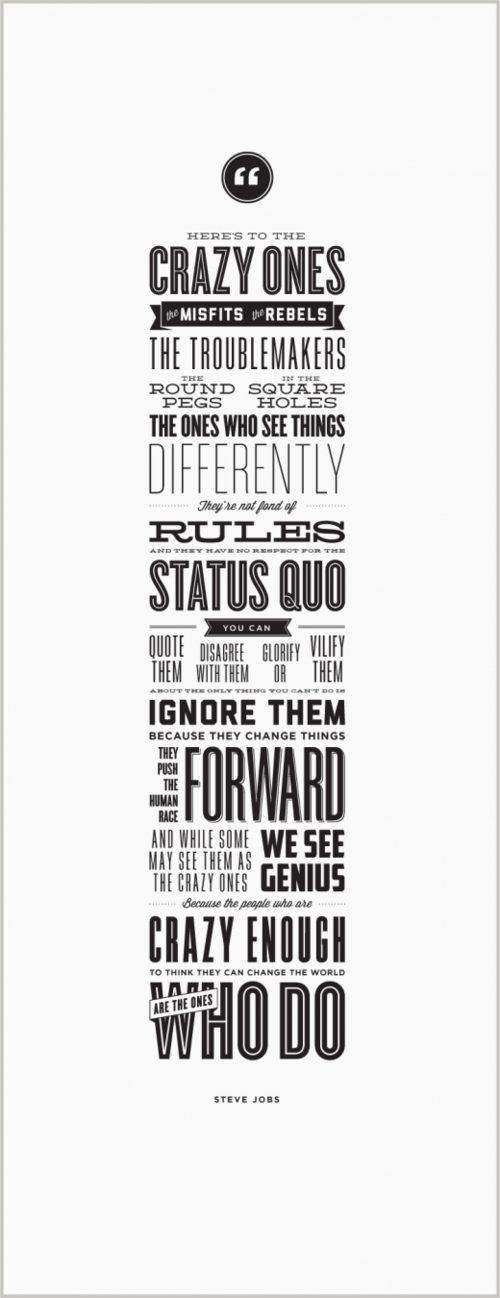
Here’s to the crazy ones…


Beautiful Steve Jobs quote poster – Holy Kaw!.

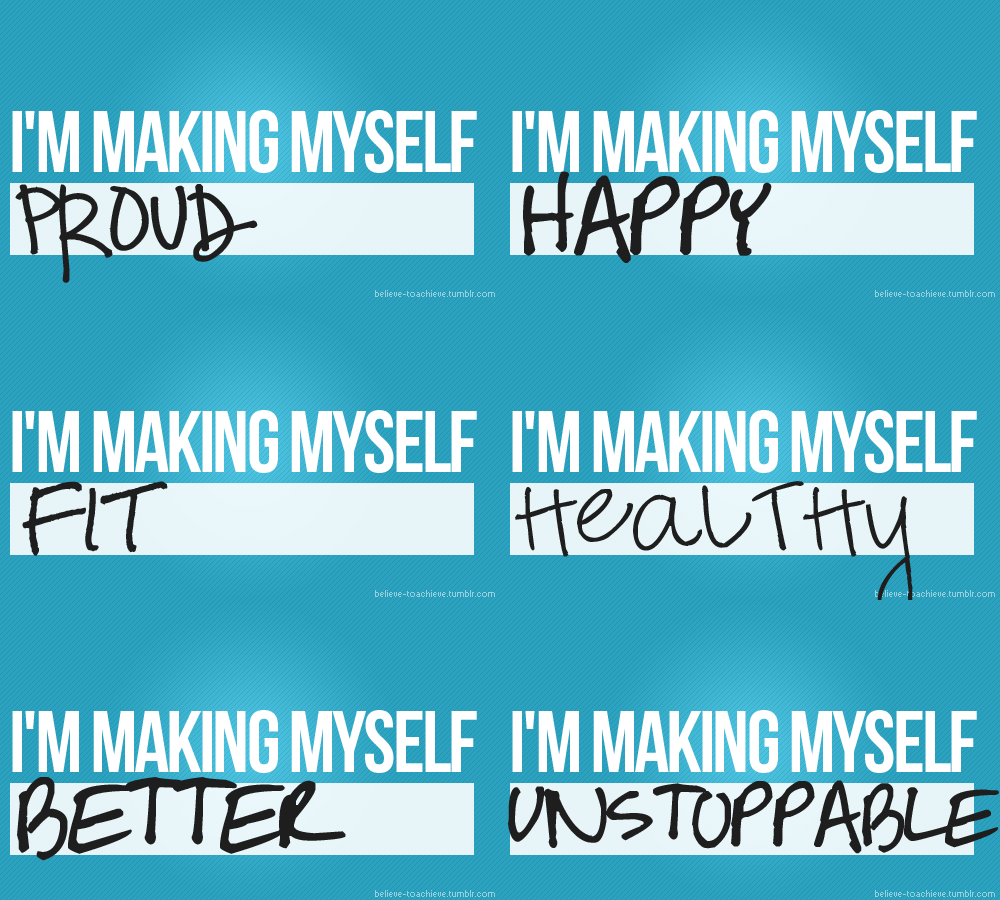
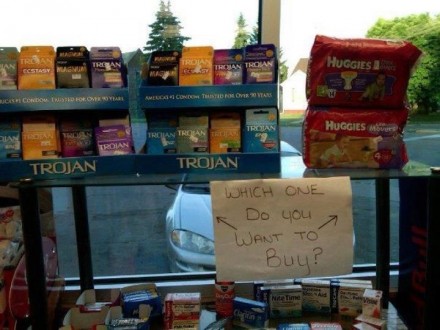
Today, I’m making myself…

What do YOU choose?

Lead.Learn.Live.

via Today, I’m making myself…??? (multiple choice).

Your Body: One Year From Today

One of my favorite quotes in working with clients is “A year from now you’ll wish you started today”. Along those lines, Craig Harper writes:

If you’re serious about changing your body, and more importantly, keeping it that way, below you’ll find some relevant, valuable and potentially-transformational questions. They are the type of questions that I ask anyone who comes to me for coaching in this area. Keep in mind that transformation lives in the doing, not just the knowing, so if you’re in need of a physical overhaul, or maybe just a few minor modifications, take some time to answer the following thoughtfully and courageously.

What do you want your body to look, feel and function like one year from today (be specific)?

What do you need to do practically, to make your goal a reality?

What happens once your motivation subsides (it will)?

What happened last time you tried to change your body?

Why and how will it be different this time (if nothing changes, nothing changes)?

What’s your optimal exercise strategy (based on your genetics, age, goals, fitness, injuries, etc.)?

What’s one simple thing (that will make a difference) that you can change today?

What happened over the last 365 days (with your body)? Why?

Are you genuinely prepared to do the work (and to keep doing it), or do you just like ‘the idea’ of a different body?

Do you need to change your relationship with food? If so, how?

Do you have an accountability system? If so, what is it?

When it comes to the practical change-your-body variables (food, lifestyle, exercise, time management), what are your ‘non-negotiables’?

As I’ve said many times before on this site, when we ask better questions and we’re genuinely committed to change, we make better decisions, do better things, produce better results and our reality shifts.

Statistically, we know that, despite their conversations, declarations and intentions, most people won’t improve their health or fitness over the next year. Some will, most won’t. Of course, they can change and they want to change, but sadly, they won’t. Like the majority of our ever-expanding population, some will continue to get on and off the weight-loss merry-go-round, all the while complaining about their genetics, the weather, their sore ankle, their limited time and their exhausting schedule.

And then they’ll wake up and it will be July 2013.

Today, I challenge you to be in the minority.” via Your Body: One Year From Today.

When I read things like this I used to feel guilty — now I’m happy I’m on the right path! I started power walking in March and now walk, run and bike ride; thanks to Endomondo, I know I’ve put in over 500 miles in all three since I started…

I’ve lost over 100 pounds with Atkins in the past 10 years but gained 75 of it back because I don’t believe that Atkins is sustainable or healthy based on my experience. I’m sorry to tell you there is no substitute for eating better and exercising more…

What the Internet Is Doing to Our Brains (And What We Can Do About It)

I had some windshield time last night driving across Wisconsin and this podcast came up in Google Listen. I encourage you to follow the link and listen to what Michael Hyatt has to say about what the internet is doing to our brains and what we can do about it. #19: What the Internet Is Doing to Our Brains (And What We Can Do About It) [Podcast] | Michael Hyatt.

Cross-posted…

Todd Lohenry's avatare1evation, llc

This is kind of an interesting article for a social media ‘gooroo’ to curate, but I learned about this article in a Michael Hyatt podcast and wanted to share it with you. In it, Tony Dokoupil writes:

Before he launched the most viral video in Internet history, Jason Russell was a half-hearted Web presence. His YouTube account was dead, and his Facebook and Twitter pages were a trickle of kid pictures and home-garden updates. The Web wasn’t made “to keep track of how much people like us,” he thought, and when his own tech habits made him feel like “a genius, an addict, or a megalomaniac,” he unplugged for days, believing, as the humorist Andy Borowitz put it in a tweet that Russell tagged as a favorite, “it’s important to turn off our computers and do things in the real world.”

But this past March Russell struggled to turn off…

View original post 477 more words

Is it too early in the week to be ‘sick and tired’?

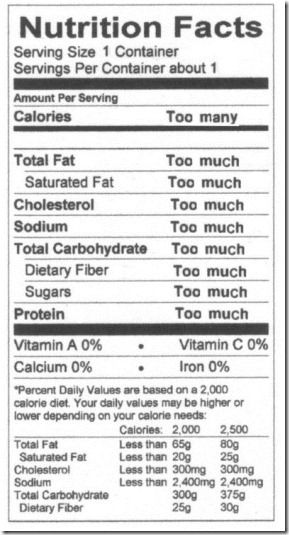
Nutrition for Dummies

Craig Harper offers this practical list:

1. Don’t eat anything bigger than your head. Unless it’s a watermelon. Or you have a tiny head.

2. If your meal arrives through a car window via a teenager wearing a headset, don’t eat it.

3. If it comes in an exciting range of fluorescent colours, don’t eat it.

4. Don’t confuse the marketing on the front (of the pack) with the nutritional information in the teeny-tiny box on the back.

5. Nobody accidentally eats cake. Own your choices and your behaviours.

6. Calories consumed in secret count. Your friends might not know but your arse will.

7. If dieting was an effective way to lose weight permanently, nobody would ever diet twice.

8. Don’t confuse ‘what your head wants’ with what your body needs. Your mind is a lying bitch.

9. If the ingredient list is full of weird-sounding numbers and words ending in ‘ose’, throw it away.

10. If you haven’t had a poo since June, maybe cut back on the processed food. And try a little fibre. Just saying.

11. If it comes with orange-coloured cheese, throw it away.

12. Most cereals are shit. Avoid them. Unless you want diabetes by Friday.

13. Amazingly, following a generic eating plan from a magazine is not your best bet.

14. If food is your lover, you need to get out more.

15. If you’re considering taking your kids to McDonalds for a treat, punch yourself in the face.” via Nutrition for Dummies (Craig’s version).

Thanks to David Kanigan for introducing me to Craig’s blog…

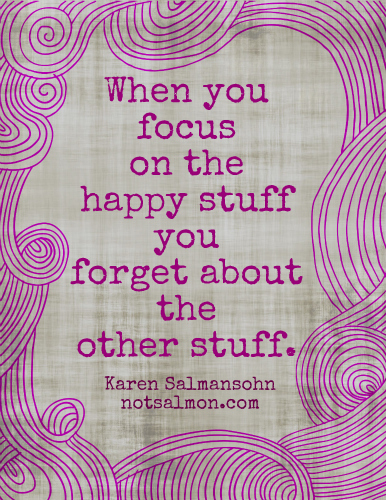
The power of happy stuff…

notsalmon

via The power of happy stuff….

Here’s a bonus song!!!

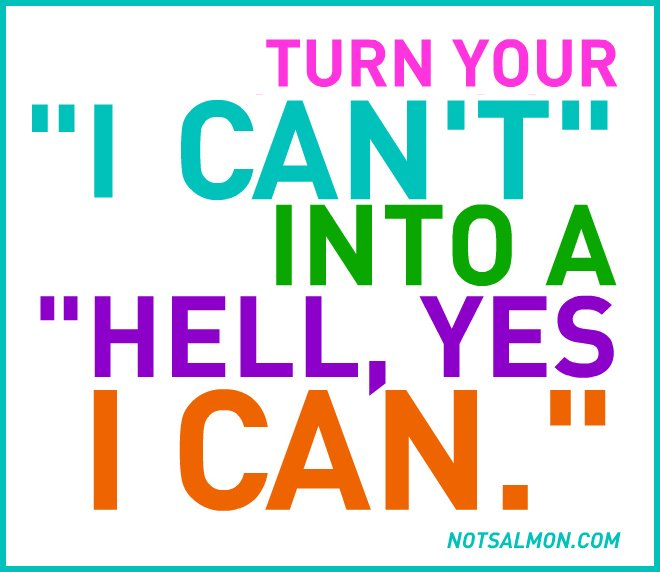
Have a “No CAN’T Do” attitude and DO!

notsalmon

via Have a “No CAN’T Do” attitude and DO!.

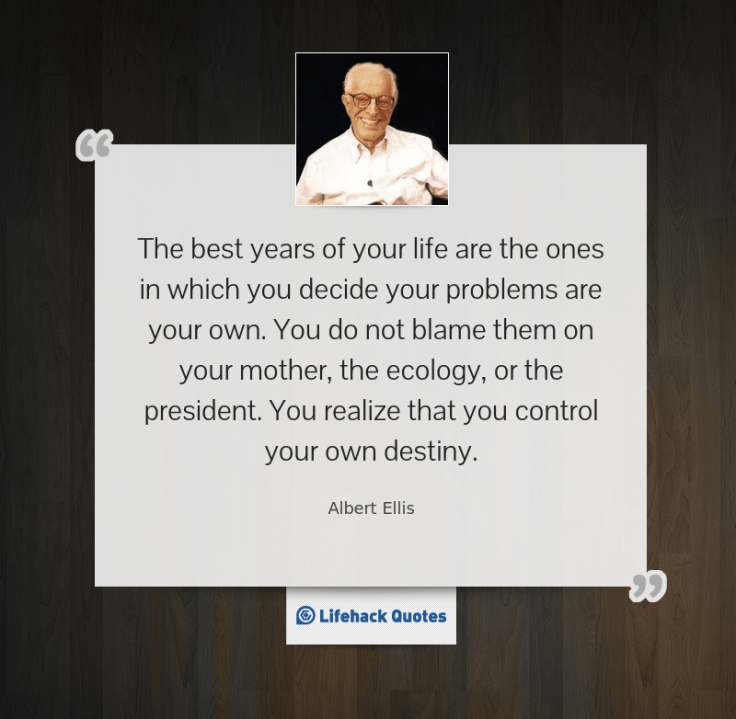
The best years of your life…


Quote by Albert Ellis | Lifehack Quotes.

Why do I curate Karen Salmansohn’s [@notsalmon] ‘pattern interrupt’ posters so often?

Because they make me happy, plain and simple, and remind me of positive values. A mentor of mine once told me ‘never confuse the artist with the art’. In this case, however, it does not apply! Karen Salmansohn has mastered the art of pattern interrupts — positive flashcards — to remind me of what is truly important. Read her thoughts on her craft here:

“I believe that my posters work to inspire people to feel happier because they create what’s called “A Pattern Interrupt” – which is a proven psychological tool, recommended by practitioners of Neural Linguistic Programming, to help stop limiting beliefs.

If you saw the movie Shallow Hal, then you saw a Pattern Interrupt in action in that elevator scene – albeit a humorously reenacted example of a Pattern Interrupt. If you haven’t seen Shallow Hal, here’s a quickie synopsis: Tony and Jack get trapped in an elevator, and begin to talk about dating. Tony speedily discovers that Jack’s character engages in a limited thought pattern – stubbornly only dating stunning women for shallow reasons. Tony helps Jack to break his superficial thought pattern by surprising Jack with a clunk on his head – then shouting “Devils come out!” Sure enough, instantly a new mental window opens for Jack. He is now able to think about dating with a less shallow lens.

Other known methods for Pattern Interrupts have included: snapping a rubber band on your wrist, playing powerful music, being hit with unexpected comic relief, doing calming meditations, repeating positive affirmations – and reading an INSTANT HAPPY premium wall graphic! All these various Pattern Interrupts work like a “Thought Intervention” – creating a jiggling affect upon a person’s tightly held negative beliefs – then jumpstarting a new positive pattern of thought.

A Pattern Interrupt works in real life like this: Let’s say an event happens which puts you in a grumpy mood. If you’re not careful, your negative thoughts about this one solo circumstance can create a downward spiral, where you quickly go from merely thinking THIS ONE THING SUCKS to MY WHOLE DAY SUCKS to MY WHOLE LIFE SUCKS to THE WORLD SUCKS to DISTANT GALAXIES SUCK! Basically, without a Pattern Interrupt, a sad person can get grumpier, and an angry person can get grumblier!

There’s a famous Albert Einstein quote: “We can’t solve problems by using the same kind of thinking we used when we created them.” Well, Albert’s philosophy is a good explanation for why a Pattern Interrupt can snap you out of a negative thought loop. A Pattern Interrupt literally changes your brain’s energy state.

Here’s the neuroscientific scoop: MRI’s of the brain show that every time a person thinks angry thoughts or imagines worst-case scenarios, they literally send a surge of blood flowing into brain regions associated with depression and anger (the right prefrontal cortex) – thereby refueling depression and anger. Happily, MRI’s have also shown that when a person starts to think happy thoughts, they can send a surge of blood flowing into brain regions associated with happiness (the left prefrontal cortex) – thereby literally refueling your positivity.

Plus, recent studies on learning show that when you incorporate visuals into your learning process, you can better “record” a message into your permanent memory bank.

More of the neuroscientific scoop: When you put words within pictures, your brain immediately perks up in an effort to make sense of how/why these words relate to the picture – thereby stimulating more neuron activity. The more neurons you have firing up, the greater the chance that your brain is paying attention and recording what it is perceiving. This is why using flashcards with pictures help people to learn info better! Similarly, my INSTANT HAPPY posters work like Inspirational Flashcards – reminding you with a playful combo of stylish pictures and feisty words how best to live your happiest life!

I’ve joked in today’s uber-busy, espresso-chugging, hyper-active world, it’s often hard to find time to read an inspirational book – but – you always have time to read a poster.

Except, well, I’m not simply joking!” via Artwork – Karen Salmansohn.”

Click here to admire my collection and go to http://notsalmon.com to connect with her.

There are thousands and thousands of Twitter tools and choosing the ones that support your business objectives can be a challenge. Here are the best I have found for the ‘e1evation workflow’ creation and curation process along with my top 10 tactical Twitter videos…

There are thousands and thousands of Twitter tools and choosing the ones that support your business objectives can be a challenge. Here are the best I have found for the ‘e1evation workflow’ creation and curation process along with my top 10 tactical Twitter videos…

http://storify.com/e1evation/my-top-twitter-tools

Questions? Feedback? Comment, call or ‘connect’ so we can talk about how this applies to you and your organization…

4 emotionally intelligent (and psychologically sophisticated) signs

Get more here: 4 emotionally intelligent (and psychologically sophisticated) signs | Daniel Pink.

Life is sweet!


Calvin and Hobbes Comic Strip, July 30, 2012 on GoComics.com.

Morning Dangler

Pops Digital

via Morning Dangler.


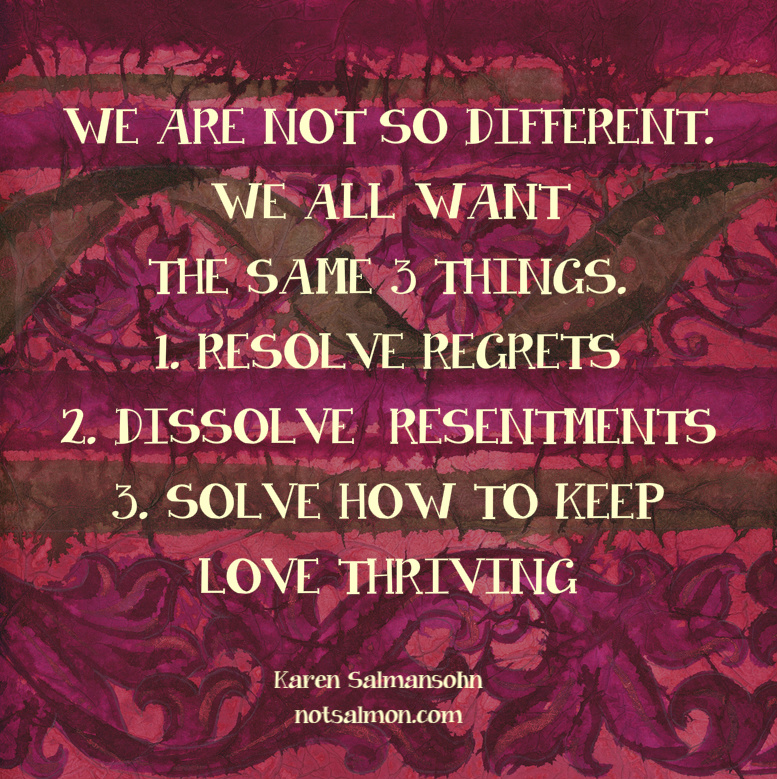
We all want the same 3 things…

notsalmon

via We all want the same 3 things….

Accepting powerlessness

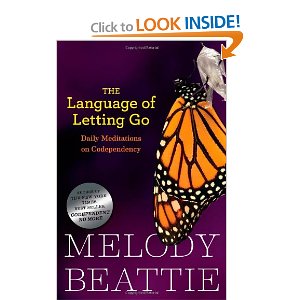
Back to back Melody Beattie! Here she writes:

Since I’ve been a child, I’ve been in an antagonistic relationship with an important emotional part of myself: my feelings. I have consistently tried to ignore, repress, or force my feelings away. I have tried to create unnatural feelings or force away feelings that were present.

I’ve denied I was angry, when in fact I was furious. I have told myself there must be something wrong with me for feeling angry, when anger was a reasonable and logical response to the situation.

I have told myself things didn’t hurt, when they hurt very much. I have told myself stories such as “That person didn’t mean to hurt me.” . . . “He or she doesn’t know any better.” . . . “I need to be more understanding.” The problem was that I had already been too understanding of the other person and not understanding and compassionate enough with myself.

It has not just been the large feelings I have been at war with; I have been battling the whole emotional aspect of myself. I have tried to use spiritual energy, mental energy, and even physical exertion to not feel what I need to feel to be healthy and alive.

I didn’t succeed at my attempts to control emotions. Emotional control has been a survival behavior for me. I can thank that behavior for helping me get through many years and situations where I didn’t have any better options. But I have learned a healthier behavior – accepting my feelings.

We are meant to feel. Part of our dysfunction is trying to deny or change that. Part of our recovery means learning to go with the flow of what we’re feeling and what our feelings are trying to tell us.

We are responsible for our behaviors, but we do not have to control our feelings. We can let them happen. We can learn to embrace, enjoy, and experience – feel – the emotional part of ourselves.

Today, I will stop trying to force and control my emotions. Instead, I will give power and freedom to the emotional part of myself.” via Just For Today Meditations » Blog.

Owning Our Power

Melody Beattie to the rescue!

Don’t you see? We do not have to be so victimized by life, by people, by situations, by work, by our friends, by our love relationships, by our family, by our feelings, our thoughts, our circumstances, and ourselves.

We are not victims. We do not have to be victims. That is the whole point!

Yes, admitting and accepting powerlessness is important. But that is the first step, an introduction to this business of recovery. Later, comes owning our power. Changing what we can. This is as important as admitting and accepting powerlessness. And there is so much we can change.

We can own our power, wherever we are, wherever we go, whomever we are with. We do not have to stand there with our hands tied, groveling helplessly, submitting to whatever comes along. There are things we can do. We can speak up. Solve the problem. Use the problem to motivate ourselves to do something good for ourselves.

We can make ourselves feel good. We can walk away. We can come back on our terms. We can stand up for ourselves. We can refuse to let others control and manipulate us.

We can do what we need to do to take care of our selves. That is the beauty, the reward, the crown of victory we are given in this process called recovery. It is what it is all about!

If we can’t do anything about the circumstance, we can change our attitude. We can do the work within: courageously face our issues so we are not victimized. We have been given a miraculous key to life.

We are victims no more unless we want to be.

Freedom and joy are ours for the taking, for the feeling, for the hard work we have done.

Today, I will remind myself as often as necessary that I am not a victim, and I do not need to be victimized by whatever comes my way. I will work hard to remove myself as a victim, whether that means setting and enforcing a boundary, walking away, dealing with my feelings, or giving myself what I need. God, help me let go of my need to feel victimized.” via Just For Today Meditations » Blog.

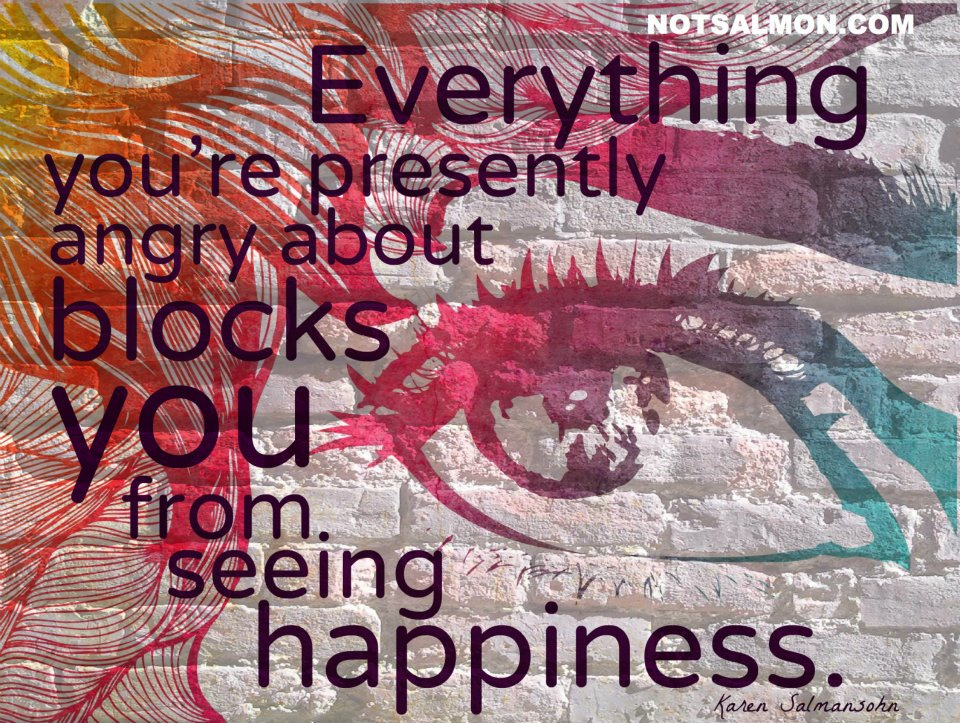
Everything you’re presently angry about blocks you from seeing happiness

notsalmon

via Everything you’re presently angry about blocks you from seeing happiness..

Mr Bean At The Opening of the 2012 Olympics

I can’t remember the last time I laughed so hard…

via Mr Bean At The Olympic 2012 Opening! (HD) – YouTube.

Happy Hummer Confluence

Pops Digital

via Happy Hummer Confluence.

Start a Blog at WordPress.com.

Up ↑