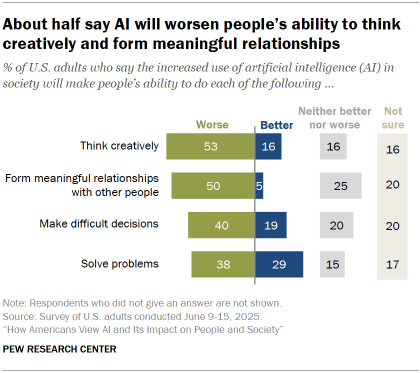
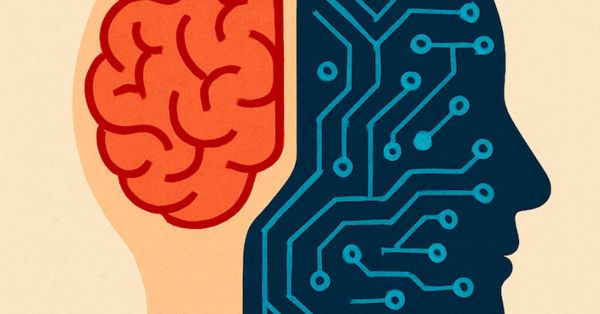
AI Tutors Are Teaching Kids to Fake Critical Thinking

New AI tutors teach kids to fake critical thinking instead of developing it. Here’s why this educational “breakthrough” damages developing minds.

In the article “AI Tutors Are Teaching Kids to Fake Critical Thinking,” the author discusses how the introduction of AI tutors in education may lead to superficial learning. Rather than fostering genuine critical thinking skills, these AI systems may encourage students to mimic responses or strategies that seem intelligent but lack deeper understanding. This reliance on technology, the article argues, could ultimately hinder the development of authentic cognitive abilities in children, creating a generation that may struggle with complex problem-solving and independent thought.

Go to the source to read the entire article: AI Tutors Are Teaching Kids to Fake Critical Thinking

What do the 3 ‘Godfathers’ of AI Have to Say About Their Godchild?

Yann LeCun, Geoffrey Hinton, and Yoshua Bengio won the Turing Award for conceptual and engineering breakthroughs that have made deep neural networks a critical component of computing. What do they have to say about their ‘godchild’?

Continue reading “What do the 3 ‘Godfathers’ of AI Have to Say About Their Godchild?”

3 Daily Habits That Could Be Draining Your Energy

Unhealthy habits can spiral into disconnection, distraction, or fatigue.

The article “3 Daily Habits That Could Be Draining Your Energy” discusses how certain common habits can inadvertently lead to feelings of disconnection, distraction, and fatigue. It emphasizes the importance of recognizing and modifying these behaviors to improve overall well-being and maintain energy levels throughout the day. By becoming aware of these habits, individuals can take proactive steps to foster a more engaged and energized lifestyle.

Go to the source to read the entire article: 3 Daily Habits That Could Be Draining Your Energy

What Emotional Maturity Looks Like

It’s important to develop an emotionally balanced ego, embrace life’s unpredictability, and understand the limits of romantic attraction.

The article “What Emotional Maturity Looks Like” discusses the significance of developing an emotionally balanced ego to navigate life’s unpredictability. It emphasizes the importance of understanding one’s emotional responses and recognizing the limits of romantic attraction. The piece provides insights into how emotional maturity is essential for healthy relationships and personal growth.

Go to the source to read the entire article: What Emotional Maturity Looks Like

The Weaponization of Psychological Labels in Relationships

As the language of psychology has become more integrated into everyday conversations, I hear more and more examples of “label weaponization.” There’s a better way to communicate.

The article “The Weaponization of Psychological Labels in Relationships” discusses how psychological terms and labels are increasingly being used in everyday conversations to manipulate or undermine individuals in relationships. This “label weaponization” can lead to misunderstandings and harm, as individuals may feel reduced to their labels instead of being seen as whole persons. The article suggests that fostering healthier communication practices, such as avoiding labeling and focusing on feelings and behaviors, can lead to more constructive relationships.

Go to the source to read the entire article: The Weaponization of Psychological Labels in Relationships

Is Male Loneliness a New Epidemic or an Age-Old Struggle?

Personal Perspective: Male loneliness is stirring up vitriolic debates, but it’s unclear why, or why now.

The article “Is Male Loneliness a New Epidemic or an Age-Old Struggle?” explores the rising discourse around male loneliness, questioning if it is a modern phenomenon or a long-standing issue. It delves into societal changes, expectations of masculinity, and the impacts of technology on male social connections. Through various perspectives, the article highlights the complexities of male loneliness, its implications for mental health, and the importance of fostering supportive communities for men. Ultimately, it encourages a deeper understanding and dialogue about this pressing concern.

Source: Is Male Loneliness a New Epidemic or an Age-Old Struggle?

We Are the 83%

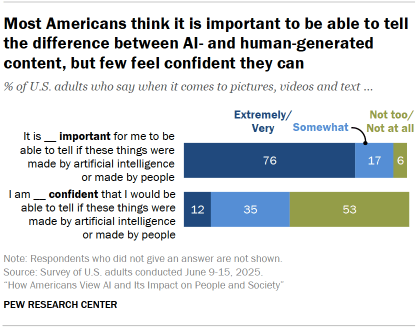
What is it that we are really supposed to take away from MIT’s “Your Brain on ChatGPT”?

The article “Your Brain on ChatGPT,” published on We Are the 83%, discusses the cognitive impact of interacting with AI language models like ChatGPT. It examines how these technologies shape our thinking, creativity, and communication. The article highlights both the benefits and potential drawbacks of reliance on AI in various aspects of life, emphasizing the importance of balancing technology use with personal engagement and critical thinking. Ultimately, it encourages readers to reflect on their relationship with AI and how it influences their cognitive processes.

Go to the source to read the entire article: We Are the 83%

What Are the Reasons and the Cures for Loneliness Today?

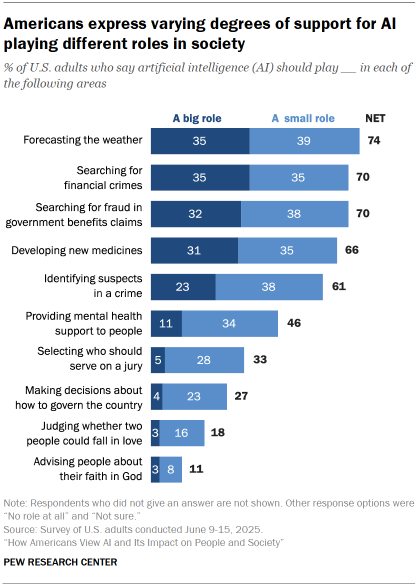
Author’s Perspective: I was appalled to learn that so many people are turning to A.I. for therapists, for friends, and even for lovers.

The article “What Are the Reasons and the Cures for Loneliness Today?” explores the contemporary issue of loneliness, examining its causes and potential solutions. It discusses how various factors, including societal changes and digital interactions, contribute to feelings of isolation. The author highlights the growing trend of individuals seeking companionship through AI, which raises concerns about the implications for real human connections. The article ultimately emphasizes the importance of addressing loneliness through both personal efforts and community support to foster genuine relationships and emotional well-being.

Source: What Are the Reasons and the Cures for Loneliness Today?

AI and the Arrival of the Cognitive Colonizers

Is AI quietly reshaping how we think, slowly influencing what still feels entirely our own?

The article “AI and the Arrival of the Cognitive Colonizers” discusses how artificial intelligence is subtly transforming human thought processes and decision-making. It argues that as AI systems increasingly influence our choices, they may disrupt our sense of individual agency, leading to what the author describes as cognitive colonization. The piece raises concerns about the erosion of authentic human experience in favor of algorithm-driven recommendations, suggesting that while AI can enhance productivity and efficiency, it also raises ethical questions about autonomy and the nature of consciousness. The article calls for a critical examination of our relationship with AI to ensure that technology serves human interests rather than undermining them.

Go to the source: AI and the Arrival of the Cognitive Colonizers

What We Can All Learn From the Kiss-Cam Couple

Why would anyone cheat in public? Consider 4 reasons…

The article “What We Can All Learn From the Kiss-Cam Couple” explores the psychological motivations behind public displays of affection and infidelity. It highlights four key reasons why individuals might cheat in public settings, shedding light on the complexities of human relationships and the subconscious factors that drive such behaviors. The author emphasizes the societal and emotional influences that play a role in these actions, encouraging a deeper understanding of personal choices in the context of relationships.

Source: What We Can All Learn From the Kiss-Cam Couple


How to Maintain Attachment While Living Together

To get the relationship you most want to have, regard yourself as emotionally connected to your partner, whether you’re together or apart.

The article “How to Maintain Attachment While Living Together” discusses strategies for sustaining emotional connections between partners, even when they are physically apart. It emphasizes the importance of perceiving oneself as emotionally linked to the partner to enhance the relationship. The piece offers insights into the dynamics of attachment in relationships, suggesting practical approaches to cultivate intimacy and secure bonds. The overall message encourages readers to prioritize emotional connection to foster a healthy partnership.

Go to the source to read the entire article: How to Maintain Attachment While Living Together

Is It Ever Possible to Get Close to an Avoidant Partner?

Although personality change is possible throughout life, new research on personality and relationships suggests that the avoidantly attached may be extremely hard to budge.

The article “Is It Ever Possible to Get Close to an Avoidant Partner?” explores the challenges of forming close relationships with individuals who exhibit avoidant attachment styles. It highlights recent research indicating that while personality can change over time, those with avoidant tendencies may be particularly resistant to emotional intimacy. The piece emphasizes the difficulties partners face when trying to connect with avoidant individuals and suggests that significant hurdles exist in fostering closeness in these relationships.

Go to the source to read the entire article: Is It Ever Possible to Get Close to an Avoidant Partner?

The Folly of Falling in Love Too Quickly

A paramour who seems too good to be true probably is, especially after a first date. Beware the rapture of emophilia—in love with falling in love.

The article “The Folly of Falling in Love Too Quickly” discusses the dangers of overly romanticizing the experience of love, particularly through the lens of emophilia, or a passion for the thrill of falling in love. It cautions readers to be wary of relationships that seem perfect at first, as they may mask underlying issues. The author emphasizes the importance of taking time to build a genuine connection, rather than rushing into love based on an idealized perception.

Go to the source: The Folly of Falling in Love Too Quickly

What Guess’s AI model in Vogue means for beauty standards

The first AI-generated model to appear in the pages of Vogue is seen in an advert for Guess.

The article discusses the debut of an AI-generated model in a Vogue advertisement for Guess, marking a significant moment in the fashion industry. It explores the implications of using AI in beauty and modeling, questioning how this technology might influence beauty standards and perceptions of authenticity. The piece reflects on the evolving relationship between technology and traditional modeling, and how it shapes consumer experiences in the fashion world.

Source: What Guess’s AI model in Vogue means for beauty standards – BBC News

A Psychologist’s Open-Minded First Take on AI Therapy

Personal Perspective: AI therapy offers promise but lacks the benefit of human connection. Here’s my experience testing Ash and reflections on its potential and limits.

The article discusses the potential benefits and limitations of AI therapy through the personal experience of testing an AI application named Ash. It highlights that while AI therapy offers promising advantages, such as accessibility and convenience, it falls short in replicating the human connection that is often vital in traditional therapy. The author reflects on both the strengths and weaknesses of AI in the therapeutic realm, pointing out that while technology can be a helpful tool, it cannot fully replace the emotional support and understanding provided by human therapists.

Go to the source to read the entire article: A Psychologist’s Open-Minded First Take on AI Therapy

The 2 “T”s That Instantly Make or Break Every Conversation

Most conversations fail for these two reasons. Here’s how you can fix both in under one minute.

In the article “The 2 ‘T’s That Instantly Make or Break Every Conversation,” the author discusses two essential elements—tone and timing—that significantly impact the success of conversations. The piece emphasizes how the way we say things (tone) can either foster connection or create misunderstandings, while the timing of our responses and comments is crucial for maintaining engagement and ensuring the message is received positively. The article provides practical tips on how to improve both aspects in under one minute, ultimately enhancing communication effectiveness.

Go to the source: The 2 “T”s That Instantly Make or Break Every Conversation

The Poker Game of Life

In life, we make the best decisions we can with the information available at the time, but the results are not always within our control.

In “The Poker Game of Life,” the author explores how life decisions often resemble a game of poker, where individuals must navigate uncertainty and risk based on the information at hand. The article emphasizes that while we strive to make informed choices, the outcomes are not always predictable or under our control. It highlights the importance of understanding the inherent risks in decision-making and accepting that we cannot control every result, much like in a game of poker where luck plays a significant role alongside strategy.

Source: The Poker Game of Life

Hoosiers

When you move to Indiana, it’s obligatory that you watch this classic movie featuring Gene Hackman as coach Norman Dale who lead his ‘David’ Milan basketball team against ‘Goliath’ South Bend Central to win the state championship back in the fifties…

…meanwhile over in Elkhart there’s a lovely monument to Coach Dale immortalizing the moment when he had his players measure the net in the fieldhouse where the state championship game took place to prove to his players that even though the arena was bigger, the court was the same size!

Click to enlarge…

Don’t Be a Jerk: The Relationship Rule That Actually Works

The best predictor of relationship success isn’t how often you have sex or how well you communicate. It’s something simpler — and harder.

The article “Don’t Be a Jerk: The Relationship Rule That Actually Works” argues that the key to a successful relationship goes beyond typical factors like sexual frequency or communication skills. It emphasizes a fundamental principle: treating your partner with kindness and respect. By fostering a supportive environment and avoiding negative behaviors, couples can strengthen their bond and enhance their relationship’s longevity. The article highlights the importance of simple, caring actions as vital for relationship success.

Go to the source: Don’t Be a Jerk: The Relationship Rule That Actually Works

AI Can Make Things Easier for You, but Should It?

Research shows that cognitive effort feels unpleasant. AI can take over most of that unpleasant effort, but avoiding the discomfort could mean missing out on learning and growing.

The article “AI Can Make Things Easier for You, but Should It?” discusses the balance between the convenience provided by artificial intelligence and the cognitive discomfort associated with learning and problem-solving. It highlights that while AI can alleviate challenging tasks and reduce unpleasant cognitive effort, relying heavily on AI might hinder personal growth and the learning experience. The piece ultimately raises questions about the implications of using AI for ease versus the necessity of engaging in uncomfortable tasks for development.

Go to the source: AI Can Make Things Easier for You, but Should It?

3 Ways to Kick the Habit of Chronic Complaining

Focusing on the negative can make positive thoughts hard to come by.

In the article “3 Ways to Kick the Habit of Chronic Complaining,” the author explores strategies to overcome a tendency for negative thinking and constant complaining. It emphasizes that focusing on the negative can hinder the ability to see positive aspects in life. The article suggests practical methods to shift one’s mindset, including recognizing the impact of complaints on oneself and others, cultivating gratitude, and actively seeking positive experiences. By adopting these strategies, individuals can enhance their outlook and foster a more positive environment.

Source: 3 Ways to Kick the Habit of Chronic Complaining

Start a Blog at WordPress.com.

Up ↑