Kindness, I’ve discovered, is everything in life.
Isaac Bashevis Singer
(via purplebuddhaproject) from Tumblr via IFTTT
Thinks I find along the way
Isaac Bashevis Singer
(via purplebuddhaproject) from Tumblr via IFTTT

 Against all expectation, in direct contrast to what one might expect of me on paper, I spent most of my teenage life in a perpetual state of anger. There I was, enjoying what can only be described as a privileged white life, with primary concerns being surfing and girls, growing up in Australia at a time when it was called “the land of plenty” (https://goo.gl/gFnbEf) and I could feel myself wanting to rage at the world, blast out at everything in sight. In the long years since I have come to not only temper that sense of anger that has never quite gone away but also step back from it sufficiently to ask: “why”? The Wikipedia definition actually provides some clues (https://goo.gl/yxHjFI). It calls anger an emotional response to a “perceived provocation or threat” and the teenage me (and later the slightly more mature and controlled adult I became) has always felt that there was a larger system at work. One that I could neither directly see nor ever hope to affect and that system ran my life. Determined my future. Defined me. In the 70s the world was locked in a state of tense détente (https://goo.gl/8Ndp27) where the steps that were being taken to reduce the possibility of a nuclear holocaust were also drawing attention to it. There was the feeling that processes were grinding away in backroom deals, decisions taken away from the public scrutiny, the fate of the world was being shaped by men who somehow felt they were more than the rest (and they weren’t).
Go to the source: Emotions Against all expectation, in direct contrast to what one might expect…
Pack your bags. The moment you finish watching this video of beautiful Colorado, you’re …
You’ve seen lots of “son surprising mom” videos. But we guarantee you’ve never …
Source: Son returning from naval deployment surprises mom, her reaction is priceless – Holy Kaw!
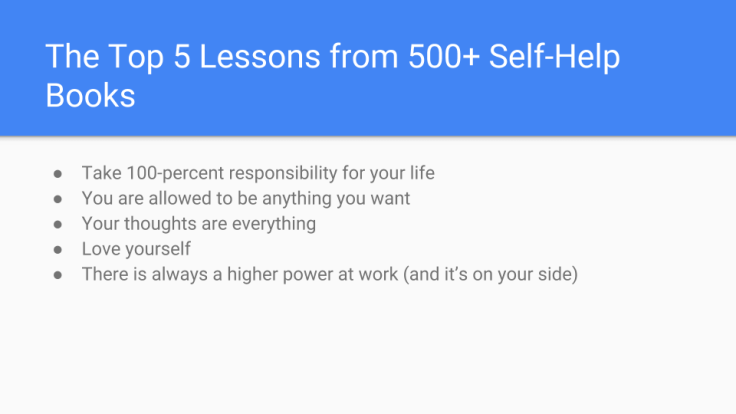
Go to the source: The Top 5 Lessons I’ve Learned After Reading 500+ Self-Help Books
“Don’t take your thoughts seriously. The voice inside your head is repetitive, loud, habitual, negative, and involuntary, to say the least.”
Source: “Don’t take your thoughts seriously. The voice inside your head is repetitive,…

Yes…

After a run of darkness (Orlando, Baton Rouge, Dallas, Minnesota, Nice), Rebecca Solnit writes an essay for The Guardian titled “Hope is an Embrace of the Unknown” on living in dark times. I’ve shared a few excerpts below.
After a rain mushrooms appear on the surface of the earth as if from nowhere. Many come from a sometimes vast underground fungus that remains invisible and largely unknown. What we call mushrooms, mycologists call the fruiting body of the larger, less visible fungus. Uprisings and revolutions are often considered to be spontaneous, but it is the less visible long-term organising and groundwork – or underground work – that often laid the foundation…
…our hope is in the dark around the edges, not the limelight of centre stage. Our hope and often our power…
What startled me about the response to disaster was not the virtue, since virtue is…
View original post 210 more words




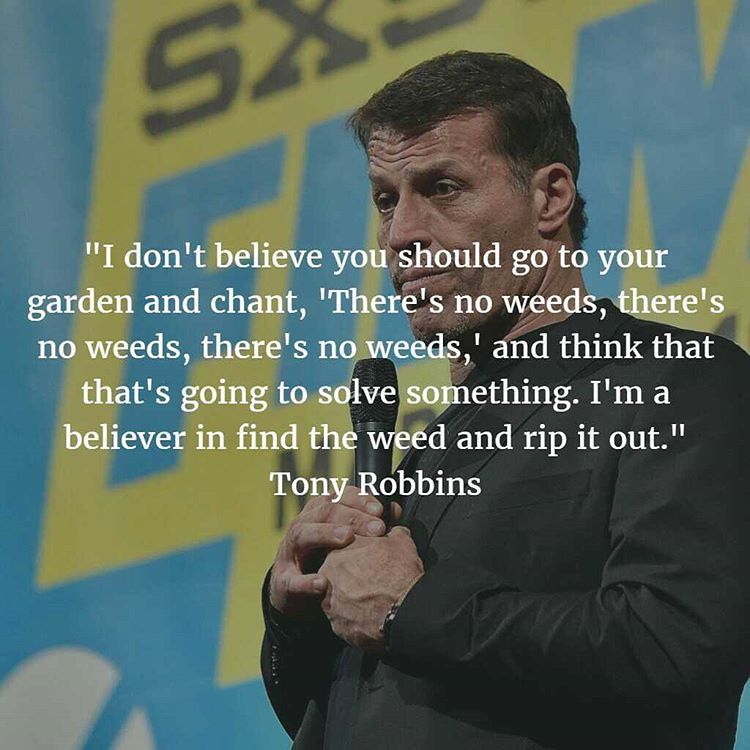


We all tell ourselves stories about ourselves and what we can do. If you want to change your life, first you need to change your limiting story.
Source: Change Your Life by Changing the Stories You Tell Yourself
 Start getting very real with yourself, about the stories you’re telling yourself. Here’s a huge hint: They are also the stories you tell others to explain yourself. Especially pay attention to when, regardless of topic, you receive a gratifying rush of positive emotion when your audience empathizes with your story. Narratives that evoke positive feelings when others “get it” represent the absolute bleeding edge of story-based identity creation. When you tell someone a tale about who you are, why you’re doing X or why X is happening to you and they really get it, you’re unconsciously seeking validation. You’re testing out a new component of identity you’d like to adopt and your listener is giving you a big ol’ thumbs up.The problem with this? Even if that particular narrative is a limiting explanation for why you can’t achieve what you want. Toxic stories will still elicit positive emotions when people “get” you.
Source: Why the stories you tell yourself decide your success | Peter Shallard



 Bright, shiny objects!
You must be logged in to post a comment.