Whoa! #cuteness overload for #caturday

Embracing the Cs and More

pablo

Fran Simone writes this on her blog:

Approximately 22 million Americans struggle daily with addition to drugs and alcohol. Another 100 million family members and friends share their pain. James Graham writes that there are two great human resources on alcoholism: recovering alcoholics who have had front line experience and combat veterans who have been exposed to the active drinking of a loved one for long periods of time.  I am combat veteran whose husband lost his battle with alcoholism.

On Christmas Day, 1996, my husband, Terry, committed suicide. He was only forty-seven years old. Although he admitted he was an alcoholic, he hated the label with its image of street drunks clutching pints of rotgut liquor beside dumpsters in dark alleys. My husband was more than a lush, a drunk, a barfly. He was a gifted lawyer, loving son, proud step-dad, loyal friend, supportive husband, and rabid Dallas Cowboy fan who eventually succumbed to this cunning disease. He was never mean, nasty, or violent. When drunk, he simply wasn’t there. He was immobile, like a corpse. Once I asked, “Why do you drink when it causes such heartache?” “Oblivion,” he responded. “I like the oblivion.”

Terry inhabited a parallel universe: his hidden self and his public self. Like light which consists of wave and particle, my husband was both things at once—a baffling paradox. Shortly after he died, I composed a poem to “my husband of a thousand joys and sorrows.” For every sad episode associated with alcohol, there was an equally joyful time when Terry was sober. We careened between the highs and lows of our roller coaster  marriage. Looking back, I recognize my part in this risky journey. I thrived on the melodrama. That may have been why I didn’t embrace my own recovery.

Years passed. Terry progressed from the middle to the late stage of the disease. At one point, he attended a one month residential treatment program. At a weekend event for family and friends I was first introduced to the twelve-step philosophy. It made sense but I didn’t follow through when I returned home. I believed that I could fix my husband. Shortly after treatment Terry relapsed. For the remaining years we resumed our life of managing the disease until his tragic death.

Go to the source for more: Embracing the Cs and More | Psychology Today

Stephen Colbert learns to pronounce Irish names

Irish names are crazy, let’s all just agree. In this video, Stephen Colbert learns how to pronounce some of the more difficult names.

Source: Stephen Colbert learns to pronounce Irish names – Holy Kaw!

Tara Brach speaks on Trusting the Gold

The one minivan we’d gladly drive

Ummm, cool?

If there’s one thing modern minivans lack, it’s the cool factor, but who wouldn’t love to cruise through the school pickup line in the original? The Stout Scarab never took off when it was released in 1936 because it was too far from the norm. William Stout, its creator, started off in airplane design, which explains the unique look. What do you say? Has the time come for a comeback?

Source: The one minivan we’d gladly drive – Holy Kaw!

Why Consult a Clinical Psychologist?

Stephen A. DiamondDr. Steve Diamond writes:

Over the past eight years Psychology Today has provided me with the rare privilege of publishing my blog “Evil Deeds” here at this site, an opportunity for which I feel fortunate and thankful. During this period, I (like many other PT bloggers) have received literally thousands of comments and questions from you, our faithful readers, in response to my various postings. I have always found your welcome comments, critiques and questions to be intelligent, inquisitive, thoughtful, challenging, perceptive, and sometimes, deeply personal, and truly enjoy responding to them to the best of my ability. In certain ways, these more personal comments in particular–with their detailed descriptions of various symptoms, problematic behaviors or relationships–and my own responses, have always struck me as being somewhat akin to what we might call a “mini-consultation” : a succinct professional exchange between psychologist and suffering, frustrated, confused or simply curious reader. Often, these same readers would then respond to my responses or to each other’s, entering into a spirited to and fro discussion or debate, evoking additional animated and often self-disclosing and supportive comments from more readers, not too unlike what happens in group therapy. Or in a psychology classroom or online course. These dynamic interactions between professionals and the public and between the readers, are part of what makes the PT site so unique, relevant, informative, valuable and vital in my view.

Go to the source for more: Why Consult a Clinical Psychologist? | Psychology Today

Here are the articles in the series:

Why Consult a Clinical Psychologist?

Why Consult a Clinical Psychologist? (Part 2)

Why Consult a Clinical Psychologist? Part 3

Why Consult a Clinical Psychologist? Part 4


Trevor Noah finally figures out how to defeat Trump’s endless Lies

Waylon Lewis of Elephant Journal shared this bit from Trevor Noah which I also happened to see the other night…

Too little, too late. And yet… the party (wherein Trump and his cronies kill healthcare, undo the Iran nuclear deescalation deal, help Climate Change hasten, delegitimize the press, and turn equal rights back in time… is just getting started. And so this is useful. Pics or it didn’t happen:

Source: Trevor Noah finally figures out how to defeat Trump’s endless Lies. | elephant journal

#picsoritdidnthappen

Photo

Cath Simard

Get more here: Cath Simard

h/t davidkanigan.com

Breathe into me

Ahhh. Rumi…

Live & Learn's avatarLive & Learn

peyto-lake-full-moon-banff-canada

At night I open the window and ask
the moon to come and press its
face against mine.
Breathe into me.

~ Jalaluddin Rumi, excerpt from “Some Kiss We Want” in A Year with Rumi: Daily Readings by Coleman Barks


Photo of full moon over Peyto Lake by Cath Simard. Peyto Lake is a glacier-fed lake in Banff National Park in the Canadian Rockies. Don’t miss her other shots of Banff here.

View original post

Discussions are better than arguments

Photo

The present

Photo

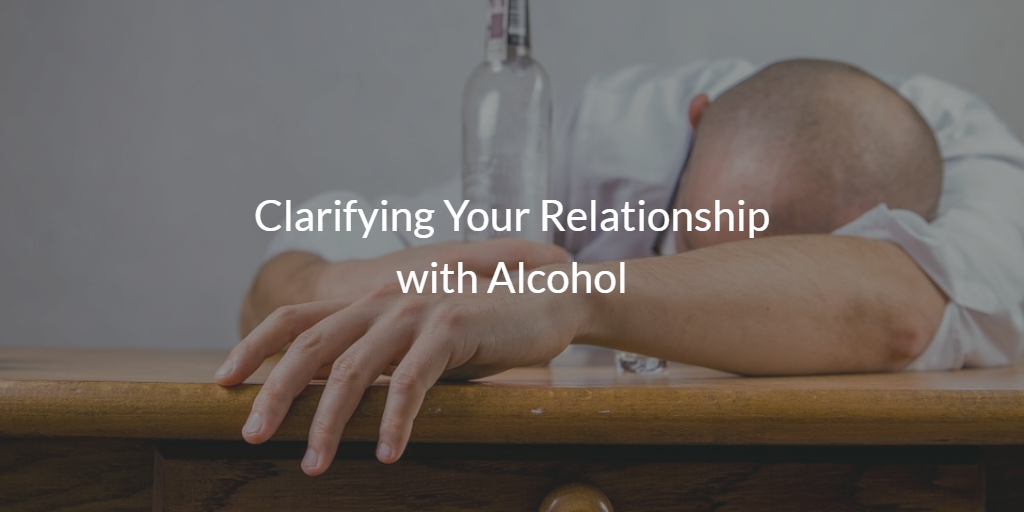
Clarifying Your Relationship with Alcohol

pablo

Here’s a sharable podcast from Terri Cole!

Do you ever wonder if you drink too much?

Are you concerned about the impact your drinking may be having on your relationships, health, career and overall potential?

There is a hot debate in the recovery world about the plausibility of controlled drinking sometimes referred to as harm reduction, as opposed to total abstinence.

You can listen to it here: Caitlin Padgett – Clarifying Your Relationship with Alcohol

The best way to stand for something

pablo

The best way to build a brand that matters, a story that spreads, an impact that we remember, is to understand a simple but painful trade-off:

If you want to stand for something,

You can’t stand for everything.

“Anyone can be our customer and we will get you what you want…” is almost impossible to pull off. So is, “we are the cheapest and the most convenient and the best.”

It didn’t work for Sears, or for Chevrolet or for Radio Shack. It definitely doesn’t work for the local freelancer, eager to do whatever is asked.

Relentlessly trimming what’s on offer, combined with a resolute willingness to say, “no,” are two characteristics of great brands. And linchpins, too.

Go to the source for more: Seth’s Blog: The best way to stand for something

36 Inspiring Quotes on Letting Go and Moving On

pablo

Letting go can be one of the hardest things to do in life. But at the same time it can be one of the most powerful and liberating things too. So this week I’d like to share 36 of the most thought-provoking and inspiring quotes from the past few thousands of years on letting go, moving on and living your life fully and happily. I hope you’ll find something helpful here…

get more here: 36 Inspiring Quotes on Letting Go and Moving On

This World as We See It

IMG_6483Another lovely post from Tara LeMieux:

“I’m having a bad day,” he said, looking forward through a half-frosted window. The morning was bitterly cold with the coming of winter, and his thoughts were as dark as the sky.

He explained to me his troubles at home; a dishwasher that ‘barely got the job done’ and kids with ‘far too much’ energy. He paused just long enough to sip his coffee – a venti caramel macchiato with just a hint of cinnamon against the edge

I watched his face as he prattled on – lamenting home, work and the traffic both ways. With every word he fell more deeply into ‘self’, creating a ‘reality’ of world absent that much bigger picture.

I watched his face as he stared blankly into the parking lot — missing completely the elderly homeless man now picking through last night’s trash bins.

Nietzsche once asked, “Why does man not see things?” — offering perhaps that it was man, himself, standing in his own way.

We see what we wish to see, arranging this world to suit our ‘vision’. Logically, we understand these aspects of cause and effect – though often fail to see our role within it.

The eyes see clearly, yet also deceive – influenced by the voices which haunt our past history.

“Do you see that man standing out there,” I asked, pointing to the parking area. “He’s here every single day. I’d once asked him the source of his smile – and do you know what he said?”

The young man lowered his eyes and he shook his head slowly.

“He said, ‘I’m alive, I have food and now – the blessing of your company.’”

We see this world as we wish to see it. To some, a paradise; to others, a prison.

And, to those – the truly awakened souls, every moment becomes a cherished blessing.

Go to the source for more: Mindfully Musing – This World as We See It.

Which kind of truth?

seth godinSeth Godin writes:

Organic chemistry doesn’t care if you believe in it. Neither does the War of 1812. 

Truth is real, it’s measurable and it happened. Truth is not in the eye of the beholder.

There are facts that don’t change if the observer doesn’t believe: The age of the Eiffel Tower. The temperature in Death Valley. The number of people in the elevator. 

On the other hand, there are outcomes that vary quite a bit if we believe: The results of the next sales call. Our response to medical treatment. The enjoyment of music…

If you believe that this wine tastes better than that one, it probably will. If you believe you’re going to have a great day at work, it will surely help. Placebos work.

We make two mistakes, all the time. First, we believe that some things are facts (as in true), when in fact, belief has a huge effect on what’s going to happen. In the contest between nature and nurture, nurture has far more power than we give it credit for. In countless ways, our friends and parents matter more than our genes do.

At the same time, sometimes we get carried away. We work to amplify our beliefs by willfully confusing ourselves about whether the truth is flexible. It makes belief a lot more compelling (but a lot less useful) if we start to confuse it with truth.

But belief is too important and too powerful to be a suspect compatriot of the scientific/historical sort of truth. 

We can believe because it gives us joy and strength and the ability to do amazing things. That’s enough.

Go to the source for more: Seth’s Blog: Which kind of truth?

I encourage you to follow his blog!

Artificial Intelligence!

Want to have endless hours of fun? Just get yourself an Amazon Echo and a Google Home and set up two calendar events like this. The result? Madness.

Source: Amazon Echo and Google Home stuck in an infinite loop – Holy Kaw!

Start a Blog at WordPress.com.

Up ↑