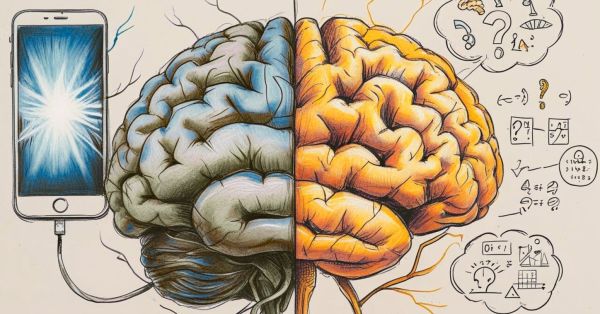
How Much Happiness Is Enough in a Perfect World?

In an ideal world, would most people choose to be maximally happy, healthy, and free? The answers given by 6,000 people in 27 countries may surprise you.

In the article “How Much Happiness Is Enough in a Perfect World?” published by Psychology Today, the author explores the responses of 6,000 individuals from 27 different countries regarding their preferences for happiness, health, and freedom in an ideal world. The findings reveal surprising insights into how people perceive the balance between these three attributes, suggesting that individuals may not prioritize maximally achieving all three. The article invites readers to reflect on what constitutes a fulfilling life and how societal values influence personal aspirations.

Source: How Much Happiness Is Enough in a Perfect World?

Where Did You Learn to Feel Less Than?

The negative things we hear in toxic environments can chip away at our sense of worth and self-confidence. Catch and challenge the resulting self-critical thoughts.

The article “Where Did You Learn to Feel Less Than?” discusses how negative influences in toxic environments can undermine an individual’s self-worth and confidence. It emphasizes the importance of recognizing and confronting self-critical thoughts that arise from these damaging interactions. By addressing and challenging these thoughts, individuals can work towards rebuilding their self-esteem and fostering a healthier self-image.

Source: Where Did You Learn to Feel Less Than?

Healthy Detachment: Caring Without Losing Yourself

Learn how healthy detachment allows therapists to care deeply without absorbing client pain—and why it’s essential for sustainable, effective healing work.

Healthy detachment is a crucial skill for therapists, enabling them to engage with clients on a deep level while preventing the absorption of client pain. This balance is essential for sustaining effective healing work, allowing therapists to care genuinely without compromising their well-being. The article emphasizes that such detachment does not equate to indifference, but rather fosters a more effective therapeutic environment.

Source: Healthy Detachment: Caring Without Losing Yourself

Wave of job losses hits tech sector as AI makes human roles more dispensable

Both companies stress humans still have a role to play – for now.

The article discusses the recent wave of job losses in the tech sector, specifically highlighting how artificial intelligence (AI) is making certain human roles increasingly dispensable. Several companies, including IBM and CrowdStrike, have laid off workers as they integrate more advanced AI technologies into their operations. Despite the growing capabilities of AI, both companies emphasize that humans still play a crucial role for the time being. The piece reflects on the balance between technological advancement and the need for human oversight in the workforce.

Source: Wave of job losses hits tech sector as AI makes human roles more dispensable

The Hidden Psychology of Connection

Loneliness is rewiring our brains, but real connection is still within reach. Here’s what psychology reveals about why we disconnect—and how to return to what matters.

Loneliness is fundamentally altering our brain patterns, yet authentic connections are still attainable. The article explores the psychological reasons behind our tendency to disconnect from others. It highlights the importance of understanding these dynamics and offers insights on how to foster meaningful relationships and re-establish connections that truly matter in our lives.

Source: The Hidden Psychology of Connection

AI Is Not Your Friend

How the “opinionated” chatbots destroyed AI’s potential, and how we can fix it.

The article “AI Is Not Your Friend” discusses how “opinionated” chatbots, designed to reflect biases and personal opinions, have hindered the potential of artificial intelligence. The author argues that these chatbots fail to provide objective information, which can mislead users and undermine trust in AI systems. It emphasizes the need for a shift towards more neutral and fact-based AI designs to restore confidence and ensure their beneficial use in society. The piece calls for re-evaluating the development strategies for AI to avoid creating tools that cater to particular viewpoints instead of serving as reliable sources of information.

Source: AI Is Not Your Friend

The Conclave Just Did the Unthinkable

What an American pope means for the Catholic Church and the world.

The article “What an American pope means for the Catholic Church and the world” discusses the implications of Pope Leo XIV, the first American pope, on the Catholic Church and broader global society. It explores how his leadership may influence church policies and adapt to modern societal issues, potentially bridging gaps between traditional Catholic doctrine and contemporary challenges. The piece highlights the significance of this historic election, considering the cultural and political contexts within the Church and in the United States, and reflects on the expectations that come with his papacy.

Source: The Conclave Just Did the Unthinkable

The Psychology of the Divine Feminine

Under patriarchy, women were told to harden to survive. Now, reclaiming softness isn’t surrender—it’s rebellion. Here’s why the Divine Feminine is rising.

The article “The Psychology of the Divine Feminine” explores the concept of the Divine Feminine as a response to patriarchal societal structures. It argues that women have historically been conditioned to adopt hard, survival-oriented traits, but the current resurgence of softness and nurturing qualities signifies a powerful act of rebellion. This shift towards embracing feminine qualities is seen as a necessary movement for empowerment and healing, ultimately contributing to a more balanced and compassionate society.

Source: The Psychology of the Divine Feminine

What Is the Relationship Between Socrates and Stoicism?

Socrates was a major influence on the development of Stoicism.1 While he didn’t directly found the school (that was Zeno of Citium in the early 3rd century BCE), several core tenets of Stoic philosophy have their roots in Socratic thought. Here’s a breakdown of the key connections:

Continue reading “What Is the Relationship Between Socrates and Stoicism?”

Can You Have a Meaningful Attachment to AI?

Are you overly attached to a digital object or interface? Is it an addiction or positive attachment?

The article “Can You Have a Meaningful Attachment to AI?” explores the nature of human relationships with digital objects and interfaces. It examines whether our connections to artificial intelligence can be deemed as addiction or a positive form of attachment. The discussion delves into the psychological implications of these attachments, highlighting that while they may lead to dependency, they can also provide comfort and companionship, especially in an increasingly digital world. Ultimately, the article emphasizes the complexity of our interactions with technology and its potential to enrich or detract from our lives.

Source: Can You Have a Meaningful Attachment to AI?

3 Signs That It’s Time to Let Go of a ‘Situationship’

The key question isn’t whether a situationship could become something more. It’s whether you’re receiving all that you need from the relationship right now.

The article “3 Signs That It’s Time to Let Go of a ‘Situationship'” discusses the complexities of undefined romantic relationships, often referred to as situationships. It emphasizes the importance of evaluating whether one is getting their emotional and physical needs met in such arrangements. The key takeaway is to assess the relationship’s current value rather than its potential future. The piece outlines indicators that may signal it’s time to move on, advocating for self-reflection and prioritizing one’s well-being in romantic connections.

Source: 3 Signs That It’s Time to Let Go of a ‘Situationship’

Trump MELTDOWN After Dana Carvey HUMILIATED Him On LIVE TV!

I do love me some Dana Carvey…

…these days I have to laugh or I’ll cry!

Want to Save Your Job from AI? Be More Human

AI is already becoming a dominant force in the workplace. There is no need for fear, but there is an opportunity for better leadership.

The article discusses the growing presence of AI in the workplace and emphasizes that rather than fearing this technological shift, individuals should view it as an opportunity to enhance leadership qualities. It advocates for a more human-centered approach to work, focusing on the importance of emotional intelligence and interpersonal skills as essential components in a world increasingly influenced by AI. By prioritizing these human traits, workers can position themselves favorably in relation to the evolving job landscape.

Source: Want to Save Your Job from AI? Be More Human

Cat-resistant furniture materials research

I’m moving to a new home and need new furniture. I used Google Gemini deep research to help me make a decision and the results are astounding…

Continue reading “Cat-resistant furniture materials research”

5 Signs Someone Is Emotionally Unavailable, Even If They Like You

Rethinking Relationships: The Emergent Love Model

Love doesn’t just happen—it emerges. Explore the Emergent Love Model and its 6 essential ingredients for building intentional, lasting, and thriving relationships.

The article “Rethinking Relationships: The Emergent Love Model” discusses a framework for understanding how love develops in relationships. It introduces the Emergent Love Model, which emphasizes that love is not a simple, spontaneous feeling but rather something that evolves over time. The model outlines six essential ingredients crucial for cultivating intentional, lasting, and thriving relationships. By focusing on these elements, individuals can build deeper connections and enhance their relational dynamics.

Source: Rethinking Relationships: The Emergent Love Model

Meaningful Questions to Ask Your Parents Before They Die

As you prepare for Mother’s/Father’s Day, here is an article about meaningful questions to ask your parents before they die. Capture their wisdom, stories, and advice with our insightful guide to ensure lasting memories…

The article “Meaningful Questions to Ask Your Parents Before They Die” provides a valuable guide for individuals seeking to capture their parents’ wisdom and life stories. It encourages readers to engage in deep conversations by posing thoughtful questions that reveal personal experiences, beliefs, and advice. By exploring topics such as childhood memories, life lessons, and family values, individuals can create lasting memories and preserve their parents’ insights for future generations. This guide serves as a heartfelt reminder of the importance of connecting with loved ones and cherishing their legacy.

An AI search in Google gave me these:

Here are five questions to consider asking one’s mother before she passes: 

  1. “What is your happiest memory of us together?” This question invites the sharing of a treasured moment, allowing for the reliving of a positive experience and strengthening bonds.
  2. “What are you most proud of in your life?” This allows for reflection on achievements and the sharing of sources of personal fulfillment, providing insight into what is valued most.
  3. “What advice would you give me about living a good life?” Wisdom gained through a lifetime of experiences can be invaluable, offering guidance and perspective for the future.
  4. “Is there anything you want to tell me that you’ve never shared before?” This opens the door for sharing unspoken thoughts, feelings, or stories that may bring closure or deepen understanding of the relationship.
  5. “How do you want to be remembered?” This question honors legacy and allows for understanding how one sees their impact on the world, ensuring memory is cherished according to wishes. 
  6. “Why did you pick my name?” In 1958 the name Todd was #116 most popular but there’s no one in our family or friends with that name.

It is important to approach these conversations with sensitivity and respect for emotional states. The approach or pace may need to be adjusted depending on energy levels and willingness to engage. The goal is to create meaningful moments and strengthen connections during a difficult time. 

Source: Meaningful Questions to Ask Your Parents Before They Die

AI pioneer Geoffrey Hinton says world is not prepared for what’s coming

Geoffrey Hinton, whose work shaped modern artificial intelligence, says companies are moving too fast without enough focus on safety. Brook Silva-Braga introduced us to Hinton in 2023 and recently caught up with him.

Something Alarming Is Happening to the Job Market

A new sign that AI is competing with college grads.

The article discusses the alarming trends in the job market where artificial intelligence (AI) is increasingly competing with college graduates for employment opportunities. It highlights the challenges faced by young job seekers as companies lean towards AI capabilities that can perform tasks traditionally reserved for human workers. The piece emphasizes the need for adaptation in education and workforce development to address the shifting landscape brought about by technological advancements, urging a reconsideration of skills that will remain relevant in the evolving job market.

Source: Something Alarming Is Happening to the Job Market

An Awakening to the Possibility of Joy in Life

An early recollection steeped in joy sets the stage for a lifetime propensity for delight and connection.

The article “An Awakening to the Possibility of Joy in Life” explores the idea that early joyful experiences can foster a lifelong appreciation for happiness and connection. It emphasizes how memories rooted in joy can shape our perspectives and relationships as we grow older. The author suggests that cultivating an awareness of joyful moments can enhance our ability to find and sustain delight throughout our lives.

Source: An Awakening to the Possibility of Joy in Life

Timeless Minds

The brain’s memory compression causes the recent past to feel similar across ages, explaining why we often don’t sense our age despite the passing years.

The article “Timeless Minds” from Psychology Today discusses how the brain’s memory compression contributes to a perception of timelessness, making the recent past feel similar at different ages. This phenomenon helps explain why individuals often do not feel their chronological age, despite the actual passage of years. The author explores the psychological implications and the nature of memory, suggesting that the way we process and recall experiences can alter our sense of age.

Source: Timeless Minds

Start a Blog at WordPress.com.

Up ↑