September 10, 1776: Permission to Leave New York, Resolve to Remain Independent
Two hundred and fifty years ago today, the American Revolution was being sustained by decisions that offered little opportunity for celebration. On September 10, 1776, Congress clarified that George Washington could determine when to evacuate New York. Meanwhile, John Adams, Benjamin Franklin, and Edward Rutledge were on a diplomatic journey that would test whether peace and independence could coexist.
It is a useful day to remember because it catches the founding generation in the middle of the uncertainty. They had declared a country. They still had to find a way to keep it alive.
Congress leaves the timing to Washington
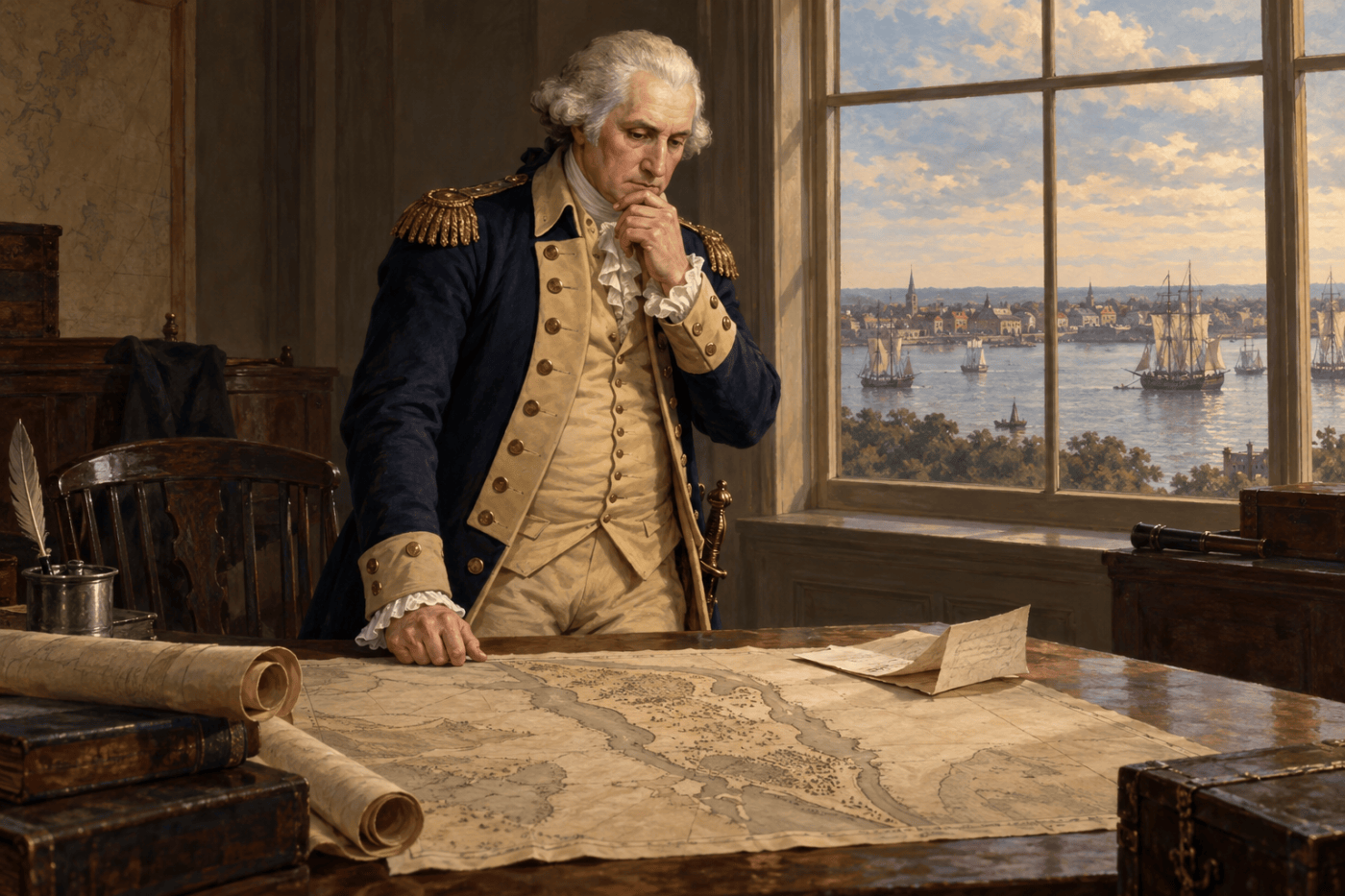
Writing from Philadelphia on September 10, John Hancock told Washington that Congress feared an earlier resolution had been misunderstood. Congress wanted New York preserved, but it left the timing of evacuation to Washington’s judgment. The accompanying resolution made clear that troops were not required to stay beyond the point he considered useful to the public service. Hancock’s letter and the congressional clarification are preserved in Founders Online.
This was permission to exercise military judgment, rather than an order to march out that day. September 10 marks the clarification sent by Congress; the letter alone does not establish when Washington received it.
The danger is evident in Washington’s September 11 letter to Hancock. He described British movements that threatened communications between American positions, a divided army, and changing opinions among his officers about holding the city. He was already ordering stores away so that an evacuation would leave less to remove.
Reading those letters now, I see the distinction between protecting a place and preserving the capacity to pursue a purpose. A city mattered enormously. So did the army that would have to continue the struggle after leaving it.
Adams, Franklin, and Rutledge on the road
At the same time, Congress was exploring what Admiral Lord Richard Howe could offer through negotiation. Its three representatives were Benjamin Franklin of Pennsylvania, John Adams of Massachusetts, and Edward Rutledge of South Carolina. Their meeting with Howe on Staten Island would take place on September 11.
Adams’s diary entry for September 10 records something wonderfully ordinary: the money he took on the journey. The editors identify the trip and explain why the next day’s conference produced no agreement. Howe’s meaningful authority centered on pardons and restoring the king’s peace, leaving no workable basis for the independence the Americans had declared.
And then there was the window
The journey also produced one of the Revolution’s most human stories. In his later autobiography, under September 9, Adams recalled sharing a bed with Franklin at a crowded New Brunswick inn. Adams wanted the small room’s window closed because he feared the night air. Franklin wanted it open and began explaining his theory of colds. Adams fell asleep during the explanation.
That recollection gives the diplomatic journey a human scale. People entrusted with an extraordinary task still had to find lodging, manage travel money, and settle disagreements about a window.
What this day asks us to remember
My takeaway from September 10 is that resolve needs room for judgment. Congress could support independence while allowing Washington to relinquish a position. Its delegates could hear an offer while retaining the right to find it inadequate.
From the distance of 250 years, the outcome feels settled. These letters restore something of the uncertainty. The people writing them had responsibilities, incomplete information, and another day’s work ahead. Their country’s future was still an open question.
 Bright, Shiny Objects!
What do you think?