Do you have the patience to wait till your mud settles? https://t.co/7u9mTQF2eE pic.twitter.com/lKIV0JrR9n
— Bright, Shiny Objects (@brightshinytwts) August 12, 2018
It's time https://t.co/cMMVfAXNps pic.twitter.com/LcZNzLGOk1
— Bright, Shiny Objects (@brightshinytwts) August 12, 2018
#Repost @lawofattractionfocus https://t.co/pCEtH39oNK pic.twitter.com/gA0W6sQcHy
— Bright, Shiny Objects (@brightshinytwts) August 12, 2018
The rapper Dessa scanned her brain to fall out of love https://t.co/iyuXO9Kf9p pic.twitter.com/FaBvD0WCDj
— Bright, Shiny Objects (@brightshinytwts) August 12, 2018
Todd’s Sunday Read

For the past two years I have been working in retail and I rarely get a Sunday morning off. Today was one of those rare days off without travel or other plans so I’m enjoying my idea of a perfect Sunday morning complete with good coffee and rye toast (breakfast of eggs and sausage coming up soon).
With all due respect to my friend David Amerland, here’s my version of perfect content for a Sunday Morning!
- Listen to Baroque Music or Mozart
- Read David Amerland’s Sunday Read and curate the content (David’s post can feed my blog with good content for a week!)
- Listen to The One You Feed podcast
- Listen to a teaching from Tara Brach
- Check in on Web Time Wasters
- Check out SundaySecrets
- Listen to Bayern 3 Radio
- Watch CBS Sunday Morning on YouTubeTV or listen on Stitcher (thanks Mary Katherine)
What about you? Add your favorite Sunday Morning routines in the comments below (because everyone thinks there’s is better than everyone elses’, right?)
Sunday Secrets



Source: Sunday Secrets
Web Time Wasters via @yesandyesblog

After reading David Amerland’s Sunday Read, listening to The One You Feed and Tara Brach, I’m usually looking for some lighter fare — that’s when Sarah von Bargen’s Web Time Wasters fits in! Follow the link:
So proud to call Ilhan Omar one of Minnesota’s own! Fellow Minnesotans: remember to vote in the primary on Tuesday! Here’s everything you need to know about the candidates and races. How was your week, friends? I crossed ‘hammock camping’ off my New Things List and was surprised to discover I liked it! It is… Read more: Web Time Wasters –
From Human Doing to Human Being via @tarabrach

How we can awaken from our non-stop doing, including the incessant inner narrative, and discover the mystery, love and freedom that arises in Being: From Human Doing to Human Being – Part 1 – Tara Brach

“While life brings you thrills and excitement, it also dispenses you with a fair share of puzzles and perplexity. You are perplexed when a good friend suddenly gives you a cold shoulder, worried when your boss speaks to you in a tone unusually stern, and anxious when your tour agent fails to pick you up in a foreign land. We tend to react when uncertainty arises; and often overreact. You can, as a matter of fact, try something quite different. When you are puzzled at what your see, do not stare hard. Instead, relax your mind and get your inner self to feel the thing. When you cannot figure out what you hear, do not struggle to listen. Rather, take a step back, and feel the vibration with a quiet mind. Let go of trying and open your mind to receive. When you allow your mind to receive, intricacy is given a chance to become simplicity; and the shapeless to palpable. It gets you see what you do not see and hear what you do not hear – moving you a step closer to reality. It brings the present back to you, enabling you to know what is actually happening. Do you have the patience to wait until your mud settles and the water is clear? “Do you have the patience to wait Till your mud settles and the water is clear? Can you remain unmoving Till the right action arises by itself?” Lao Tzu Tao Te Ching Chapter 15: Do you have the patience to wait till your mud settles – Tao Te Ching”
Jusdon Brewer: The Craving Mind via @oneyoufeed

Judson Brewer MD PhD is widely considered an expert in the areas of habit change, the “science of self-mastery” and mindfulness training for addiction. He has published a number of peer-reviewed articles and book chapters, he has trained US Olympic coaches, and his work has been featured on 60 Minutes, TEDMED, Time, Forbes, BBC, NPR, Businessweek and others. So – you get the idea…this guy knows what he’s talking about and what he’s talking about is fascinating. It’s a very different approach to ridding yourself of addiction and it works. it works much better than even currently accepted “gold standard programs” and it’s something you can learn how to do today. In fact, you can learn how to do it by listening to this episode. Go to the source: Jusdon Brewer: The Craving Mind – The One You Feed
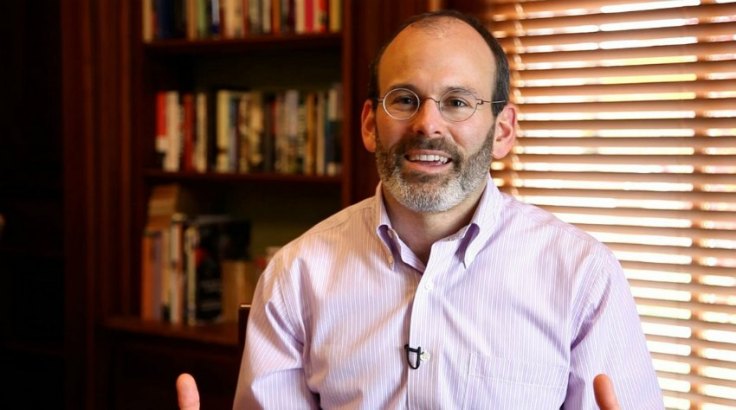
Romance
David Amerland writes:
The Neuroscience of Romance shows that we are as hardwired to fall out of love as into it: Romance
Do follow the link and read, not only David’s article but consume every article and video he refers to. I warn you — it may take over an hour — but, every single article is worthy of your attention. David is to me the most amazing of human beings; he is smart, articulate AND kind. While you might sometimes find two of the three someone like David does not come along often and for what it’s worth, I want to share his thinking with you…
Here’s a list of all the articles to which he refers:
- How hardwired is human behavior
- How to fall out of love with somebody
- The Neuroscience of Falling in Love
- The Science of Falling out of Love
- Human brain hardwired to fall out of love
- The Paradoxical Psychology of Romance
- The Day Love Was Invented
- The Neuroscience of Love and Relationships
- Dr. Helen Fischer on the Anatomy of Love
- Select the Right Relationship
- How your Brain falls in Love
- The Brain in Love
- The Neuroscience of Love
- What Neuroscience tells us about being in Love
It made me tired just to create this list. Thank you, David, for your work…
What Neuroscience Tells Us About Being in Love
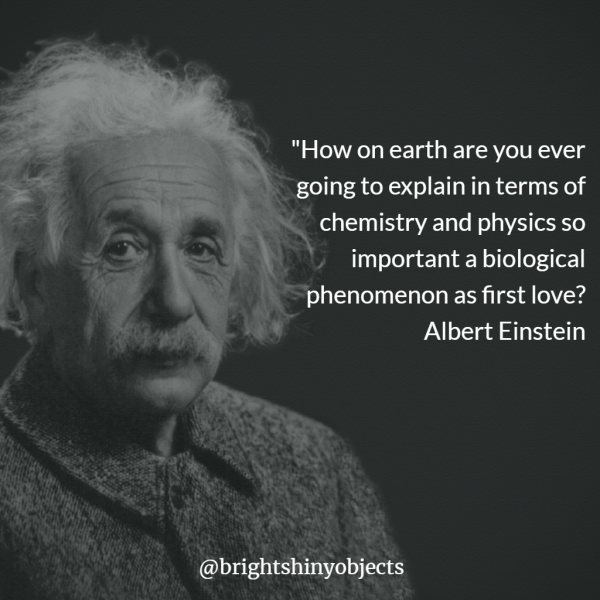
“How on earth are you ever going to explain in terms of chemistry and physics so important a biological phenomenon as first love?—Albert Einstein
Einstein was correct—science will never clinically sterilize the wonderment of love (first or otherwise). But I think he’d also agree that it’s a mistake to confuse increased understanding with diminished meaning. No matter what we learn about love, it will continue to be one of the most meaningful and powerful forces on the planet, as it should be. With that disclaimer, let’s jump in and discover what we’ve learned so far: What Neuroscience Tells Us About Being in Love | Psychology Today
The Neuroscience of Love https://t.co/MDF2TrIqG3 https://t.co/J0u1owISM3
The Neuroscience of Love https://t.co/MDF2TrIqG3 pic.twitter.com/J0u1owISM3
— Bright, Shiny Objects (@brightshinytwts) August 12, 2018
The Neuroscience of Love
Love’s been around a long time. As an evolutionary anthropologist Dr Machin is fascinated by what makes us fall in love and what keeps us there. In this talk she will use the results of cutting edge research in the fields of neuroscience, genetics, evolutionary theory and psychology to explain what happens in our brains when we fall in love and how this affects how we feel and behave when we are in love: King’s College London – The Neuroscience of Love
How Your Brain Falls In Love

For centuries poets and philosophers have speculated what causes two people to fall in love. Now, Biologist Dawn Maslar M.S. puts an innovative twist on this age-old question. Science can now take the mystery out of love. Thanks to latest neuroscience we can finally explain how your brain falls in love.
In this innovative twist on this age-old question, Maslar explores the latest neuroscience and explains how your brain falls in love.
Select the right relationship
Are you ready to talk about relationships? Alexandra Redcay is the executive director to Serise, Inc. She can be found at Seriseinc.com. Alexandra has over 18 years of direct practice, management, and training experience working in mental health, substance abuse, child welfare, juvenile justice, and education systems. She is an expert consultant in establishing healthy relationships.
Dr. Helen Fisher: “Anatomy of Love” via Talks At Google
Dr. Helen Fisher joined us at Google New York to talk about the neuroscience behind falling in love, why we love who we love, and the future of romantic love…
The Day Love Was Invented

These days, few people think of marrying without having feelings of love for their partner. Love is what brings us together, and the lack of it drives us apart. But it hasn’t always been this way. There was a time when the question of love was not an issue: The Day Love Was Invented | Psychology Today
Why We Fall in Love: The Paradoxical Psychology of Romance and Why Frustration Is Necessary for Satisfaction
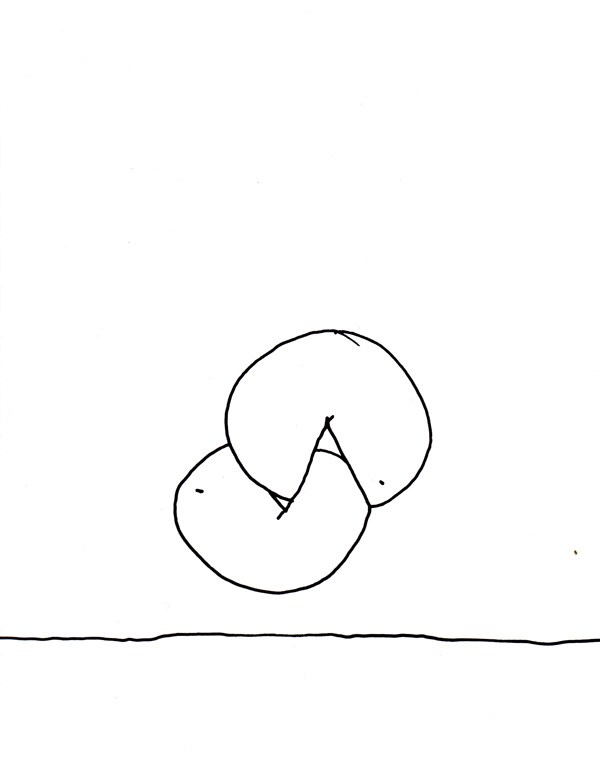
“Adrienne Rich, in contemplating how love refines our truths, wrote: “An honorable human relationship — that is, one in which two people have the right to use the word ‘love’ — is a process, delicate, violent, often terrifying to both persons involved, a process of refining the truths they can tell each other.” But among the dualities that lend love both its electricity and its exasperation — the interplay of thrill and terror, desire and disappointment, longing and anticipatory loss — is also the fact that our pathway to this mutually refining truth must pass through a necessary fiction: We fall in love not just with a person wholly external to us but with a fantasy of how that person can fill what is missing from our interior lives: Why We Fall in Love: The Paradoxical Psychology of Romance and Why Frustration Is Necessary for Satisfaction – Brain Pickings”
 Bright, shiny objects!
You must be logged in to post a comment.