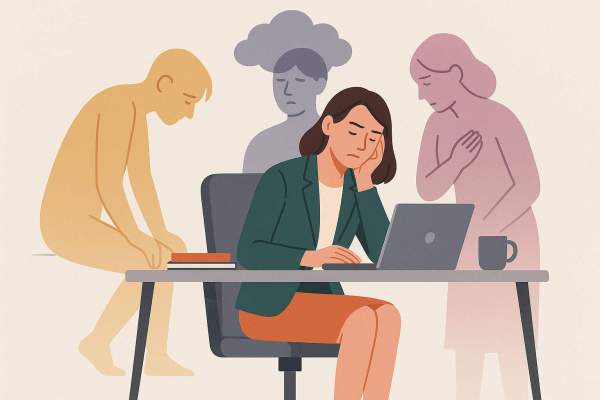
It’s Fine to Be Alone Together

Ian Bogost of The Atlantic writes:

“When my mother was still alive and she would visit my family from out of town, or we would visit her, the question of what to do would always come up. And she would inevitably say, “It doesn’t matter. I just want to be here with you.” That wasn’t true; Mom was always stir-crazy and couldn’t stand to sit still! But she wanted to be able to enjoy the presence of company absent action.

Being together is usually understood as a symmetrical act: The people present are doing the same thing—cooking, eating, conversing, playing cards, watching television, whatever—and that shared experience becomes a medium for communion.

But another kind of togetherness exists, one built on asymmetry instead. You are there doing something, and someone else is doing something else—reading a book in the keeping room while someone else prepares a meal, or doing the accounting on the computer while a child completes a craft. Parallel occupation can feel more intimate than a shared activity because it demands a certain trust. One needs to feel comfortable enough with someone else to simply coexist.

The MIT sociologist Sherry Turkle famously criticized modern technology because it encourages people to be alone, together. Turkle argued that screens provide an illusion of companionship. But I’d counter that that’s not quite right. All intimacy is mediated—by telephones, by couches, even by the sensation of touch. Some mediators are more detrimental to connection than others. But the intimacy of doing different things in the same place is still intimacy.”


Why Do I Have No Energy? The Science-Backed Energy Management Framework for Overwhelmed High-Achievers

Discover why you have no energy and learn the science-backed COM-B framework for energy management. Practical strategies for high-achievers to reclaim vitality.

The article “Why Do I Have No Energy? The Science-Backed Energy Management Framework for Overwhelmed High-Achievers” explores the reasons behind low energy levels and introduces the COM-B framework, which stands for Capability, Opportunity, and Motivation-Behavior. It provides practical strategies aimed at high-achievers to help them reclaim their vitality and manage their energy more effectively. By understanding the science behind energy management, readers can implement actionable steps to enhance their overall well-being and productivity.

Source: Why Do I Have No Energy? The Science-Backed Energy Management Framework for Overwhelmed High-Achievers – LifeHack

These 4 Nutrients May Combat Your Dementia Risk—Are You Getting Enough?

The article from Mindbodygreen highlights four key nutrients believed to help reduce the risk of dementia. It emphasizes the importance of these neuroprotective nutrients in promoting cognitive longevity and suggests ways to incorporate them into your diet to support brain health. The article encourages readers to be mindful of their nutrient intake for better cognitive function as they age.

Here’s how to get enough of them. Source: These 4 Nutrients May Combat Your Dementia Risk—Are You Getting Enough?

The blueprint for inner excellence: Jim Murphy

The universe dropped this in my inbox this morning…

I can’t say this is recommended reading because I haven’t read it yet, but I did like the podcast…

Start a Blog at WordPress.com.

Up ↑