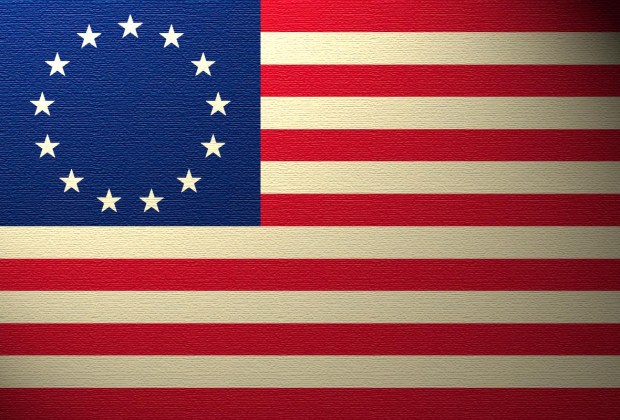
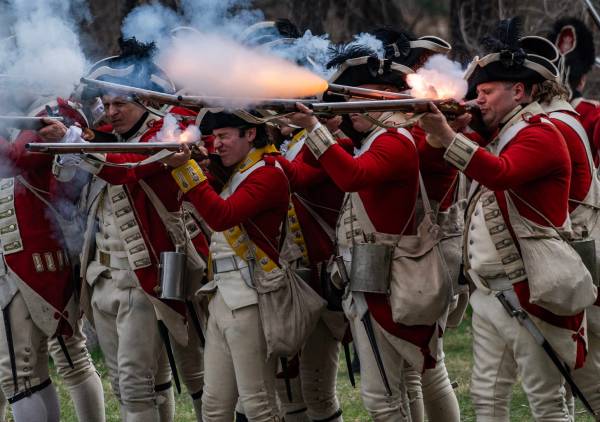
Lexington and Concord at 250: Can We Still Hear the ‘Shot Heard Round the World’?

Big Revolutionary War anniversaries lie ahead—and bring reminders of our messy, surprising history…

April 19, 2025, marked the 250th anniversary of the American Revolutionary War’s inception, highlighting significant historical reflections and events tied to this milestone. The article delves into the implications of such anniversaries, suggesting they serve as a reminder of the complex and often surprising nature of history. Additionally, it questions whether the essence of the conflict, encapsulated in the phrase “the shot heard round the world,” still resonates in today’s society. Through this lens, the article encourages contemplation on the ongoing relevance of the Revolutionary War and its legacy in contemporary America.

Source: Lexington and Concord at 250: Can We Still Hear the ‘Shot Heard Round the World’?

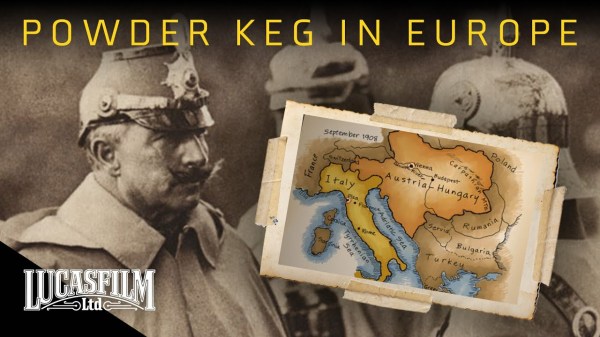
Powder Keg: Europe 1900 to 1914

The assassination of Archduke Franz Ferdinand[a] was one of the key events that led to World War I. Archduke Franz Ferdinand of Austria, heir presumptive to the Austro-Hungarian throne, and his wife, Sophie, Duchess of Hohenberg, were assassinated on 28 June 1914 by Bosnian Serb student Gavrilo Princip. They were shot at close range while being driven through Sarajevo, the provincial capital of Bosnia and Herzegovina, formally annexed by Austria-Hungary in 1908. Princip was part of a group of six Bosnian assassins together with Muhamed Mehmedbašić, Vaso Čubrilović, Nedeljko Čabrinović, Cvjetko Popović and Trifko Grabež coordinated by Danilo Ilić; all but one were Bosnian Serbs and members of a student revolutionary group that later became known as Young Bosnia. The political objective of the assassination was to free Bosnia and Herzegovina of Austria-Hungarian rule and establish a common South Slav (“Yugoslav”) state. The assassination precipitated the July Crisis which led to Austria-Hungary declaring war on Serbia and the start of World War I. The assassination team was helped by the Black Hand, a Serbian secret nationalist group; support came from Dragutin Dimitrijević, chief of the military intelligence section of the Serbian general staff, as well as from Major Vojislav Tankosić and Rade Malobabić, a Serbian intelligence agent. Tankosić provided bombs and pistols to the assassins and trained them in their use. The assassins were given access to the same clandestine network of safe-houses and agents that Malobabić used for the infiltration of weapons and operatives into Austria-Hungary.” Source: Assassination of Archduke Franz Ferdinand – Wikipedia

If you find this interesting, you might like this book…

Why are the Battles of Saratoga significant to American History?

The Battles of Saratoga were pivotal in the American Revolutionary War for several reasons:

  1. Turning Point of the War: These battles marked a significant turning point in the war, as they were the first major victories for the Continental Army against the British.
  2. Foreign Support: The American victory at Saratoga convinced France to openly support the American cause, providing crucial military and financial aid. This French alliance was a game-changer for the Patriots, giving them the resources and legitimacy they needed to continue fighting.
  3. Boost to Morale: The victories at Saratoga boosted the morale of the American troops and civilians, who had been struggling against the powerful British forces. It demonstrated that the Continental Army was capable of defeating the British and inspired hope for independence.
  4. Diplomatic Significance: The American victory also had significant diplomatic implications. It showed other European nations that the American Revolution was a viable cause, encouraging them to consider supporting the Patriots.

In essence, the Battles of Saratoga were a crucial turning point in the American Revolutionary War, leading to French support, a boost in morale, and increased international recognition of the American cause.

If you’d like to know more, I suggest this book or you can watch the series on AppleTV+:

Continue reading “Why are the Battles of Saratoga significant to American History?”

The Most Successful Fighter Plane of World War II

One of the most crucial aspects in World War II was the employment and performance of newly created weaponry. Military tactics and intelligence services were important, but in the heat of combat, the quality and amount of weaponry were the most important. As a result, the world’s most powerful countries were designing and manufacturing military systems and platforms on an unprecedented scale. Fighter aircraft were among the most formidable vehicles of the war produced. They proved to completely alter the battlefield. Although the fighters had been around for a while, they were nothing like as sophisticated as the revolutionary fighters deployed in the Second World War. Skilled pilots in these new aircraft could pose a significant threat to the whole opposing fleets. They not only changed the course of the war, but also became the legends of the aerial battle. Let’s take a look at the 10 most proficient and successful WWII fighter aircraft.

Happy Birthday, Your Excellency!

George Washington may be the most honored—and least intimately understood—of America’s founders. Two centuries of portraits, monuments, currency, and patriotic mythology have hardened him into marble. In Washington: A Life, Ron Chernow performs the remarkable feat of turning that monument back into a man.

Chernow’s Washington is ambitious, proud, temperamental, physically courageous, painfully conscious of his reputation, and almost superhumanly disciplined. His famous reserve was not an absence of emotion; it was mastery over an abundance of it. That distinction is the key to this magnificent biography.

Continue reading “Happy Birthday, Your Excellency!”

The Exceptional 18th Century: A Turning Point in Human History

The 18th century stands out as a remarkable period in human history for numerous reasons. Often referred to as the “Age of Enlightenment” or the “Century of Reason,” it witnessed extraordinary advancements in various fields that would forever shape the trajectory of humanity. From scientific discoveries to political revolutions, let us delve into why the 18th century was truly exceptional.

Continue reading “The Exceptional 18th Century: A Turning Point in Human History”

Benedict Arnold: Hero Betrayed

Growing up, we were taught that Christopher Columbus was an ‘explorer’ and Benedict Arnold was a ‘traitor’. It’s good to challenge these thoughts from time to time…

Continue reading “Benedict Arnold: Hero Betrayed”

“JAAAAAAA!!!” Thomas Müller

Thomas is my hero! Why? He always puts himself at the service of the team

Learn more about him here:

Bonus!

Top 10 Typical Thomas Müller Goals

I love soccer due in large part to watching this guy play for the past 12 years. Watch it and you’ll understand why!

Could Putin actually fall?

What history teaches us about how autocrats lose power — and how Putin might hang on. Source: Could Putin actually fall?

The odds are not in his favor

Here’s something else to consider. Historically, in asymmetric warfare the underdog has a better chance of winning. Consider the American Revolutionary War and the War of 1812. See…

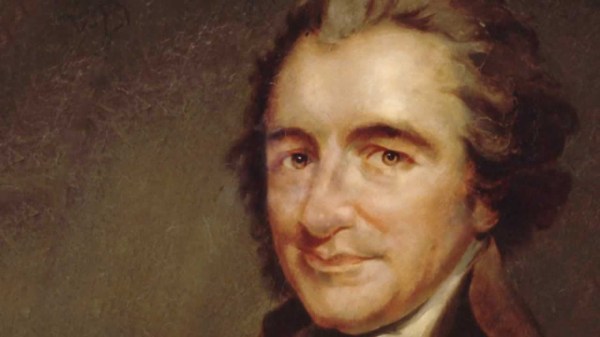
Thomas Paine publishes “The American Crisis”

On this day in 1776, Thomas Paine’s immortal words inspired the revolutionary army…

‘These are the times that try men’s souls. The summer soldier and the sunshine patriot will, in this crisis, shrink from the service of their country; but he that stands it now, deserves the love and thanks of man and woman.

Tyranny, like hell, is not easily conquered; yet we have this consolation with us, that the harder the conflict, the more glorious the triumph.

What we obtain too cheap, we esteem too lightly: it is dearness only that gives every thing its value. Heaven knows how to put a proper price upon its goods; and it would be strange indeed if so celestial an article as FREEDOM should not be highly rated: Thomas Paine publishes “The American Crisis”

While I no longer believe in ‘american exceptionalism’ there is no doubt this is an exceptional example of words that inspired men to great deeds. You can read the entire pamphlet at no cost here (and I believe every American should read this at least once in their lifetime):

Milestone for Müller

I love German soccer. Thomas Müller is the reason why! He scored his 100th goal at the Allianz Arena when he found the net against Schalke: Milestone for Müller – FC Bayern Munich

Thomas Müller ist zurück – entschlossen, energisch, präzise

Seit Jupp Heynckes wieder Trainer des FC Bayern München ist, zeigt sich Thomas Müller wieder von seiner besten Seite. Source: Thomas Müller ist zurück – entschlossen, energisch, präzise | NZZ

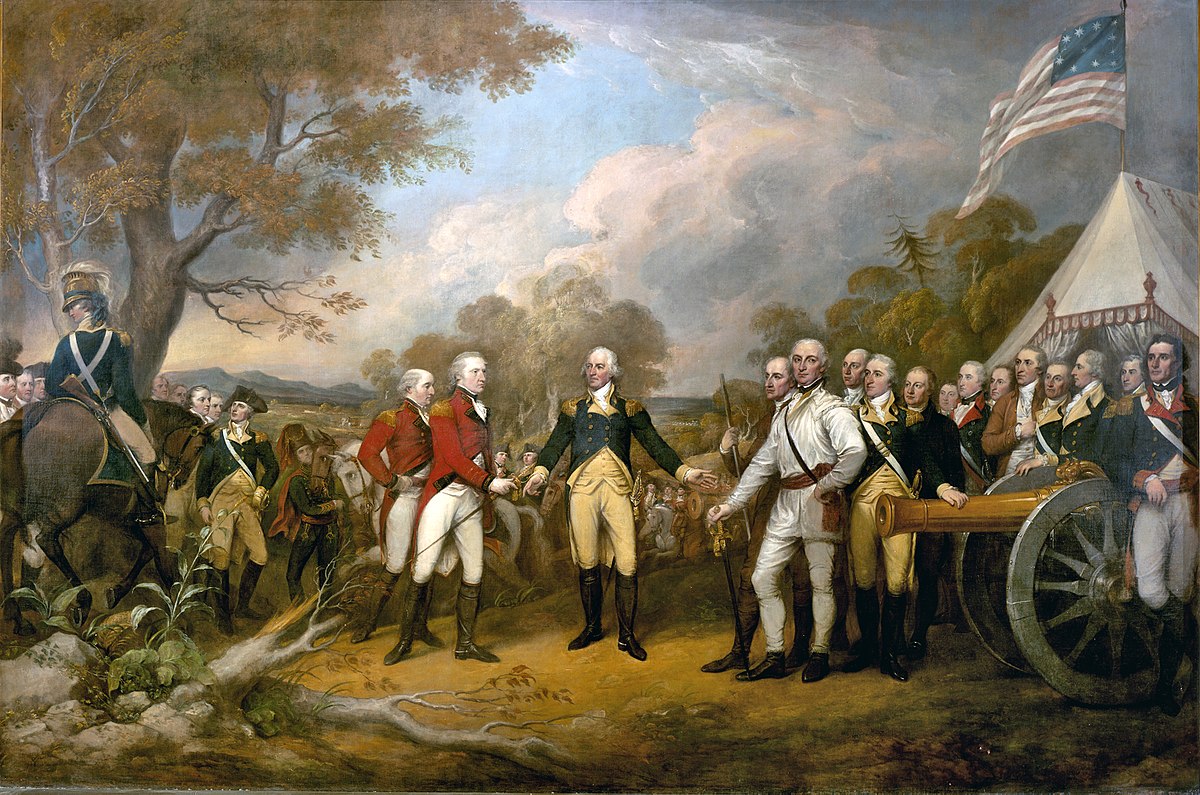
Battles of Saratoga

The Battles of Saratoga (September 19 and October 7, 1777) marked the climax of the Saratoga campaign, giving a decisive victory to the Americans over the British in the American Revolutionary War. Continue reading “Battles of Saratoga”

A story about George Washington…

1795 - 1823
1795 – 1823 (Photo credit: Wikipedia)

Have you ever heard this one?

About a dozen years before the Revolutionary War, tensions increased in America between the British and the French with their Indian allies, resulting in battles.
The most notable period of the French and Indian Wars lasted from 1754 to 1763. It is considered the first global war, as allies of the French and English fought all around the world.
On July 9, 1755, about 1,400 British troops marched over the Appalachian Mountains to seize French Fort Duquesne, near present day Pittsburgh. As they marched through a deep wooded ravine along the Monongahela River eight miles from the fort, they were ambushed by French regulars, Canadians, and Potawatomi and Ottawa Indians.
Not accustomed to fighting unless in an open field, over 900 British soldiers were annihilated.
It was known as the Battle of the Wilderness or Battle of Monongahela.
23-year-old Virginia Colonel George Washington rode back and forth during the battle delivering orders for General Edward Braddock, the Commander-in-Chief of British forces in America.
Eventually, Braddock was killed and every officer on horseback was shot, except Washington.
Washington carried Braddock from the field.
Braddock’s field desk was captured, revealing all of the British military plans, enabling the French to surprise and defeat British forces in succeeding battles at Fort Oswego, Fort William Henry, Fort Duquesne, and Carillon. The Iroquois tribes of Senecas and Cayugas decided to switch their allegiance to the French.
Before he died, Braddock gave Washington his battle uniform sash, which Washington reportedly carried with him while serving as Commander-in-Chief and as President.
Washington presided at the burial service for General Braddock, as the chaplain was wounded. Braddock’s body was buried in the middle of the road so as to prevent his body from being found and desecrated.
Shortly thereafter, writing from Fort Cumberland, George Washington described the Battle of Monongahela to his younger brother, John Augustine Washington, JULY 18, 1755:
“As I have heard, since my arrival at this place, a circumstantial account of my death and dying speech, I take this early opportunity of contradicting the first, and of assuring you, that I have not as yet composed the latter.
But by the All-Powerful Dispensations of Providence, I have been protected beyond all human probability or expectation; for I had four bullets through my coat, and two horses shot under me, yet escaped unhurt, although death was leveling my companions on every side of me!”
An Indian warrior later declared:
“Washington was never born to be killed by a bullet! I had seventeen fair fires at him with my rifle and after all could not bring him to the ground!”

Source: William J Federer’s American Minute for January 1st

Love is the Revolution

See on Scoop.itLiving Business

In a world of hate, love is the revolution. ~Bryant McGill #revolution #hate #occupy #revolutionary

See on simplereminders.com

So that’s how it goes…

Melody-Beattie.pngMelody Beattie has a loooong post on New Year‘s mindfulness. Here’s an excerpt:

I began to list the qualities or skills I applied that helped me go from loser to a winner at something I knew absolutely nothing about when I started.  I didn’t take me long to see that these are identical to the qualities that help me succeed at anything I want to do. While these ideas aren’t revolutionary, it’s easy to forget that each is within our power to do.

  1. Realize I’m where I am on purpose, even if it’s an accident. Sometimes the most trivial things that happen to us are more important than we believe.  When I look for the big, the exciting and the momentous – I leave empty-handed.  When I surrender to the present moment, understanding the sheer magnificence of each of these in my life – even those that suck — and then follow that with gratitude, my wheelbarrow overflows.  (I use that expression because my entire life, I wanted a wheelbarrow and now I have one, a good one I won one for not much money at all at DealDash and because “cups overflowing” has become a cliché, something writers should avoid.) I really am thrilled about having a wheelbarrow and in my most far-fetched moments of self-love, couldn’t justify buying one.

Full story at: SO THAT’S HOW IT GOES | Melody Beattie.


10 Things You Might Not Know About America’s Independence

C’mon, world! We’re not all imperialist dogs — some of us are quite nice actually! Here are some things you might want to know about our Independence Day:

On July Fourth, Americans eat hot dogs and apple pie, watch fireworks, and go swimming. But what are we really celebrating? Standard answers to this question are that we are celebrating our independence or the signing of the Declaration of Independence. Well, yes and no.

Here are 10 things you might not know about our America’s Independence Day.” Get the answer here: 10 Things You Might Not Know About America’s Independence | All Pro Dad.

U.S. Constitution ratified; This Day in History — 6/21/1788

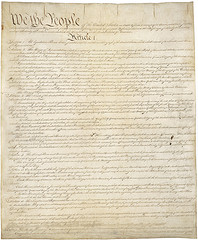
Constitution of the United States of America

New Hampshire becomes the ninth and last necessary state to ratify the Constitution of the United States, thereby making the document the law of the land.

By 1786, defects in the post-Revolutionary War Articles of Confederation were apparent, such as the lack of central authority over foreign and domestic commerce. Congress endorsed a plan to draft a new constitution, and on May 25, 1787, the Constitutional Convention convened at Independence Hall in Philadelphia. On September 17, 1787, after three months of debate moderated by convention president George Washington, the new U.S. constitution, which created a strong federal government with an intricate system of checks and balances, was signed by 38 of the 41 delegates present at the conclusion of the convention. As dictated by Article VII, the document would not become binding until it was ratified by nine of the 13 states.

Beginning on December 7, five states–Delaware, Pennsylvania, New Jersey, Georgia, and Connecticut–ratified it in quick succession. However, other states, especially Massachusetts, opposed the document, as it failed to reserve undelegated powers to the states and lacked constitutional protection of basic political rights, such as freedom of speech, religion, and the press. In February 1788, a compromise was reached under which Massachusetts and other states would agree to ratify the document with the assurance that amendments would be immediately proposed. The Constitution was thus narrowly ratified in Massachusetts, followed by Maryland and South Carolina. On June 21, 1788, New Hampshire became the ninth state to ratify the document, and it was subsequently agreed that government under the U.S. Constitution would begin on March 4, 1789. In June, Virginia ratified the Constitution, followed by New York in July.

On September 25, 1789, the first Congress of the United States adopted 12 amendments to the U.S. Constitution–the Bill of Rights–and sent them to the states for ratification. Ten of these amendments were ratified in 1791. In November 1789, North Carolina became the 12th state to ratify the U.S. Constitution. Rhode Island, which opposed federal control of currency and was critical of compromise on the issue of slavery, resisted ratifying the Constitution until the U.S. government threatened to sever commercial relations with the state. On May 29, 1790, Rhode Island voted by two votes to ratify the document, and the last of the original 13 colonies joined the United States. Today the U.S. Constitution is the oldest written constitution in operation in the world.” via U.S. Constitution ratified — History.com This Day in History — 6/21/1788.
Start a Blog at WordPress.com.

Up ↑