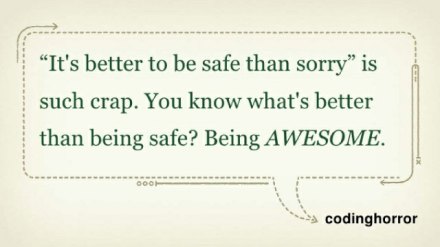
I love those who yearn for the impossible

BrainyQuote via I love those who yearn for the impossible. – Johann Wolfgang von….

Create Your Day!

The Daily Love via Visual Inspiration: Create Your Day!.

Release the stick!

Student pilots learn a simple method for getting an airplane out of a stall; Release the stick forward, and the airplane rights itself. Continue to hold the stick back, and you cause a fatal spin.

Many times, we cling too tightly to conditions that could simply right themselves if we would only let go. Situations often work themselves out when we stop pushing and pulling too hard.

If we’re living on a spiritual basis and following our 12 Step program, lots of unpleasant conditions will clear up without any strain or struggle on our part. The secret, then, is to do our part and act prudently, but also to be willing to let things happen.

I’ll remember today not to push or pull too hard to get my way. Things might work themselves out if I simply let natural forces work properly in every situation.

via Just For Today Meditations » Daily Recovery Readings – June 26, 2012.

During stormy times….

notsalmon via During stormy times…..

Kind girls are the coolest

notsalmon via Kind girls are the coolest.

10 Reasons Why You Need A Blog

Nick Thacker writes:

I know, I know–you’re already running a business, writing a book, raising children, and trying to have a life.

I get it.

But you’re here, which means that you’re into things like productivity, getting things done, and creating space in your life for the good things.

But it’s probably not enough.

Most likely, you’re able to maintain your 200+ emails-per-day workload, multiple projects at a time, and still have enough sanity to get home in time for dinner.

So why am I advocating adding another thing to your daily task list? Why am I telling you why you need a blog?

Because blogging isn’t going anywhere.

More importantly, it’s not something that should be seen as adding to what you’re doing. On the contrary, blogging (if done well), can be the most productive thing you do all day, and can even take the place of many of your daily “to-do”s. You might need to step out of your comfort zone, but trust me–it’s worth it.

Here’s a list of some of those things blogging can help with: 10 Reasons Why You Need A Blog.

I have two blogs; one business, one personal. This is the personal one. In addition to many of the benefits Nick mentioned, my blog is a place to store the good things I find in such a way that they benefit other people as well as myself. Comment, call or ‘connect’ so we can talk about how this applies to you and your organization…

Just in case you missed this for 6//25/2012

  1. “Learn to say ‘no’ to the good so you can say ‘yes’ to the best.”

    – John C. Maxwell

  2. It is good to have an end to journey towards, but it is the journey that matters, in the end.
    —Ursula K. LeGuin
  3. A man who has committed a mistake and doesn’t correct it is committing another mistake.
    –Confucius
  4. Don’t argue for other people’s weaknesses. Don’t argue for your own. When you make a mistake, admit it, correct it, and learn from it–immediately.
    –Stephen Covey
  5. Left to itself, nature takes ordinary garbage and transforms it into useful nutrients that help sustain life. It’s usually poor human action that makes garbage a problem.

    Our mental and emotional garbage takes the forms of bad memories, festering resentments, and useless regrets. We waste time berating ourselves and others about bad decisions and experiences that are behind us.

    The magic of the 12 Step program is that we can use it to transform this mental garbage into useful experience. A past mistake can become as asset when we share it with others. Pain and suffering can teach a lesson that helps all of us to grow. By forgiving others, a resentment can be turned into a friendship.

    I’ll resolve today not to worry about garbage any longer than it takes to identify it and release it to my Higher Power for transformation.

  6. Quote: When a man points a finger at someone else, he should remember that three of his fingers are pointing at himself.
    —Louis Nizer

    It’s so easy to blame others. Others are always making mistakes we can hide behind. That’s what blame is—hiding. When we blame others for our mistakes, we’re trying to hide our character defects.

    It’s nobody else’s fault that we act the way we do. It’s our fault. We’re responsible for our actions.

    And with the help of our Higher Power, we can change. We can turn over our character defects. Over time, we’re not afraid to learn about ourselves—even the parts we don’t like—because we want to know ourselves better.

    Prayer for the Day: I pray for help in facing my character defects.

    Action for the Day: I’ll think about the past week. I’ll list times I’ve used blame to hide from reality.

Being Honest with Ourselves and Removing Our Masks

“Our lives only improve when we are willing to take chances and the first and most difficult risk we can take is to be honest with ourselves.” ~Walter Anderson via Being Honest with Ourselves and Removing Our Masks | Tiny Buddha.

If you want to be happier….

notsalmon via If you want to be happier…..

How to stand out


JFDI « Travels and Tealeaves.

Autobiography in 5 chapters

I

I walk down the street.

There is a deep hole in the sidewalk

I fall in.

I am lost … I am helpless.

It isn’t my fault.

It takes me forever to find a way out. Continue reading “Autobiography in 5 chapters”

Think Different?

Don’t think at all! Just pull out the credit card, Mac users…

Johnson & Johnson Introduces ‘Nothing But Tears’ Shampoo To Toughen Up Newborns

After decades of coddling young children, Johnson & Johnson unveiled its new “Nothing But Tears” shampoo this week, an aggressive bath-time product the company says will help to prepare meek and fragile newborns for the real world.

A radical departure for the health goods manufacturer, the new shampoo features an all-alcohol-based formula, has never once been approved by leading dermatologists, and is as gentle on a baby’s skin as “having to grow up and fend for your goddamn self.”

“We at Johnson & Johnson have been making bath time a safe and soothing experience for far too long,” company CEO William C. Weldon said. “Years of pampering have left our newborns helpless, feeble, and ill-equipped for the arduous road ahead.”

“It’s time our children got the wake-up call that’s been coming to them,” Weldon continued. “It’s time they cried their precious little eyes out.”

via Johnson & Johnson Introduces ‘Nothing But Tears’ Shampoo To Toughen Up Newborns | The Onion – America’s Finest News Source.

I could care less about gardening…

…but I don’t think I could care more about the gardener! She looks so adorable in her hat…

Click image to enlarge…

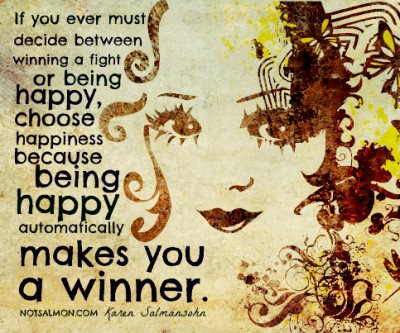
If you ever must decide between winning a fight and being happy…

notsalmon via If you ever must decide between winning a fight and being happy….

Just in case you missed this over on the business blog…

Todd Lohenry's avatare1evation, llc

…to tell the ‘thought leadership’ marketing story. First off, no Microsoft products; Google Drive. Second, short, sweet and to the point. Let me know what you think…

Bonus ZMOT resources!

View original post

Todd Lohenry's avatare1evation, llc

…is not news.google.com. It’s newsmap.jp! Newsmap presents the news in an interesting format based on trends — you can also slice and dice your news by country or topic if you’re interested in more than just the US perspective..

View original post

Battle of Little Bighorn; This Day in History — 6/25/1876

English: George Armstrong Custer.
George Armstrong Custer. (Photo credit: Wikipedia)

Crazy Horse and Sitting Bull, leaders of the Sioux tribe on the Great Plains, strongly resisted the mid-19th-century efforts of the U.S. government to confine their people to reservations. In 1875, after gold was discovered in South Dakota’s Black Hills, the U.S. Army ignored previous treaty agreements and invaded the region. This betrayal led many Sioux and Cheyenne tribesmen to leave their reservations and join Sitting Bull and Crazy Horse in Montana. By the late spring of 1876, more than 10,000 Native Americans had gathered in a camp along the Little Bighorn River–which they called the Greasy Grass–in defiance of a U.S. War Department order to return to their reservations or risk being attacked.

In mid-June, three columns of U.S. soldiers lined up against the camp and prepared to march. A force of 1,200 Native Americans turned back the first column on June 17. Five days later, General Alfred Terry ordered Custer’s 7th Cavalry to scout ahead for enemy troops. On the morning of June 25, Custer drew near the camp and decided to press on ahead rather than wait for reinforcements.

At mid-day, Custer’s 600 men entered the Little Bighorn Valley. Among the Native Americans, word quickly spread of the impending attack. The older Sitting Bull rallied the warriors and saw to the safety of the women and children, while Crazy Horse set off with a large force to meet the attackers head on. Despite Custer’s desperate attempts to regroup his men, they were quickly overwhelmed. Custer and some 200 men in his battalion were attacked by as many as 3,000 Native Americans; within an hour, Custer and every last one of his soldier were dead.

The Battle of Little Bighorn–also called Custer’s Last Stand–marked the most decisive Native American victory and the worst U.S. Army defeat in the long Plains Indian War. The gruesome fate of Custer and his men outraged many white Americans and confirmed their image of the Indians as wild and bloodthirsty. Meanwhile, the U.S. government increased its efforts to subdue the tribes. Within five years, almost all of the Sioux and Cheyenne would be confined to reservations.” via Battle of Little Bighorn — History.com This Day in History — 6/25/1876.

One Child’s Love…

Very Demotivational: One Child’s Love… – Lolcats – Funny Pictures of Cats – I Can Has Cheezburger?.

Charity

International Money Pile in Cash and Coins

Melody Beattie writes:

We need healthy boundaries about receiving money, and we need healthy boundaries about giving money.

Some of us give money for inappropriate reasons.

We may be ashamed because we have money and don’t believe we deserve it. We may belong to an organization that uses shame as a form of control to coerce us out of our money that the organization wants.

We can get hooked into giving money to our children, family members, or friends because we have earned or un­earned guilt. We allow ourselves to be financially black­mailed, sometimes by the people we love.

This is not money freely given, or given in health.

Some of us give money out of a sense of caretaking. We may have exaggerated feelings of responsibility for others, including financial responsibility.

We may be giving simply because we have not learned to own our power to say no when the answer is no.

Some of us give because we hope or believe people will love us if we take care of them financially.

We do not have to give money to anyone. Giving money is our choice. We do not have to allow ourselves to be victimized, manipulated, or coerced out of our money. We are financially responsible for ourselves. Part of being healthy is allowing those around us be financially responsible for themselves.

We do not have to be ashamed about having the money that we earn; we deserve to have the money we have been given — whatever the amount, without feeling obligated to give it all away, or guilty because others want what we have.

Charity is a blessing. Giving is part of healthy living. We can learn to develop healthy boundaries around giving.

Today, I will strive to begin developing healthy boundaries about giving money. I understand that giving is my choice.

via June 25: Charity | Language of Letting Go.

GIGO; ‘Garbage in, garbage out’

Charles Babbage's Difference Engine 2 at the S...
Charles Babbage’s Difference Engine 2 at the Science Museum in London

“On two occasions, I have been asked [by members of Parliament], ‘Pray, Mr. Babbage, if you put into the machine wrong figures, will the right answers come out?’ I am not able to rightly apprehend the kind of confusion of ideas that could provoke such a question.” Charles Babbage. via Anderson Layman’s Blog: Apprehending confusion……..

Start a Blog at WordPress.com.

Up ↑